
Emma McDonald Kennedy sees an "alarming problem" with the increased use of discriminatory language and slurs against people with disabilities. She says cuts to Medicaid are creating burdens for people with disabilities and notes that recently passed changes in some states, such as Illinois and Delaware, expand access to medical aid in dying, which might promote the assumption that the lives of people with disabilities aren't worthwhile. She points out that startups are advertising genetic screening of embryos to facilitate "optimal" selection to avoid disabilities and genetic conditions.
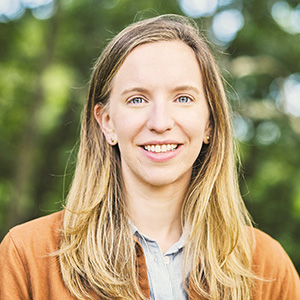
McDonald Kennedy, an assistant professor of Christian ethics at Villanova University, said these developments make it an opportune time for a conversation about the intersection of health care, society and disability. She spoke during a webinar hosted by CHA March 4. The webinar explored what disability bioethics, which examines ethical issues in medicine and biotechnology through the lens of disability studies and activism, offer to Catholic health care.
ERDs and Catholic Social Teaching
The Ethical and Religious Directives for Catholic Health Care Services, McDonald Kennedy pointed out, call on providers to serve and advocate for people on the margins, and specify people with mental and physical disabilities. "So already, I think here we see the resonance between disability bioethics and Catholic health care's moral commitments," she said.
The directives' emphasis on justice for people with disabilities, value for their lives, and access to health care, she said, pushes against cultural assumptions "that assume that people with disabilities are not living lives of equal value to other people."
McDonald Kennedy highlighted three principles of Catholic social teaching that align with disability bioethics: human dignity, the option for the poor, and solidarity.
"Human dignity and the option for the poor, I think, help clarify what we need to recognize and what we need to attend to," she said. "But solidarity really asserts a duty in that we're all responsible for each other, as it states, and we all have to contribute to the common good, and part of that contribution is recognizing rights and also living out responsibilities."
CHA's advocacy priorities, such as protecting Medicaid and Medicare and addressing social determinants of health and health care disparities, would empower people with disabilities, she said.
"All of these connect to that overall goal of disability bioethics to improve our societal setup such that people with disabilities can flourish further," she said.
Examples and resources
Explaining how to advance the conversation around disability bioethics, McDonald Kennedy referenced Rosemarie Garland-Thomson, a professor of English and bioethics who teaches disability studies at Emory University. She said Garland-Thomson talks about improving the environments where people with disabilities flourish, and challenges society to look at disability as something that is part of life, which anyone can experience if they get sick or injured. She described failure to fully understand disability as disability illiteracy, and disability cultural competence as the promotion and development of bioethical, cultural, technological and legal supports for people living with disabilities, including and especially in health care environments.
When it comes to improving access to care for those who are disabled, McDonald Kennedy cited the example of a long-term care facility, Elizabeth Seton Young Adult Center, planned in Yonkers, New York, for young adults with medically complex needs. Elizabeth Seton Children's found that when children age out of its center at 21, about one-third of them die within the first year or two. The new facility will bridge the care gap for this particular population, she said.
McDonald Kennedy also pointed to the nonprofit Disability Equity Collaborative, which offers resources that support health care equity. Those resources include suggestions for health care institutions to provide helpful accommodations so people with disabilities "feel seen, comfortable and cared for" that go "far beyond" what the Americans with Disabilities Act requires, she said. An upcoming conference on disability in health care and medicine at Stanford Medicine focuses on patients and providers with disabilities.
She also suggested participants review research from researchers and teachers, such as Mary Jo Iozzio of Boston College, Devan Stahl of Baylor University, and Julia Watts Belser of Georgetown University, who are working at the intersection of disability studies, health and embodiment, and religion. McDonald Kennedy also cited the research and work of Joel Michael Reynolds of Georgetown and Christine Wieseler of Santa Clara University.
"It's a little bit of a shift to recognize that what is (often) making people with disabilities vulnerable is not necessarily their disability so much as it is how our society thinks about their disability and responds to it structurally," she said. "So we're not suggesting people with disabilities need to be cured, necessarily ... but rather that we need to more seriously evaluate how we as a society operate to better include people with disabilities."