
During the last school year, several thousand students at seven elementary schools in central Kentucky created bright, colorful art to promote kindness, adorn their schools and enrich the lives of people in their community.
Their masterpieces were funded and inspired by Lexington, Kentucky-based Saint Joseph Health, through its Art of Humankindness Grant program. Art teachers at Fayette County schools used the dollars on supplies for projects that focused on and fostered kindness, empathy, compassion and friendship.
In a press release, Christy Spitser said, "At Saint Joseph, we understand the power of art to bring us together. … We are thrilled to help bring that power into local schools through these Art of Humankindness grants." Spitser was Saint Joseph Health interim market president at the time the release went out. Saint Joseph Health has since named a president.
Demetrus Liggins, superintendent of Fayette County, Kentucky, Public Schools, said in the release that the Art of Humankindness funds "will go a long way toward ensuring kindness is a consistent and meaningful part of students' daily lives — not just for a day, or a week, but as an ongoing commitment to one another."
Community betterment
The grants are part of a broader Saint Joseph Health effort, the Creating Safer Neighborhoods Initiative, which is funded by the Mission and Ministry Fund of Saint Joseph Health's parent, CommonSpirit Health. CommonSpirit uses that fund to support innovative programs and initiatives that improve health and well-being in communities served by CommonSpirit. The system has 137 hospitals in 24 states. All initiatives supported by the Mission and Ministry Fund address identified needs, invite collaboration with local partners, and are replicable elsewhere.
The Art of Humankindness grew out of Saint Joseph Health's Year of Humankindness in 2021 to express gratitude to a community that had supported health care workers through the worst of the COVID-19 pandemic. Saint Joseph caregivers participated in a Chalk It Up Challenge, using chalk on sidewalks to share messages of humankindness. In subsequent years, the Creating Safer Neighborhoods initiative launched a similar challenge for students in a few local schools to promote kindness, and that grew in 2024 to the grant program.
Saint Joseph Health's Creating Safer Neighborhoods program allotted the grants for the 2024-2025 school year through a competitive application process. Each of the selected schools received up to $2,000. Plans call for grants to again be allotted for the upcoming school year.
Unity through art
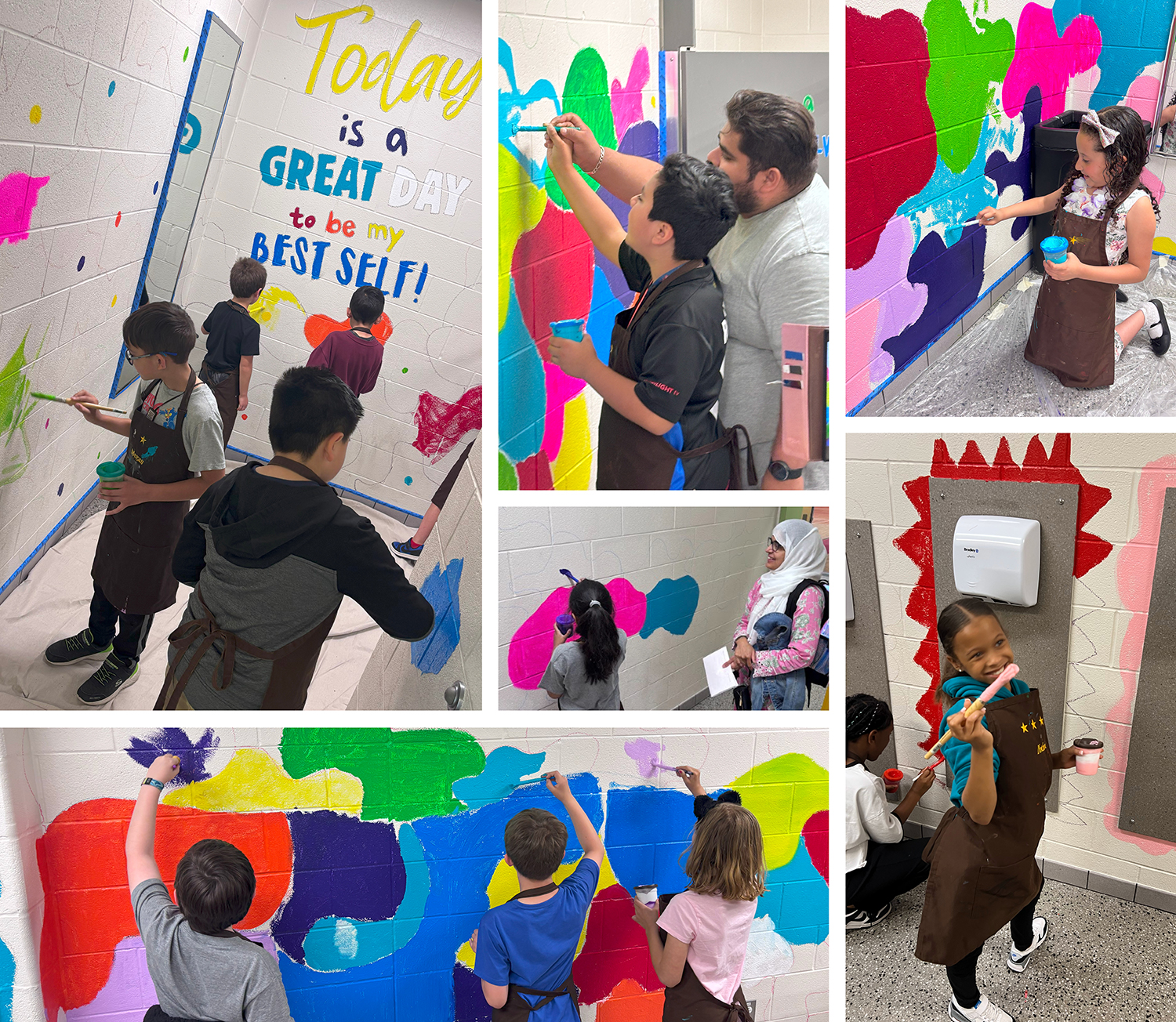
Art teacher Hope Bennett used the grant for Coventry Oak Elementary beginning last fall, when she painted a tree on a wall then invited students and community members to write affirmations on paper acorns and leaves and post them on the tree. She used some of those affirmations to make wall art in student restrooms. She painted messages like "I am strong" opposite mirrors so students could see the inspirational quotes in their reflection.
After leading multiple kindness-focused student art projects throughout the year, Bennett ended school in May with a community art project. In student bathrooms, she roughed in large splatter designs then invited students, parents and staff to choose the shapes they wanted to paint and the colors they wanted to use.
"I knew this project would unify our school," Bennett said. "This allowed people to put their mark on the school in a positive way. And I am really pleased with how this brought the community together. There were conversations going on between families and students. It was a cool, unifying event, and we could build on this in the future."
Indigo and butterflies
Deep Springs Elementary is in a part of Lexington that has many marginalized community members, including immigrants and low-income families who haven't had opportunities for international travel.
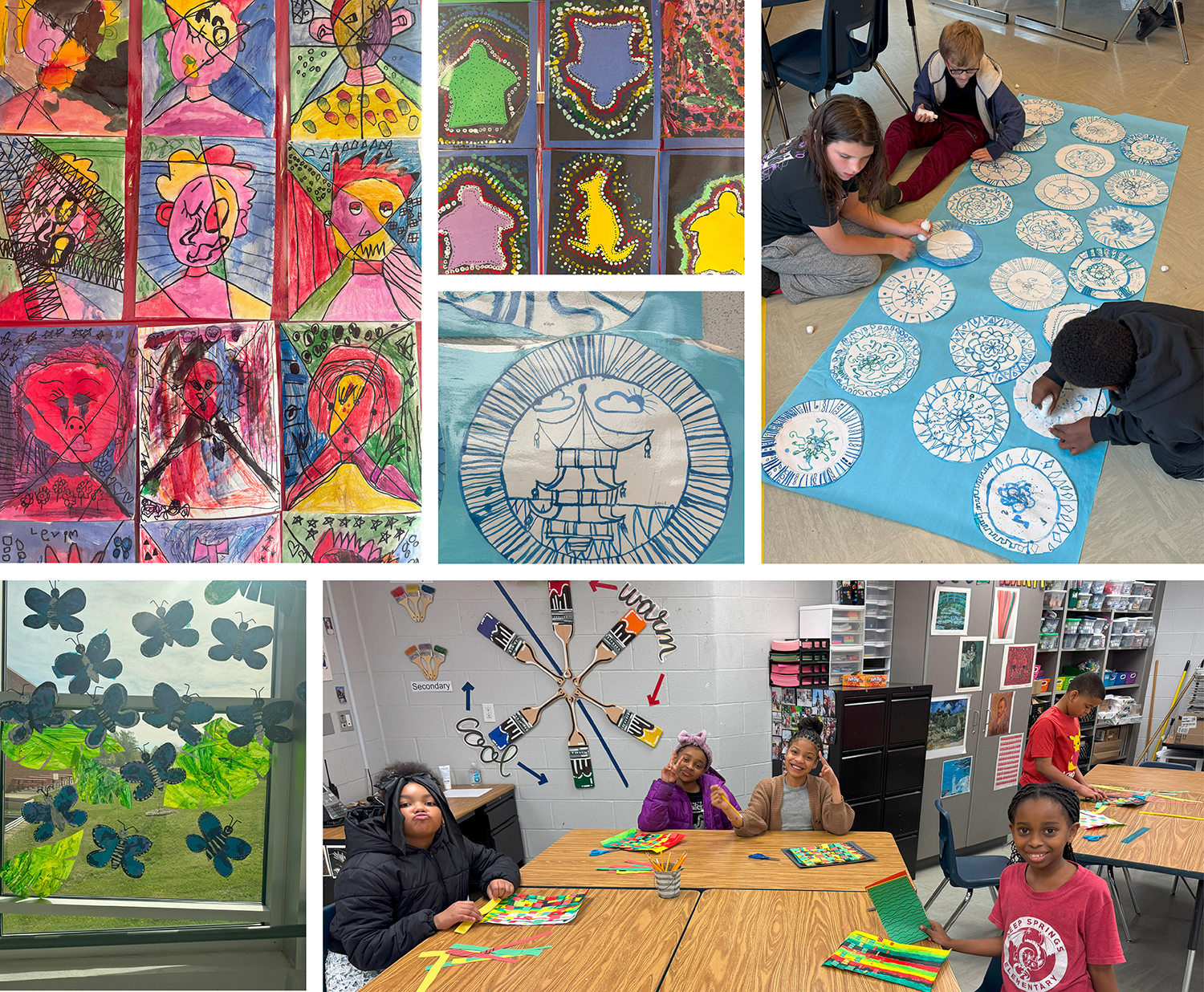
Deep Springs Elementary art teacher Emily Blankenship led projects that exposed the students to other countries and cultures and taught them historical information about the places. Blankenship has led such "Art Around the World" lessons in the past, but this year's grant allowed her to incorporate art supplies and techniques that many of her students had never used.
In one lesson, she described the ancient use of the color indigo and its spread through Asian trade routes, and the students created art representing Ming dynasty porcelain plates with indigo designs. In another lesson, the students learned about butterflies that live in South American rainforests, and created butterfly art. They also wove paper strips to evoke the pattern of kente fabrics worn in Africa, and they learned about the significance of different colors used in the weavings. They painted dot art of animals native to Australia in a lesson about aboriginal designs. They also planted cacti in pots that they'd decorated with Aztec designs in a lesson on Latin America.
Blankenship displayed much of the art for the May school carnival and a music performance.
Throughout the lessons, she said, "We've been talking about spreading kindness and connecting, and how respecting others also means opening our eyes to the differences around us and learning to love those around us."
Outreach
Many of the projects that art teacher Brittany McFarland has led at Mary Todd Elementary have involved outreach to organizations in the community.
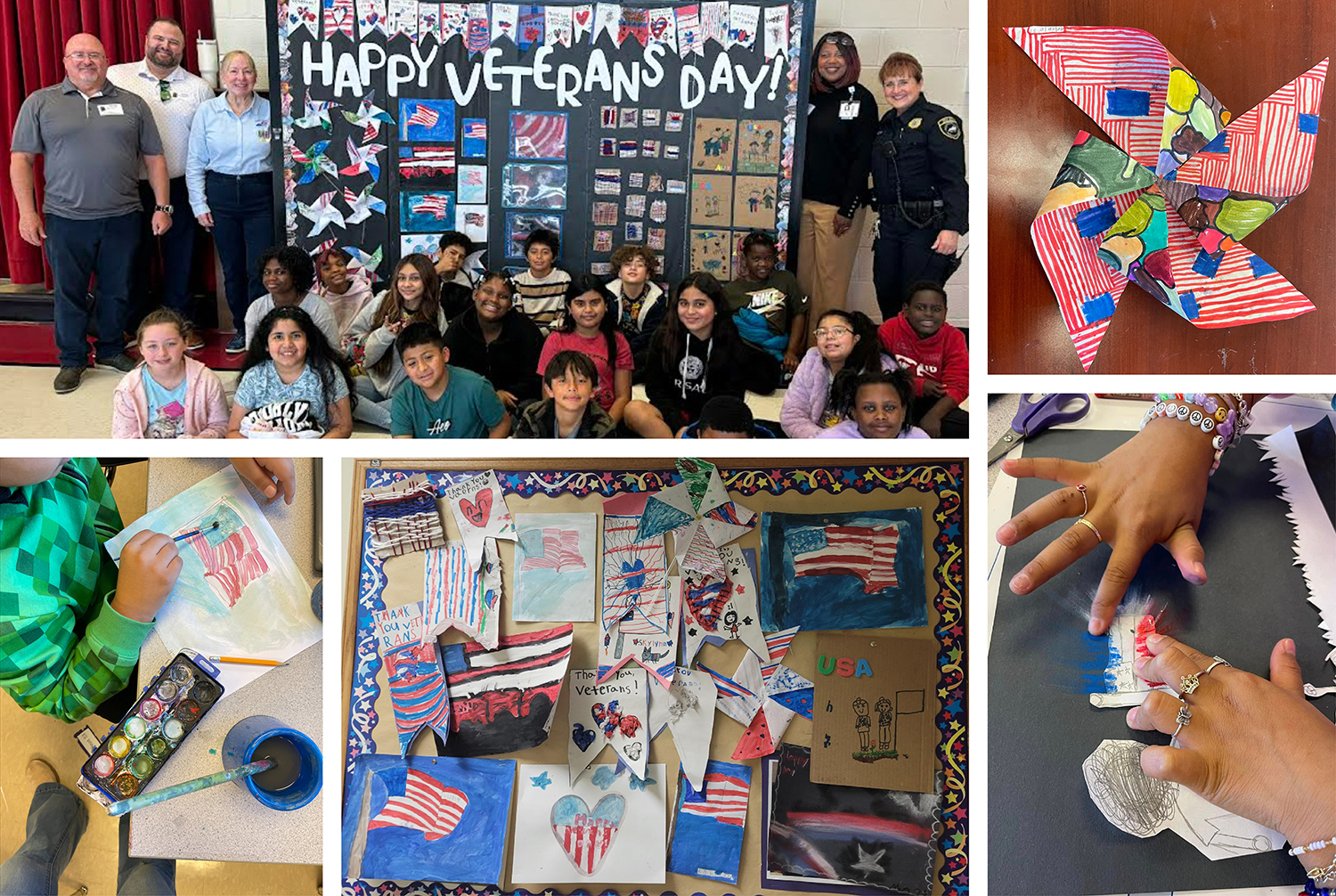
For Veterans Day, she worked with students to make artwork that they then arranged into a traveling display. That display served as the backdrop for an assembly honoring members of the military, and then the school gifted the display to a local veterans' center.
In the winter, the class made Christmas cards for patients at Lexington's Saint Joseph Hospital.
Around Valentine's Day, the students made heart-themed art that McFarland fashioned into a quilt pattern to gift to the hospital.
McFarland said that in using the grant, "I thought about how we could reach out into the community, and how we could involve the whole school in promoting kindness."
She noted that at her school, a lot of kids come from very low-income households, and they usually are on the receiving end of charity.
"I like that this gave kids a way to make meaningful art, and something positive to do," McFarland said. "They created artwork for others, and that filled their cup, so they can help others."
Comfort for survivors
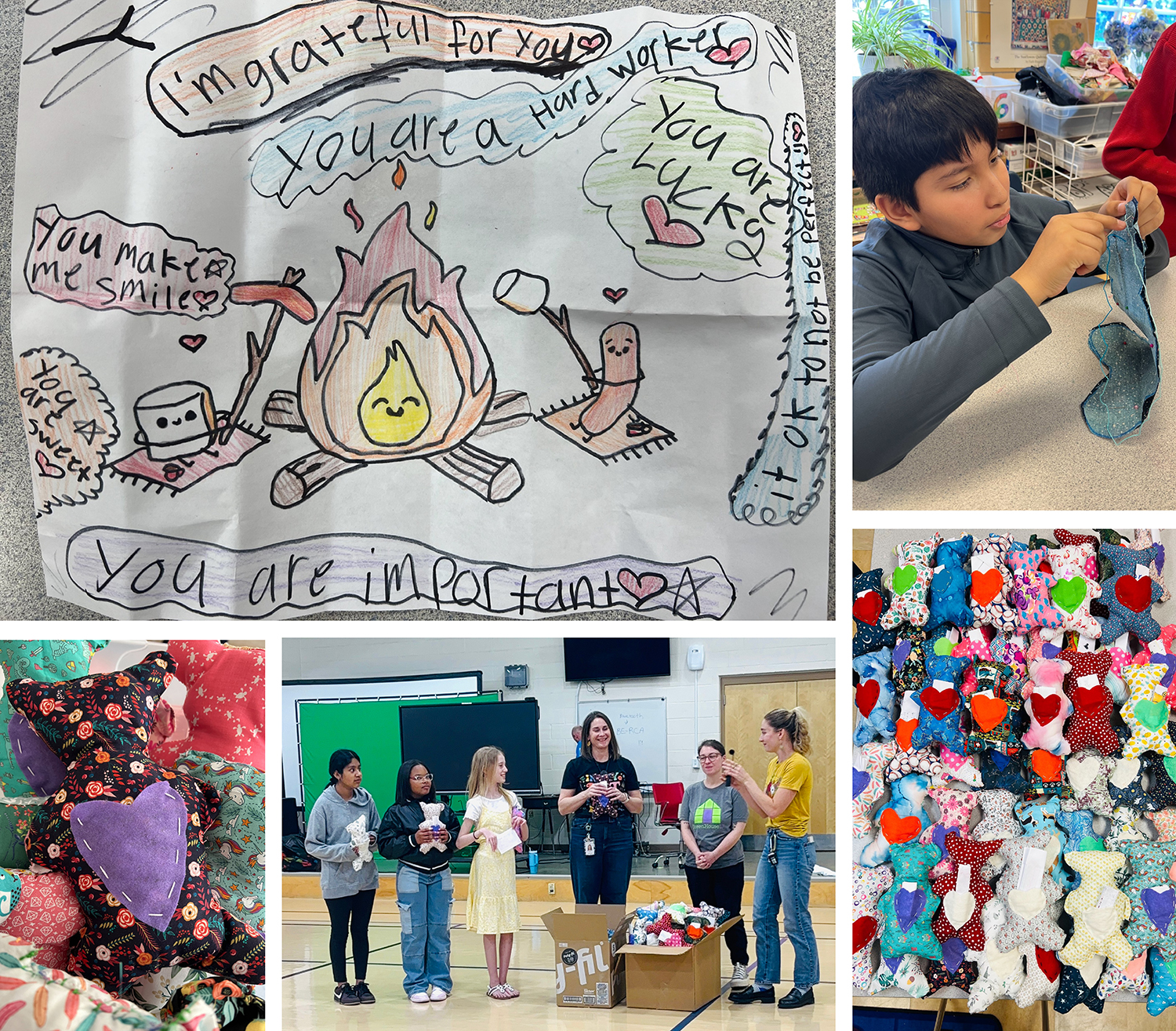
Arlington Elementary art teacher Kristen Blaker used the grant to purchase sewing materials, then led hand-sewing instructions for all the students at Arlington. She worked with the fourth and fifth graders to hand-sew teddy bears with a heart pocket on their chest. The students filled the bears with lavender from the school's garden for aromatherapy benefits. The students wrote personalized notes for the recipients, folded them up, and put them in each bear's heart pocket.
The students made nearly 80 bears for the children of survivors at the Greenhouse 17 domestic violence shelter.
Blaker says not only did the students gain what was a new skill for many of them, they also learned about a vulnerable population very much in need, and helped that population. "I talked to them about what it might be like to be a child who had to leave everything and go to a shelter," Blaker says. "Our students were glad to make something to bring comfort to those kids."
She said the students wrote meaningful notes, sharing their own experiences and words of encouragement. "They saw they could use art to connect with others," Blaker says.
Demetria Blair, violence prevention program manager for Saint Joseph's Creating Safer Neighborhoods Initiative, says, "In a culture where empathy, kindness, compassion and inclusion are more important than ever, this initiative is making a meaningful difference in the hearts of our youth, in the hallways of our schools and in the health of our communities."