
Dr. Kenneth Liao knew his patient, Tony Ibarra, was getting sicker. The 45-year-old had been in the intensive care unit at Baylor St. Luke’s Medical Center in Houston for months, waiting for a heart transplant.
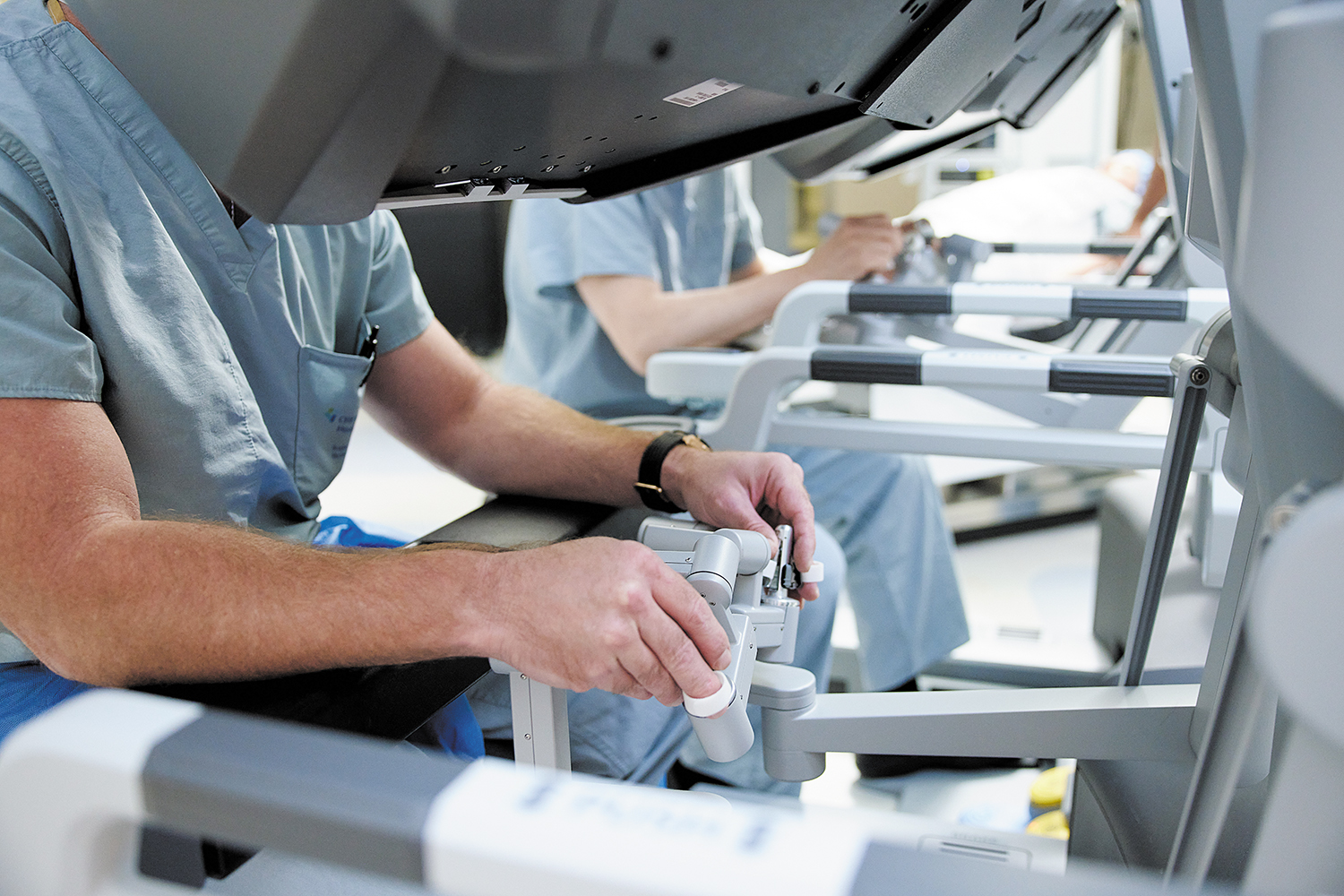
Meanwhile, Liao and his team had been performing heart surgeries using surgical robots, often three a day and in total more than 800, over the last six years.
Last year, they started planning how they might perform a robotic heart transplant to remove a diseased heart and replace it with a new one without splitting open the breastbone.
Liao presented the idea of having such a surgery to Ibarra, who was willing. In early March, Liao and his team performed the operation, the first fully robotic heart transplant in the United States. Liao's team is the second to transplant a heart with surgical robots. In September 2024, a team at King Faisal Specialist Hospital and Research Centre in Riyadh, Saudi Arabia, completed a fully robotic heart transplant on a 16-year-old boy.
"(What) I always tell my colleagues or the students, is that this happens, and you need two things: surgical expertise and the technology," said Liao. "And (when) these two things converge, then some miracle will happen. That's exactly what happened in this case."
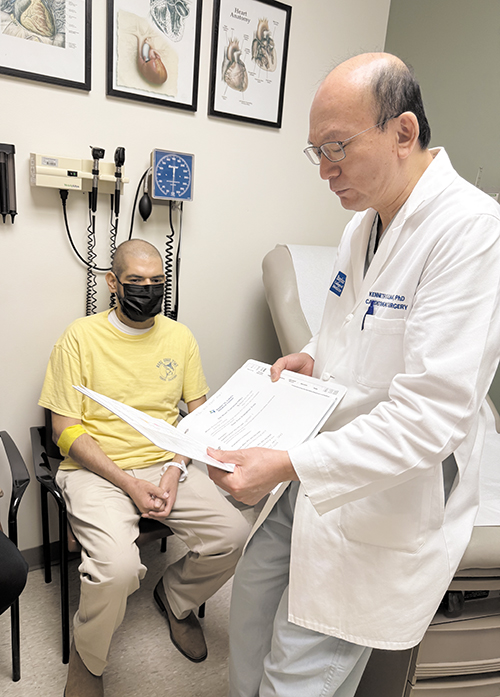
Liao is a professor and chief of cardiothoracic transplantation and circulatory support at Baylor College of Medicine and chief of cardiothoracic transplantation and mechanical circulatory support at Baylor St. Luke's. The medical center is part of St. Luke's Health, a subsystem of CommonSpirit Health.
Aligning circumstances
Ibarra had a history of heart failure after suffering a stroke. In November, he was admitted to the hospital as his condition worsened. He was on mechanical support devices for months in the ICU, waiting for a transplant.
Because he had been bedridden for so long, it would take longer to recover from a traditional heart transplant and he would be prone to infection. That made him a good candidate for the relatively gentler robotic approach, Liao said.
In March, a local heart became available for transplant and the surgical team was given more than 24 hours' notice, which gave them time to prepare.
Liao said the surgical robot is like a natural extension of his hands. He and his team had plenty of practice with it and were "doing parts of the heart transplant surgery every day," he said.
He added: "The historical part is that the robotic heart transplant is a little complex, because we put all the other robotic procedures together into one."
Precise work
In a traditional transplant, surgeons cut through the sternum, which leads to a longer recovery time and higher possibility of complications. Using the surgical robot, Liao's team cut a five-inch incision above the navel and snipped the cartilage at the tip of the breastbone to get behind the sternum. They then opened the preperitoneal space in the abdomen to reach the diseased heart.
After the team removed the old heart, they inserted the new one through the same abdominal space. They made three smaller incisions in the chest for other robotic arms necessary for the surgery. The approach helped prevent excessive bleeding and the need for blood transfusions.
The team could have changed course during the surgery and transplanted the heart the traditional way if needed, Liao said. "This robotic surgery didn't have any potential harm to the patient," he said. "That's the beauty of this. Everything we do is to the best benefit of the patient."
After the surgery, Ibarra recovered in the hospital for a month. Doctors monitored him closely for three months after his release. He doesn't need to be checked for another year, Liao said.
"I can't believe I'm alive," said Ibarra in an interview with Houston television station KHOU. "I always had God, so it came out good."
Another historic moment
Liao called the transplant a historic moment but a natural progression in the field of heart surgery. He pointed out other historic moments, such as the first human-to-human heart transplant in South Africa in 1967, and the implantation of a new type of artificial heart in a patient last year at Baylor St. Luke's. He added that other surgeons will innovate and perform robotic transplant surgery in new and slightly different ways.
Liao is already responding to texts and emails inviting him to conferences to tell others about the operation and he will teach others at Baylor St. Luke's his technique.
This aligns with the mission of the hospital's care providers to help others, he said, and to take a humble approach to their work.
"You work in this hospital, and then you do everything to help the people, and then you advance the technology to help the people. You transform the health care," he said. "And then that's it. That's all we do."