
Caregivers are trained not to refer to patients as "the gallbladder" or "the heart attack," so why would they refer to someone with a substance use disorder as a junkie, user or addict?
A group of caregivers with CommonSpirit Health are teaching their peers to use language that helps reduce the stigma surrounding substance use disorders.

The CommonSpirit Anti-Stigma Initiative started last year. About 60 staffers are now certified trainers and more than 300 of their peers have been trained.
The Centers for Disease Control and Prevention says more than one in six Americans above age 12 is living with a substance dependence.
"Our anti-stigma campaign is all about supporting patients that are impacted by substance use disorder, alcohol and drug addiction, and really creating more compassionate care and more awareness around the fact that addiction is a medical condition that's treatable and not a moral failing or a personal choice," said Kathy Krebs-Dean, the system's director of behavioral health, expansion and development who is leading the anti-stigma effort.
The effort ties with CommonSpirit's mission to provide care for vulnerable populations and to advance social justice, said Krebs-Dean, evoking the system's "Hello humankindness" slogan and related campaign.
"I think that there's probably no greater kindness than suspending any bias or judgment or at least trying to have that a little more in check when we are addressing patients," she said. "And sometimes it's not easy to do."
She said sometimes emergency rooms become catchalls for people who overdose on drugs or drink too much alcohol. Or they are the go-to place for someone with a related issue, such as a patient who breaks an arm because he fell off a ladder after drinking.
"We have this opportunity to understand more compassionately where a patient might be coming from," said Krebs-Dean. "There's just a lot of implicit bias sometimes when it comes to folks that are using alcohol or drugs or coming in for conditions that are related to that. Our work is around increasing stigma awareness."
Using expert resources
The initiative uses a curriculum from the nonprofit Addiction Policy Forum called Responding to Addiction. The instruction covers the science of addiction, its signs and symptoms, evidence-based treatment options, medication interventions, and engagement strategies.
"Research has found that individuals who experience stigma due to a substance use disorder are more likely to continue engaging in substance use and manifest greater delayed treatment access and higher rates of dropout," a description of the course on the Addiction Policy Forum website says. "Stigma prevents people who are struggling from reaching out for help and isolates families affected by the disease who fear being judged by their communities."
The training to be a certified instructor is in-person, takes about four hours and includes videos and other interactive components. The instructors are then able to facilitate virtual or in-person training. The training done by instructors can take up to three hours, although a shortened version of about 45 minutes is also available.

The instruction covers research that suggests genetic factors account for about half of a person's likelihood of developing a substance use disorder, and that substance use disorders get worse over time. The earlier the treatment starts, the better the chances of long-term recovery.
The training also includes suggested language to use while talking to someone with a substance use disorder. An example is: "I am concerned about how your alcohol/drug use may impact your health, and it sounds like you have some concerns too. I would like to have you talk to our behavioral health specialist/refer you to a treatment program to assess together what might be most helpful for you."
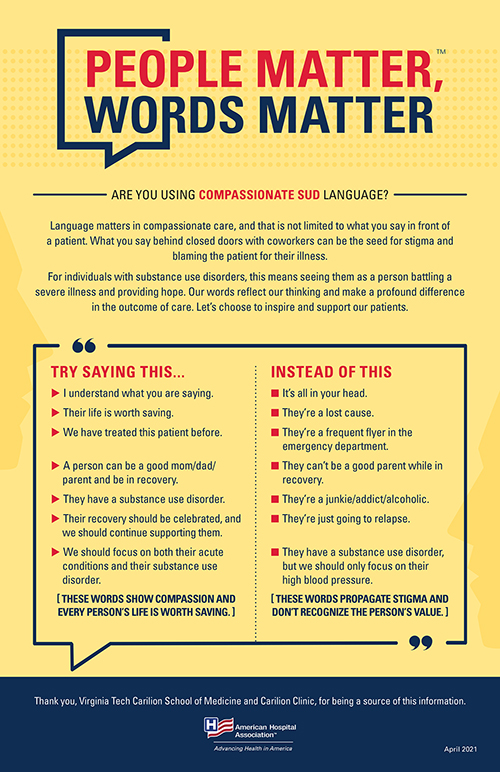
CommonSpirit also is partnering with the American Hospital Association on its People Matter, Words Matter campaign, which emphasizes that person-first and respectful communication is a powerful way to reduce stigma and increase compassion.
The campaign cites preferred language to use when speaking or referring to people with substance use disorders, and addresses other issues such as mental health, eating disorders and suicide. Posters and fliers reach visitors and caregivers who aren't otherwise trained.
A personal touch
Artinice Walker is a certified anti-stigma instructor who works as a substance use navigator and community health worker wellness navigator at St. Bernadine Medical Center in San Bernadino, California. The hospital is part of Dignity Health, a member of CommonSpirit Health.
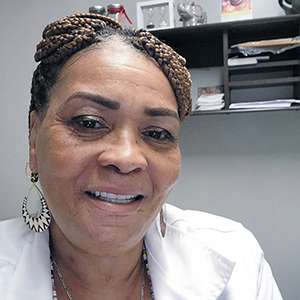
She is based in the emergency department and says her approach to patients is reflected in her actions, not just her words. She said she takes time to actively listen to patients "and not just assume that I know their situation."
Walker promotes an inclusive health care environment. "We include everybody in this opportunity to receive healing and treatment," she said of the ministry. "And I love that, because that amplifies what Jesus represented. You know, he wasn't judgmental. He didn't point fingers; he welcomed the sinner. He welcomed the prostitute. It didn't matter to him."
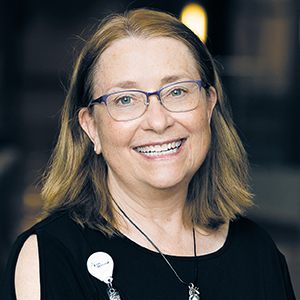
Karen Frank, is a nurse and the market director of quality at CHI Memorial Hospital in Chattanooga, Tennessee. She is also a certified anti-stigma instructor. One patient with substance use disorder presented her with a drawing of flowers and a poem he wrote about her called "The Lady Who Cares."
The poem read in part: "She shared with me a lot of love and what she knew, which was the road I should take for me to live, what I had to do, and that's why I'll always remember and never forget, the most caring person I've ever met."
Making a difference
Frank says instructors learn and convey why caregivers, who bring their own experiences or beliefs to their work, might use stigmatizing language or have stigmatizing feelings. "It's a delicate balance," she said. "It's exciting to share the work and the difference it can make."
Last year, the group leading the initiative surveyed about 500 providers to get a sense of their attitudes toward, and knowledge of substance use disorders. They will do another survey this year to see if that has changed.
One challenge is responding to the different cultures and attitudes toward substance use and disorders across the country, Frank said. More than 150,000 caregivers are employed by CommonSpirit across 21 states, and the sheer numbers alone are daunting.
In December, the group presented their anti-stigma initiative work at the California Hospital Association Behavioral Health Symposium to over 200 health care professionals from various health systems.
When Frank reflects on the anti-stigma effort, she recalls the story of the starfish.
The story goes that a little girl walks along the beach and sees many starfish washed ashore. She begins throwing them back into the water one by one to save them. People approach and say it's pointless to save so few starfish, given the number washed ashore. The girl responds while throwing another starfish back: "I made a difference to that one." Soon, the others join her in throwing the rest of the starfish back into the water.
"That's what we hope by our experience," said Frank. "By our teaching, by what we do, we can share with others how they can make a difference, and that'll carry on."