
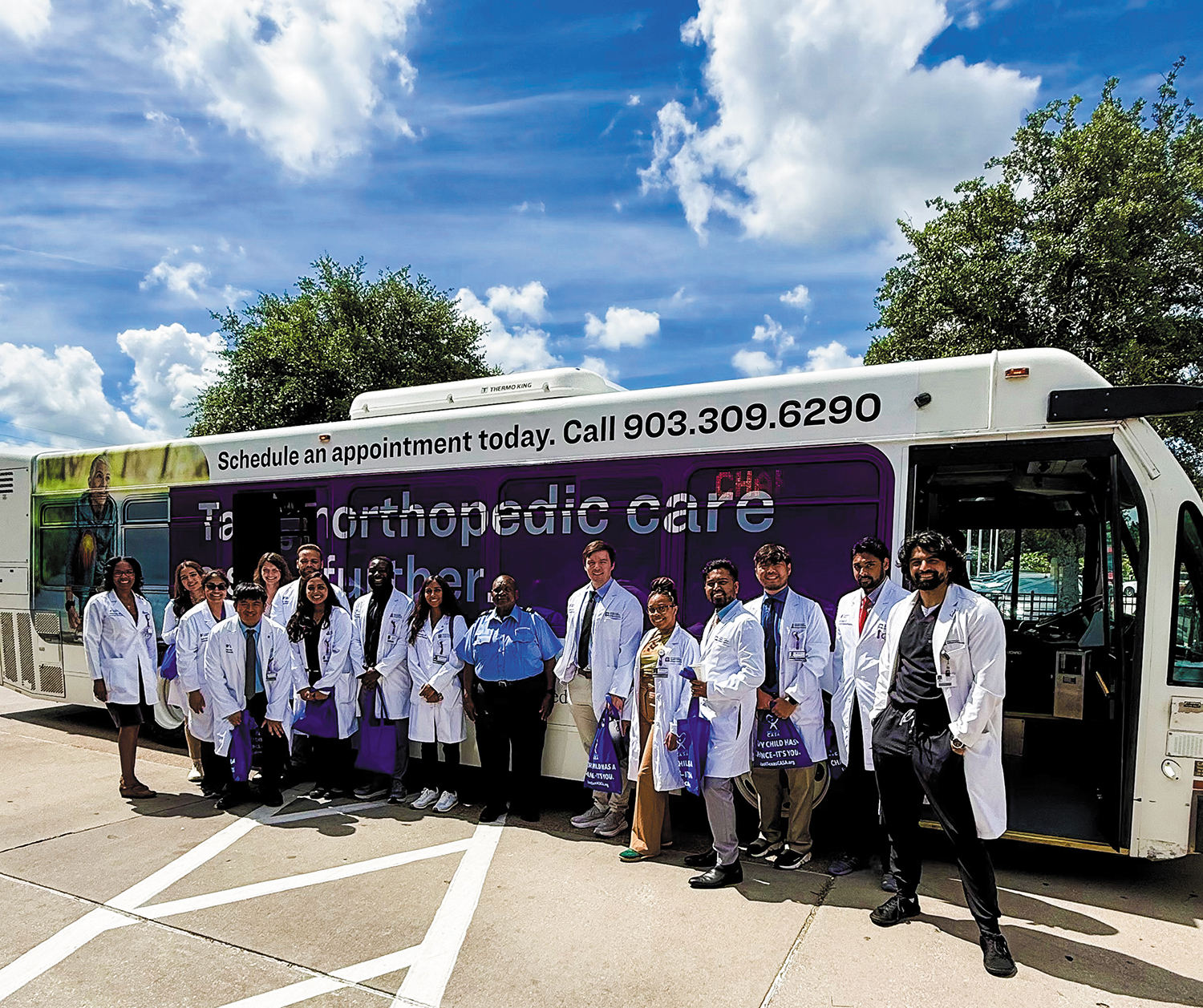
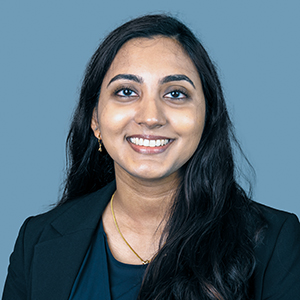
Even though Dr. Jasmine Thomas grew up in East Texas and completed a student rotation in Longview during medical school, it wasn't until a recent bus tour that she got an up-close perspective on what life is like for marginalized members of the Longview community.
She is one of 13 physicians who in late June started their internal medicine residency at CHRISTUS Good Shepherd Medical Center — Longview with a bus tour of the community they'll be serving for the next three years. On the tour, Dr. Tiffany Egbe of Good Shepherd described the area. The group stopped at two Longview nonprofits that serve vulnerable people. The physicians got to talk with leaders and clients of the nonprofits and hear about some of the challenges of living on the margins in Longview.
Thomas says she and the other tour participants "learned how much of a struggle some community members face. We learned about the stressors they have." Thomas says several of the doctors now want to volunteer with the nonprofits.
Egbe hosts the bus tour. "It's important to get to know your community and get involved and connected," she says.
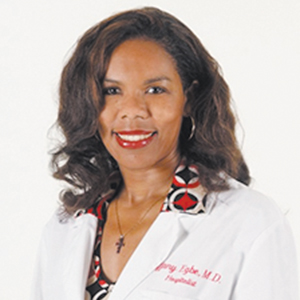
She says the tour helps the medical residents understand the context of residents' lives. "Much of people's medical treatment takes place after they go home from the hospital," she adds. "Do they follow through? If you don't have context, how can you help them?"
'Alarming' disparities
The annual bus tour is affectionately called "Who Are the People in Your Neighborhood?" in a nod to the old ditty once sung on Sesame Street. Egbe started the tours in 2018 after becoming the program director for the internal medicine residency at Good Shepherd. That three-year residency is a partnership between CHRISTUS Health and Texas A&M University College of Medicine.
Egbe says one reason she started the bus tour is that she saw very poor health outcomes in East Texas despite its great health care facilities and clinicians. She believes by seeing the whole picture of patients' lives and understanding their lived experiences, physicians can do a better job of treating them.
And change is necessary. According to analysis by the East Texas Health Project at the University of Texas at Tyler, Northeast Texas, "is a large, primarily rural region of the state that has alarming health and mental health disparities. The region suffers from some of the highest rates of chronic health conditions such as obesity, diabetes, and cancer. In addition, mental health problems such as depression, anxiety, and post-traumatic stress disorder are more common in Northeast Texas when compared to state and national averages."
That analysis adds that "many of these health conditions remain untreated or undertreated due to increased barriers to care faced by rural communities ... Particularly for mental health services, Northeast Texas suffers from a chronic shortage of mental health providers, long waitlists for behavioral health services, and increased travel time and costs for patients seeking treatment." The analysis says that the pandemic exacerbated disparities that existed before 2020.
Court advocates and pet adoption centers
Each summer, the bus tour takes place during the residents' orientation. The bus, which the city of Longview donates for the several hours of the tour, meanders around south Longview neighborhoods.
Egbe says this area used to be a hub of the city, but the population shifted north, leaving the southside in decline. Now, much of the south Longview population is low-income, with many elderly people on fixed incomes, she says.
The tour stops at nonprofit partners of Good Shepherd. In past years, these partner organizations have included Newgate Mission, Highway 80 Rescue Mission and OneLove, organizations that meet the needs of marginalized people; Longview Child Development Center; Longview Animal Adoption Center; East Texas Court Appointed Special Advocates; and the Refuge International medical mission organization.
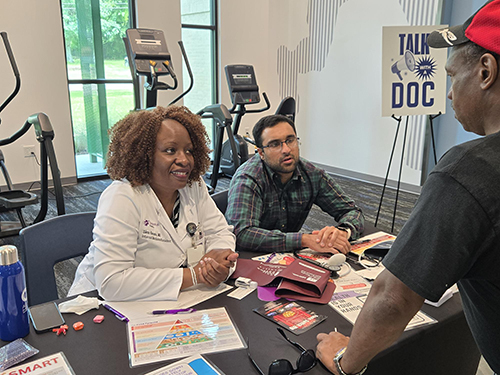
This year's stops were at the Court Appointed Special Advocates organization, where the visitors heard moving stories from volunteers who stand up for children in the legal system; and Buckner Children and Family Services, where the group met single moms and their families facing many barriers to success but getting help to address those concerns. At Buckner, the physicians played with children whose families are clients of the nonprofit.
Food deserts, money deserts
Egbe says that while touring south Longview, the physician residents can see that there are few grocery stores or banks, but many convenience stores and predatory check-cashing businesses. At the stops at the nonprofits, they hear about how difficult it is for families to get by. Learning about food deserts, money deserts and other social determinants of health, says Egbe, the physicians "immediately feel more empathy and respect for our patients" who face such obstacles. Through conversations, she adds, "the residents see how challenging access to health care can be."
In addition to fostering understanding among the physicians, Egbe seeks to encourage the physicians to build relationships with their patients as well as the broader community. She says a goal of the residency is to encourage internal medicine physicians to remain in East Texas, which has a severe shortage of primary care physicians.
An additional motivation for the bus tour and for the residency, she says, is to ignite "an initial understanding of and connection to the Longview community and to our patients. We hope to also awaken a lifelong calling to serve others and to continue to spread the healing ministry of Jesus Christ."
The strategies work. The new doctors often volunteer for the organizations they visit during the tour, as well as for other organizations they learn of from Egbe and others on the team that works with the residents. Also, many of the residents stay at Good Shepherd to practice post-residency.
Partner connections
The tour is just one part of the relationship between Good Shepherd and its nonprofit partners.
Many of the partners receive grant dollars from CHRISTUS Health's Community Impact Fund. The fund invests in nonprofits that address the social determinants of health.
Relationships with the partner organizations have paid off in unexpected ways, notes Egbe. For instance, when COVID first hit, Good Shepherd was in dire need of personal protective equipment, and one partner, Refuge International, gave Good Shepherd its excess.
New perspective
Physician resident Thomas says she found the bus tour enlightening. She was struck by the disparities endured by the families the tour participants met. But she was pleasantly surprised by the wealth of programs and resources that the nonprofits offer to help.
She says the tour gave her new insights that she certainly will apply in her practice. "When I interact with patients, I will be considering the family stressors, and what issues they are facing," Thomas says, "because that could affect their health and health care access."
She adds, "As part of a multidisciplinary team, if I know of issues facing my patients, I will want to work with case management to ensure those issues are addressed."