
Mercy is partnering with the company Wellvana to offer independent primary care physicians and advanced practice providers access to resources that focus on value-based care.
Mercy, based in Chesterfield, Missouri, in early December announced the 20-year partnership with Wellvana, based in Nashville, Tennessee.
With value-based care payments, providers are rewarded for good patient outcomes, not how many times patients come through the door.
Mercy and Wellvana will focus on improving patient outcomes and reducing the administrative burden for independent providers, helping them remain financially viable with access to value-based care programs and services. Participating physicians will get data-driven insights, care coordination resources and practice-level support.
A new study from health care consultancy Sage Growth Partners says 77% of health system and hospital leadership teams are planning to increase participation in value-based care models within two years, an increase from 57% in 2023.
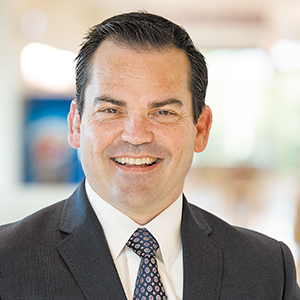
Dave Thompson, Mercy's senior vice president, chief growth officer and president, population health, spoke with Catholic Health World about Mercy's role in the partnership with Wellvana. His responses have been edited for length and clarity.
Why did you want to commit to this partnership?
It's a long partnership, and we were very thoughtful in wanting to bring in a partner who could help a broader base of providers within our communities that we serve today and communities that we may grow into in the future. We want to help those independent providers remain viable and actually thrive in a new kind of health care landscape.
Missouri, Oklahoma and Arkansas are our three central states, though we serve patients from the surrounding region, and our health care outcomes in those communities are not as high as they can and should be. Reimbursement is relatively pressured compared to the rest of the country. So we have a real crisis on our hands in terms of being able to provide the adequate level of access and ensure that providers are able to sustain their practices and thrive in a future model of funding as well as a future kind of health care delivery system.
Who are you trying to reach, and what does Mercy bring to the table?
With Mercy's provider base of approximately 5,000 providers and 50 hospitals, we're serving about 4 million patients a year. But in the communities that we serve, there's upwards of 30 million lives that can and should be served in a much more integrated way than they are today. A lot of times, independent practitioners are out on an island. They don't have the ability to negotiate in inventive alternative payment models. They don't typically have sophisticated electronic health records. They don't typically have strong connection points into regional or even local health care systems to be able to provide longitudinal care. They often don't have strong support for virtual care and digital care. All of those things are part of the broader vision that we feel should extend to all patients they serve.
Are you getting a lot of interest so far, and how many patients do you want to help serve?
Yes, we're getting a lot of interest, from probably about half a dozen relatively large independent primary care groups, even multispecialty groups. We think the initial number of lives is somewhere around 400,000, but we do think the opportunity is far greater than that.
How are these providers handling things now?
These are some of the strongest, most caring health care professionals you'll ever meet, and some of the most resourceful. But they're managing large panels of patients, they're managing a very suppressive reimbursement model that is not keeping up with inflation, and they're managing a more complex population with growing health care needs. All of those demands are putting massive constraints on independent practices. I think each year that goes by, it becomes more and more overwhelming.
Is Mercy hoping eventually for more partnerships with providers or that patients will eventually see Mercy providers?
It's definitely an opportunity to integrate care better in the communities we serve. Our hope is that we can wow independent primary care by rolling out the red carpet with this program where appropriate. We think we're the best solution for many of the communities we serve. A lot of our data would prove that we're one of the largest ACOs (accountable care organizations) in the country, with leading quality scores, and so we want to create a straight line of care for patients in the communities we serve. If we manage the populations well together — meaning we keep their A1C (or blood sugar) levels in check; we manage their multiple, chronic conditions; and maybe even start to reverse those conditions — then there's a win, win, win scenario for all parties, right?
As a patient, would I notice anything different?
You're going to see an enhanced level of engagement by the practice, and some of that is support from Wellvana, but it's behind the scenes. Wellvana will deploy nurse case managers in each of the practices to support the patients who have chronic conditions. You're going to see more access, a better level of availability by their practitioners. I think the patient's going to see access to better resources as well, including what Mercy can bring to the table in the form of virtual care services and digital extension of care.
How does this partnership with Wellvana help fulfill your mission as a Catholic Health care ministry?
I think the work we're doing at Mercy is fully aligned to our heritage. If you think about where Mercy started in Dublin, Ireland, and how the Sisters of Mercy came over to the United States, they ultimately went where health care was needed. They started out educating and housing the underserved, and then they transformed into delivering health care because that was what was needed. What we're really doing here is we're transforming the health care delivery system, and we're doing that in concert with meeting the needs of the communities that we serve. I love this work, and the Wellvana partnership couldn't be more aligned to that missional intent.