
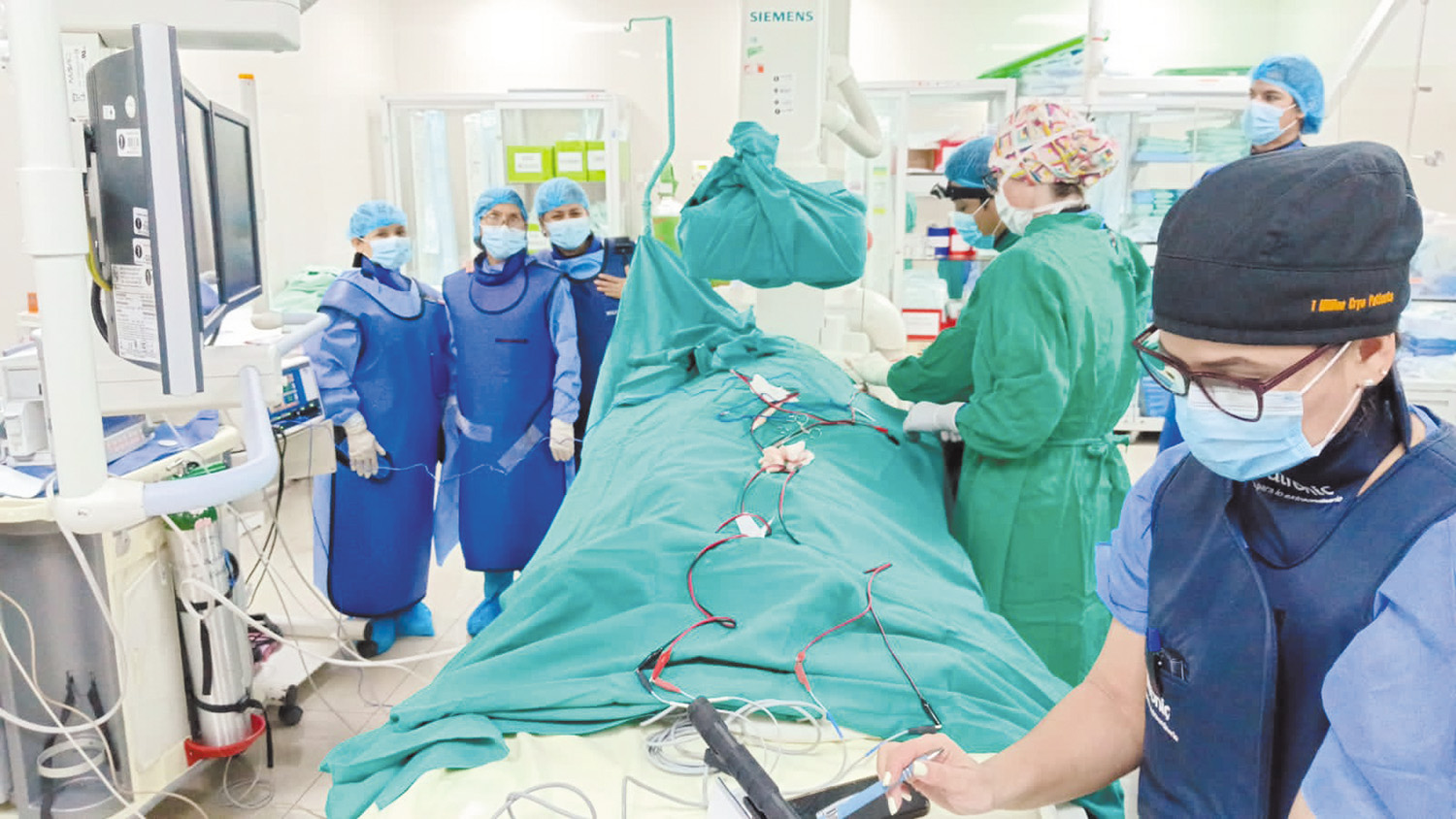
Fifteen years ago, when Dr. Carlos Albrecht's mother had a heart attack, it took four flights and 26 hours for him to get to Lima, Peru, to be at her bedside at a public hospital.
"I was in shock at how well she was taken care of," says Albrecht, who lived and worked in South Carolina at the time. "The mattresses were sagging. The beds were in bad shape. The infrastructure is horrible, but the quality of her care was spectacular, and they saved her life."
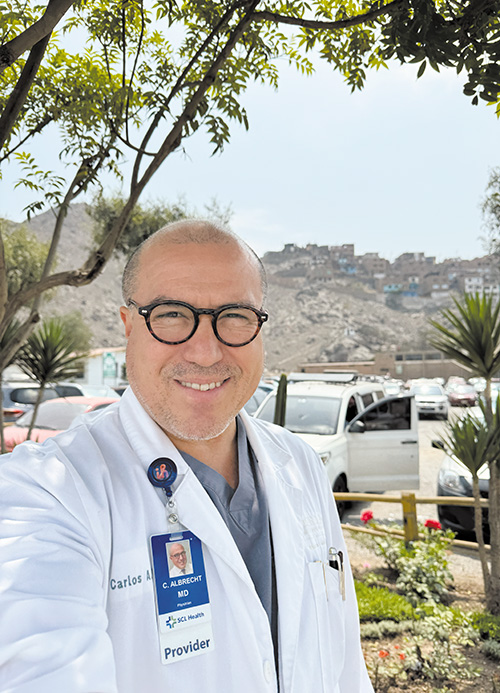
Albrecht, now a cardiologist with St. James Hospital in Butte, Montana, part of Intermountain Health, had received a free medical school education in Peru in the 1980s as the country was embroiled in social and political turmoil. He has since worked and lived all over the United States and the world. When he saw his mother, he realized he wanted to give back to the people in his home country.
"It just shocked me how much they could do with so little," he says. "For the first time in that long of a time it struck me, and I was like: I have to do something."
He asked the Lima hospital's chief of cardiology how he could help. The doctor replied that in the immediate term Albrecht could give a lecture on cardiac care, but in the future, he could serve at hospitals that treat the poorest people of Peru. The doctor said those hospitals could use his hands, resources and expertise.
For the last 14 years, Albrecht has traveled to Peru twice a year on his own time and at his own expense to provide pacemakers and defibrillators to the patients of those hospitals. Medical technology companies Medtronic and Boston Scientific donate the devices. Albrecht says the hospitals where he has volunteered can't afford the lifesaving devices.
Depending on the number of devices and amount of supplies he can bring with him, he can help about a dozen patients on each trip and show doctors in Peru how to implant the devices.
The challenge is that if the doctors don't implant the devices as often as cardiologists might in the United States, they lose dexterity and fall out of practice. "And so when I go, I teach them different ways to do it," Albrecht says. "So it's faster and quick."
Working with limited resources
For the first several years of his medical travel in Peru, Albrecht volunteered in Hospital Nacional Dos de Mayo, which was built in 1875 — but founded in 1538 — and is Lima's first and largest public hospital. Not much has changed to the hospital's layout since 1875, he says: Patients are grouped in open-air wards and most record-keeping is done on paper, with few computers. Hospital caregivers often ask patients to bring their own food and supplies like needles and sutures.
Albrecht says he brings everything he needs for the surgeries he performs in Peru.
During a 2023 trip, the equipment in the operating room at Hospital Nacional Dos de Mayo broke down and wasn't repaired, so for the last two years, Albrecht has helped patients at another public hospital in Lima, Hospital Nacional Hipólito Unanue. During his last trip, in July, because of the sponsorship of the St. James Hospital Foundation, Intermountain catheterization lab techs Noelle Coates and Kelli Bush accompanied him. The trio spent about a week helping their Peruvian counterparts implant pacemakers or defibrillators in 11 patients.
At the start of his medical career, Albrecht had done several rotations at both Lima hospitals and sees his work now as a repayment for his early education.
Life lessons
With the help of his children, Eliette, Dara and Lars, Albrecht set up a foundation called Lifebeat Peru several years ago to facilitate his volunteer work. The only donations he seeks are devices from the companies that make them. Over the years, all three of his children, who are now young adults, have accompanied him to Peru and in the operating room there to learn valuable life lessons.
"I'm not a prophet. I'm not a preacher," Albrecht says. "But I have a moral north. And I tell my kids: Always keep your moral north. When you're blessed to have things, just give it to others.
"A lot of people who are less fortunate, and for whatever reasons, they were born into a country with deep structural problems. I'm not going to fix it; I'll just do my part."
According to Human Rights Watch, five former presidents in Peru have been charged with corruption, and corruption has been a major factor in the deterioration of public institutions, public services, and the environment. As of 2023, 28% of the people of Peru lived under the national monetary poverty line of $67 American dollars a month, an increase from 20% in 2019.
Albrecht takes his trips over the Thanksgiving and Fourth of July holidays, a time that is not as disruptive to his schedule as one of Butte's few cardiologists.
"I cannot leave rural west America without cardiologists, either," he says.
He says his trips to Peru have made him reflect on the importance of addressing disparities in rural and urban areas of the United States. He has worked in both settings and encourages cardiologists to work where there is the most need. "You will make a forever impact," he says.
This year, Albrecht plans to welcome a doctor from Peru to shadow him and other cardiologists in Montana for two or three weeks. He considers it his obligation to teach and serve others.
After all, doctors in his home country helped him in his career and saved the life of his mother, now 89. She lives in Brazil and is doing great, Albrecht says.
"She dances in the streets," he says, laughing. "She travels everywhere. She goes to see my brother, sees me, she goes everywhere. When you dare to offer her a wheelchair, she says, 'No, no thank you. I can walk.'"