
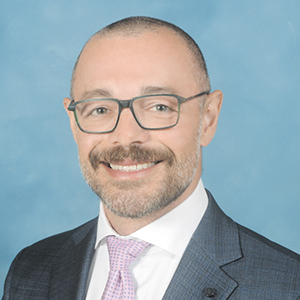
Though he grew up during the AIDS crisis that at its peak in the mid-1990s claimed more than 40,000 American lives a year, Dr. Robert Gioia remembers watching an animated program in eighth grade about sexually transmitted diseases that mentioned people dying of AIDS and not knowing about the disease.
In the intervening years, his knowledge about AIDS and HIV, the virus that causes the disease, has vastly grown. Gioia started his career as a dentist, got interested in preventive medicine, changed career paths, and now, at 50, he is a primary care physician and HIV specialist. He recently accepted the role of board chair of the Florida chapter of the American Academy of HIV Medicine.
Though the number of lives lost to AIDS in the United States has dropped significantly in recent decades — the Centers for Disease Control and Prevention put the total at 4,496 in 2022 — Gioia sees much more that can be done, given the advances in medication interventions.
"There's no reason why anybody needs to get HIV nowadays," he said. "Before, it used to be a cocktail of pills. Now, one pill can suppress the virus so that it's undetectable. So it's really come a long way."
Serving in a hub
Gioia is one of two primary care physicians at Holy Cross Medical Group's Wilton Manors office in Broward County, Florida. Holy Cross Health is part of Trinity Health. Wilton Manors, a hub for the LGBTQ+ community, is in a county with one of the higher HIV prevalences in Florida at 1,131 per 100,000 people in 2024 compared to 574 per 100,000 people statewide. Gioia and his husband are active in the gay community, and meeting people who were HIV positive pushed him to get more involved in helping to prevent the disease, he said.
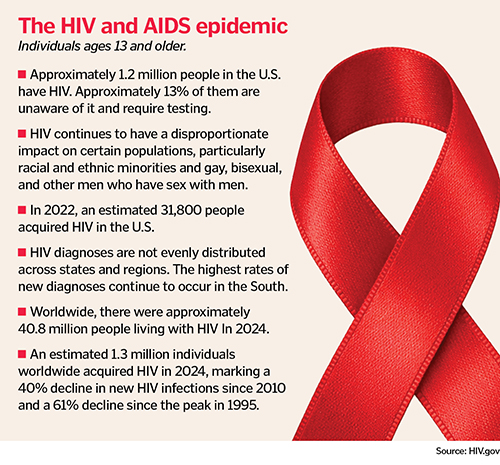
HIV, or human immunodeficiency virus, attacks cells that help the body fight infection, which can make a person more vulnerable to other infections and diseases, according to hiv.gov. If left untreated, HIV can lead to AIDS, or acquired immunodeficiency syndrome.
While HIV can affect anyone, in the United States, gay and bisexual men and men who have sex with men are most affected. Black and Hispanic people — who make up about 60% of Broward County's population — also are disproportionately affected by HIV compared to other racial groups.
The HIV diagnosis rate in Broward County has risen since 2021 and is higher than the state average and that of counties with similar demographics, according to the most recent Holy Cross community health needs assessment.
The assessment cites HIV and AIDS care as one of the eight most significant health needs, among other concerns like Alzheimer's disease and maternal and infant health. The assessment projects that the percentage of people above age 60 with HIV in the Holy Cross catchment area will grow "substantially" over the next decade. People at community listening sessions for the assessment said HIV is still largely seen as a "gay disease" and that Black men face unique struggles coping with mental health and HIV stigma.
Gioia said he has seen people test positive for HIV, despite the availability of medication interventions such as PrEP, or Pre-Exposure Prophylaxis, which can prevent the spread of HIV. Meanwhile, antiretroviral therapy can help people with the virus live long and healthy lives.
Promoting education
In his role leading the Florida chapter of the American Academy of HIV Medicine, Gioia hopes to promote education about HIV among physicians, especially those in primary care.
"Keeping things within primary care, I think, leads to better outcomes, instead of having a lot of different referrals," he said.
He said his patients with HIV are highly educated and aware of how to take care of themselves. Many are in relationships where one partner is HIV positive, the other is negative, and both are healthy.
"They already know they're living with a chronic illness, and so they just take more responsibility in trying to prevent other things," he said.
He sees challenges in fighting the virus. One is that there's a stigma among some populations against using PrEP medication — which can be taken orally or through long-acting injectables — because they don't want their families to find out they are gay. Another is that it's sometimes difficult for patients on Medicare to find a pharmacy that will supply PrEP medications through Part B of the insurance program for older Americans.
Anyone taking HIV preventative medicine is required to be tested every three months, Gioia said. People can do rapid HIV tests at home, at the Holy Cross Medical Group's office, or at other testing locations.
He hopes to see other providers of care to HIV patients follow the mission-driven example of Holy Cross, which recognizes Southeastern Florida's large LGBTQ+ population and strives to provide affordable care to cover the special needs of that population, as it does with others.
"Our office helps with their mission, because we do provide a safe place where at least people feel safe to come to us and are very honest to us," he said.