Catholic Health World Articles

February 20, 2026

Trinity Health prioritizes nutrition, using clinical and social care strategies to promote food security

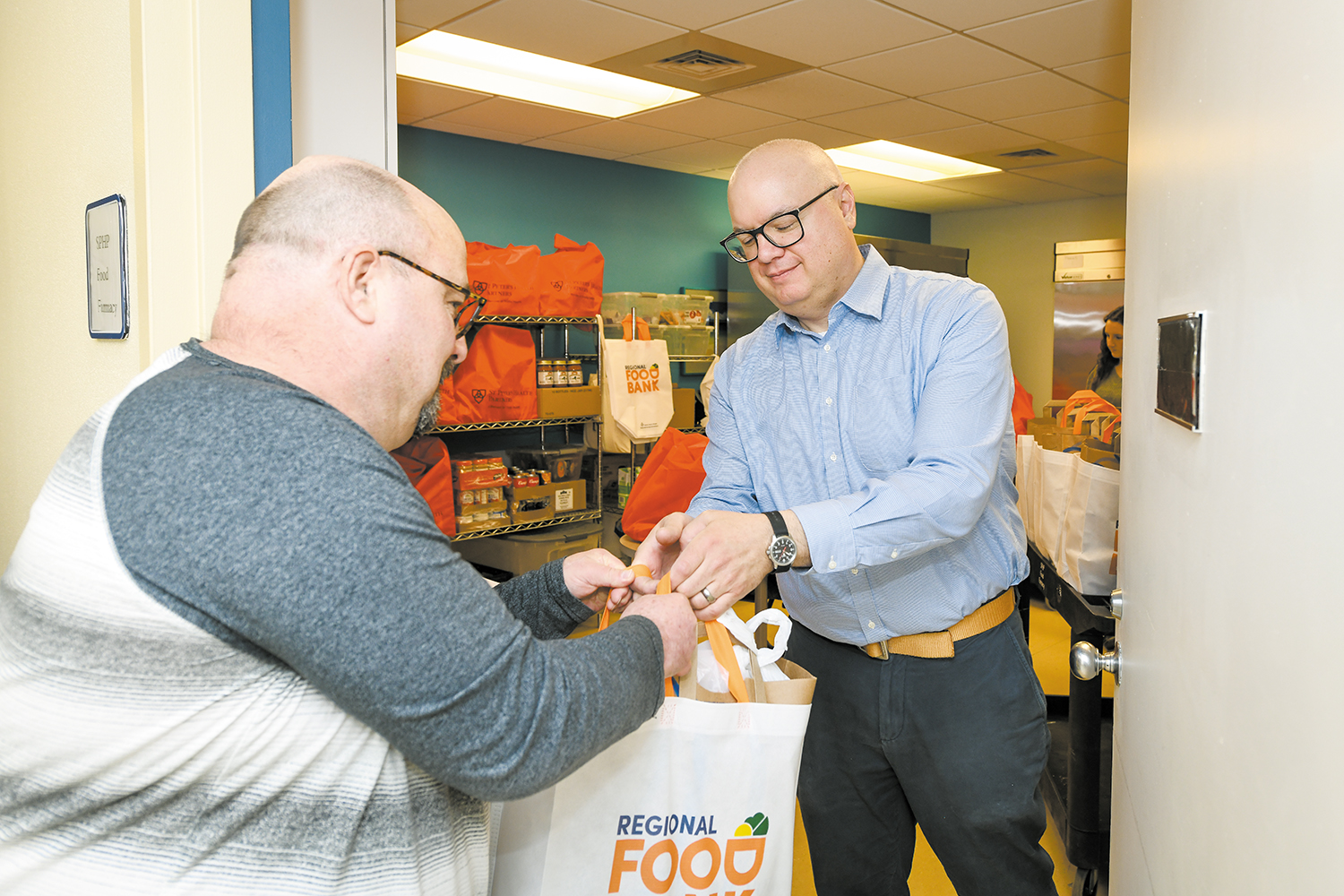
Matt Senko, right, provides a Food Farmacy bag to a program participant. Senko is the coordinator of the Food Farmacy program in the department of community health and well-being at St. Peter's Health Partners in Albany, New York. St. Peter's is part of Trinity Health.

Food insecurity is an intractable and long-standing issue in the U.S., and a concern that Trinity Health is prioritizing throughout its 25-state footprint through its Food Is Medicine strategy. It recognizes that nutritious food is an essential component of overall health, but many people do not understand that connection or they face significant barriers to healthy eating.
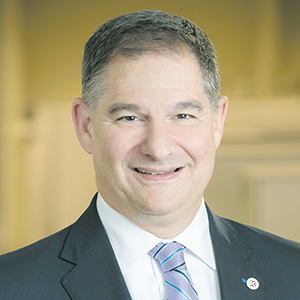
Roth

Through Food Is Medicine programs, multiple Trinity Health regions address nutrition concerns, in the clinical environment and the broader community. While each Trinity Health facility's particular approach varies based on local circumstances, all of them use some type of patient screening for food security, partnerships with community organizations to address food access issues, education of patients and community members as well as data collection to monitor outcomes.

Dr. Daniel Roth, Trinity Health executive vice president and chief operating officer, is helping to lead Food Is Medicine. "We're educating people on food and lifestyle, and their connection to health … and we're ensuring that they have ways to connect to healthy food in their community," he says. "We're making it easy to do."

He adds, "We know we're saving lives."

Olivia Thomas, director of nutrition innovation and implementation at Boston Medical Center, far left, teaches a culinary medicine masterclass in Holy Cross Family Health Center's culinary kitchen at the Fort Lauderdale, Florida, hospital campus. The masterclass was part of the third annual Food Is Medicine event in October at Holy Cross Health, part of Trinity Health. Photo courtesy of Holy Cross Health

A deepening crisis
About 47.9 million Americans lived in food-insecure households in 2024, with some minority populations especially at risk, according to an analysis of the December 2025 Household Food Security report from the Department of Agriculture's Economic Research Service.

The report's findings "highlight a crisis that is set to deepen as the deepest cuts to the Supplemental Nutrition Assistance Program in history take effect," the nonprofit Food Research & Action Center said in a release. According to the USDA, an average of about 41.7 million people per month participate in the federal nutrition program, with benefits averaging $187.20 per participant per month.

Food insecurity consistently ranks as a top concern in community health needs assessments from nearly half of Trinity Health's hospitals and their community partners. Trinity Health clinical data shows that food insecurity is a persistent issue for many patients.

Barriers to healthy eating
Roth says food insecurity has two main facets: Can people afford nutrient-rich food and can they buy that food in their area? Many areas that Trinity Health facilities serve lack grocery stores, a persistent and widespread problem.
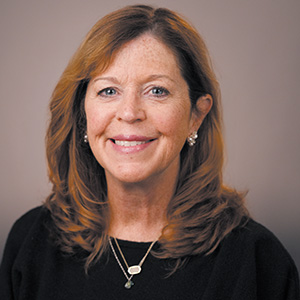

Stone

Alessi

Sheilah McCart, Eric Stone and Carolyn Alessi are Trinity Health colleagues advancing the Food Is Medicine work in local markets. They explain that numerous barriers can exacerbate food insecurity. The rising cost of living can make it too expensive to buy nutritious food, says McCart, manager of community engagement, community health and well-being at St. Peter's Health Partners in Albany, New York. Some people do not have the transportation needed to travel to stores with healthy foods, says Stone, director, community health and well-being at St. Joseph's Health, Syracuse, New York. Maintaining food access over time can be especially challenging, notes Alessi, regional director of community health and well-being at Trinity Health Of New England.

Whatever the barriers and issues, poor nutrition can have serious — and even life-threatening — implications, says Roth. Unhealthy diet is linked to some of the top health concerns in the U.S., including heart disease, cancer, diabetes, kidney disease and chronic liver disease. An analysis from the nonprofit National Institute for Health Care Management says these types of chronic conditions are among the nation's leading causes of death and account for an overwhelming percentage of health care spending. The institute's analysis says some minority communities are particularly at risk.
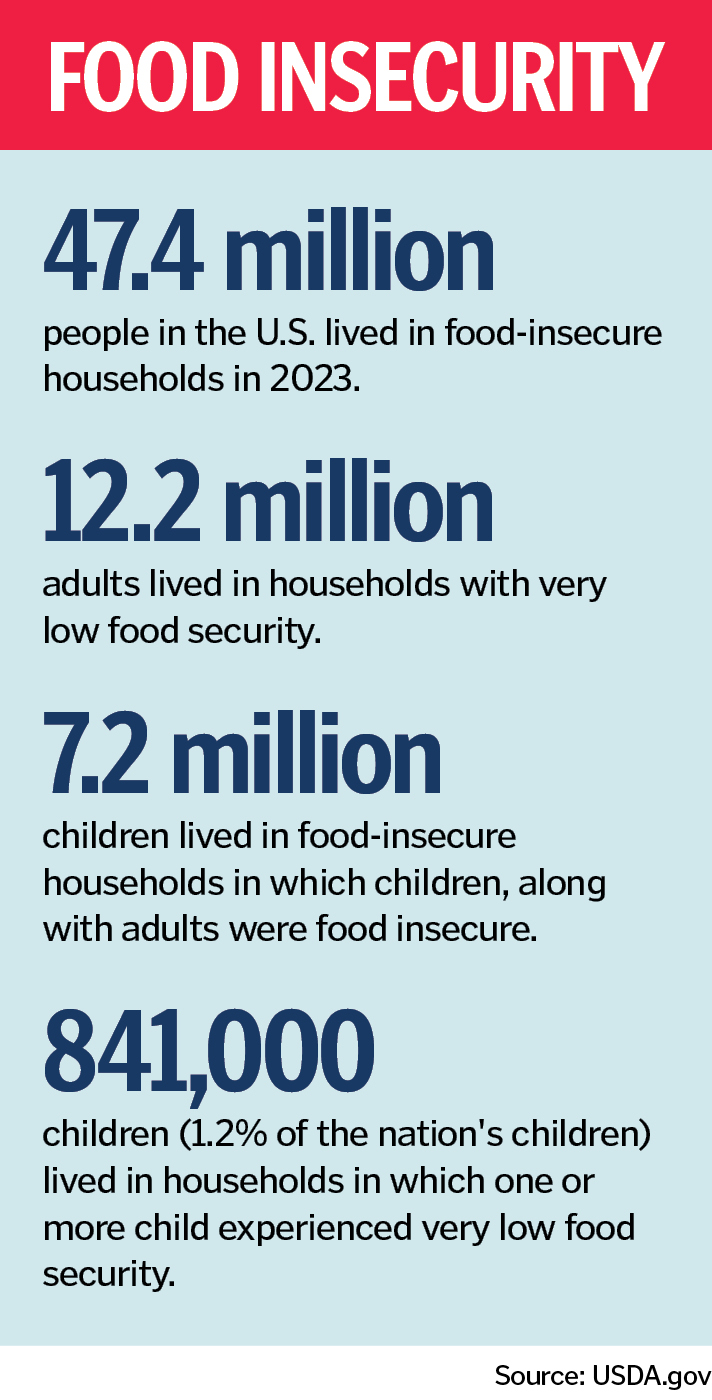
Some of the top chronic conditions on Trinity Health regions' radar screens through Food Is Medicine include diabetes, stroke and cardiovascular concerns, including hypertension.

Tools for success
Roth says Trinity Health enables local markets to tailor programming, based on particular needs and resources in each community.

But the regions' work has common aspects. All include both clinical initiatives that apply to Trinity Health patients as well as population health approaches that apply to the broader community. On the clinical side, all are taking advantage of Trinity Health's electronic medical record, which has screening questions on health-related social needs, including food insecurity. All are forging partnerships with community partners, including food pantries and social service agencies. And all are incorporating nutrition education, often from registered dietitians. Multiple regions involve community health workers in their programming. These workers help with coaching, navigation and follow-up, for both Trinity Health patients and community members.

Roth adds that all the programming is grounded in whole-person care concepts, addressing people's needs — body, mind and spirit.

Local iterations
Food Is Medicine programming in some areas Trinity Health serves includes:

  • Trinity Health New York: Trinity Health's Albany and Syracuse markets offer the Food Farmacy initiative, which includes 12-week group sessions for patients who have specific chronic conditions and who have screened as food insecure. The participants get food and healthy lifestyle education, help addressing socioeconomic concerns, free healthy food if they need it and help connecting with community partners that can meet identified needs. Both the Albany and Syracuse markets also offer patients and staff members access to on-site emergency food supplies. The Albany program involves community health worker support.
  • Trinity Health Of New England: Saint Francis Hospital in Hartford, Connecticut, has made community health workers a central part of its Food Is Medicine work. Saint Francis Hospital engaged a committee of community partners in developing an intervention for people with food insecurity and unmanaged chronic disease. Piloted at the hospital's safety net clinics and then broadened to patients of the primary care practices within Trinity Health Of New England's Medical Group, the program provides intensive support from specially trained community health workers to patients diagnosed with certain chronic illnesses. The community health workers provide education on making healthy choices, coaching on nutrition and help with addressing socioeconomic barriers.

In August, a volunteer at The Farm at Trinity Health Oakland prepares a soil bed to be planted using a technique called broadfork aeration. The technique improves vegetables' uptake of water and nutrients. The farm in Pontiac, Michigan, is part of Trinity Health's Food Is Medicine programming.
  • Trinity Health Michigan: Three Trinity Health Michigan sites — Ann Arbor, Muskegon and Oakland — run Food Is Medicine farm programs on their hospital campuses. These farms provide community-centered food programs and seek to improve health equity while investing in the local food system, according to Trinity Health Michigan. The programming includes the Farm Share program that offers produce boxes and cooking education to community members, the Farm Share Assistance program that provides fresh fruit and vegetables to food-insecure people, and the Produce to Patients program that supplies patients with fresh produce. The farms also supply produce to farm stands and food pantries and for nutrition classes. In the Oakland market, retired emergency department physician Dr. Ross Weinstein recently announced a $4 million estate pledge to expand the farm's work and add a community food hub on the hospital campus.
  • Trinity Health Florida: As part of a larger body of work, Holy Cross Health of Fort Lauderdale, Florida, hosts an annual Food Is Medicine Symposium. The October 2025 gathering drew more than 100 people — in-person and virtually — to learn how to improve health through nutrition. Sponsored by Holy Cross's community health and well-being department and local partners, the event featured presentations by experts in food policy, nutrition science and community health. Holy Cross says a highlight of the symposium was the Culinary Medicine Masterclass, three hours of hands-on learning on how to prepare healthy, culturally relevant meals that support chronic disease prevention.

Education Coordinator Sydney McCann teaches campers to harvest radishes during Sprouts Mini Camp at McLaughlin Grows Urban Farm at Trinity Health Muskegon in Michigan in June. The urban farm is part of the Food Is Medicine programming.

Roth says this and other Food Is Medicine work results in measurable improvements in health outcomes. This includes reductions in readmissions and emergency room visits and improvements in chronic disease management.

"We are joining with partners to change the dynamics in communities that are under-resourced," Roth says. "We are increasing their food access."
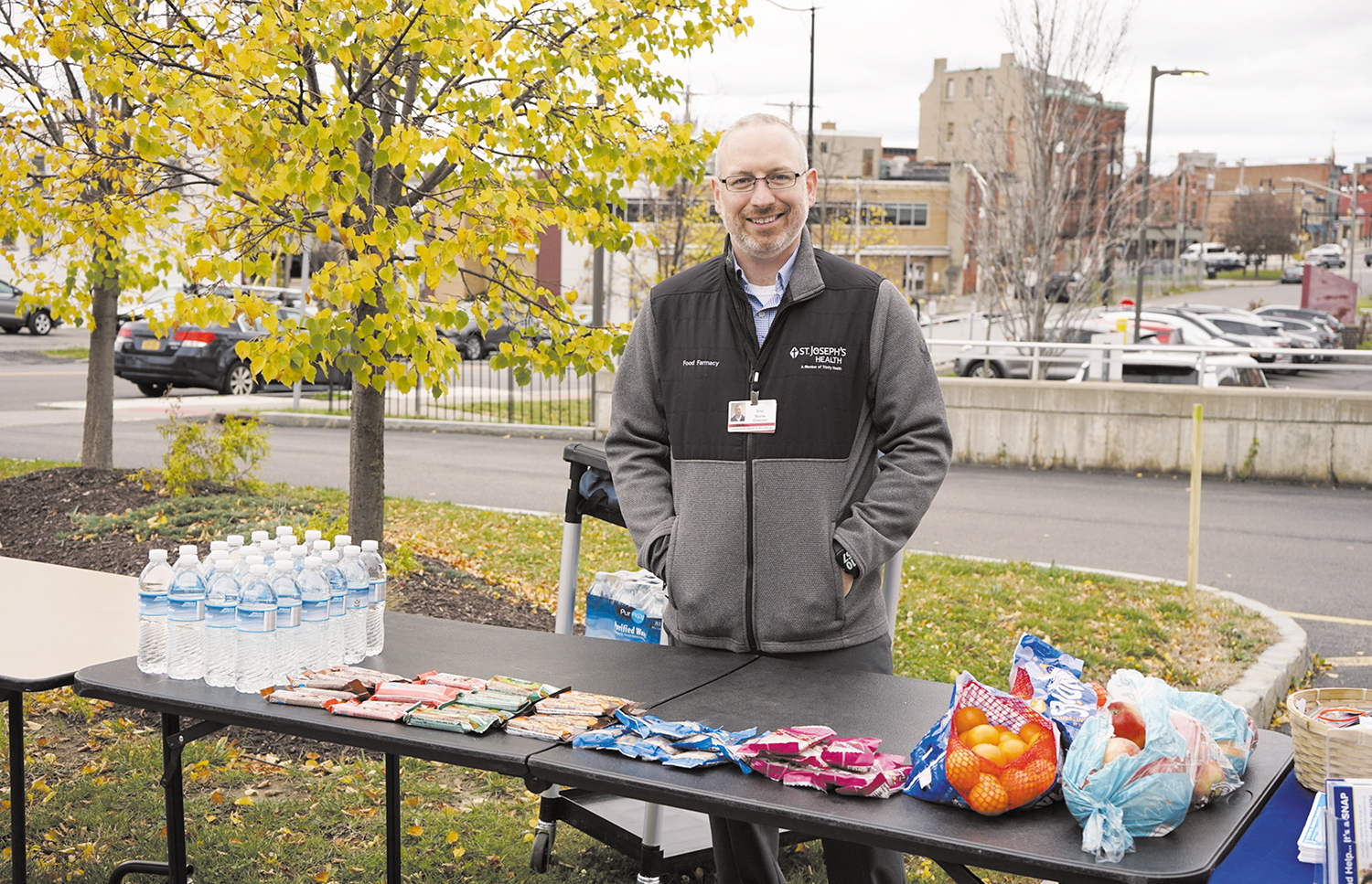


Trinity Health New York's Food Farmacy offers healthy food and nutrition education
Eric Stone provides healthy snacks during a community coat drive at Trinity Health's St. Joseph's Hospital in Syracuse, New York. Stone is director of community health and well-being at St. Joseph's Health, which runs St. Joseph's Hospital. The hospital's Food Farmacy program funded the snacks.

At Trinity Health's St. Peter's Health Partners in Albany, New York, and St. Joseph's Health in Syracuse, New York, patients and community members have gained access to healthy food and improved their health outcomes through the Food Farmacy program.

Representatives from those hospitals' community health and well-being departments say Food Farmacy has been a success, in large part because the program has a screening system to identify people who could most benefit from chronic disease management. It also has a behavior change model that provides participants with education and resources to promote lasting results, access to professionals to coach people and help them navigate the system, and access to multiple sources of nutrient-rich food.

Eric Stone, director of community health and well-being for St. Joseph's Health, says, "Our focus has been on the education and social care pieces."

Sheilah McCart, manager of community engagement, community health and well-being at St. Peter's Health Partners, says it is critical for health care providers to address nutritional deficiency, especially as it relates to chronic disease management. Lack of healthy food "leads to so many chronic diseases, including diabetes and hypertension. In pediatric patients, it can cause learning issues. For pregnant women, it can lead to gestational diabetes, which can lead to poor pregnancy outcomes," she says.

In both the Albany and Syracuse areas, there are neighborhoods with few or no grocery stores selling fresh, healthy foods. McCart says the cost of living has been escalating faster than many people's paychecks. This has resulted in high levels of food insecurity, she says. Many people eat cheaper, heavily processed convenience food that doesn't nourish their bodies. There is a high level of nutrition-related chronic disease in these low-income areas, she says.

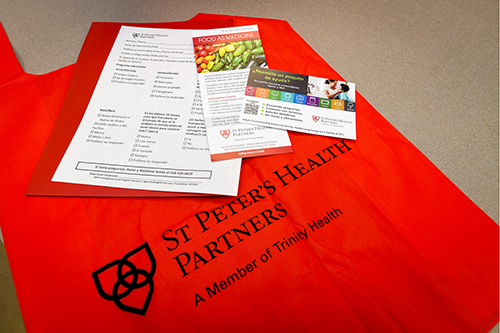
St. Peter's Health Partners puts educational and resource materials in emergency food bags that it has on hand for people who are food insecure. The food bags are part of the Food Is Medicine programming.

In Albany, the Food Is Medicine team uses Trinity Health's patient database to identify people with type 2 diabetes, gestational diabetes, pediatric obesity or malnutrition, or hypertension who also have revealed through Trinity Health's screening tool that they have socioeconomic barriers to health. Those patients can participate in the 12-week Food Is Medicine program where they receive nutrition education from a registered dietician. They also can work with community health workers from local organizations to get help navigating socioeconomic barriers to health and to learn where they can access food.

In Syracuse, Stone says, the community health and well-being department worked closely with St. Joseph's primary care clinical network to develop its iteration of Food Is Medicine. Launched in 2021, it serves a similar patient population with similar programming to the Albany program.

The Food Farmacy program includes emergency food aid for patients, staff and community members, with some of this aid provided through partnerships with community organizations.

Through the Emergency Food Bag program in Albany, St. Peter's keeps a stock of bags of nutritious food for patients to ensure a three-day supply upon discharge. The program started in 2020 in the emergency department and behavioral health units and has since expanded throughout St. Peter's network.

Both St. Peter's and St. Joseph's have on-site food pantries in discreet locations where colleagues can get nutritious food.

McCart and Stone mention that both the Albany and Syracuse hospitals have extensive relationships with community-based organizations to ensure community members generally get access to socioeconomic screening and food aid. Community health workers at these organizations can screen local people for food needs and refer them to help. Local pantries provide groceries, including options that take into account cultural preferences.

The Mother Cabrini Foundation is a top grant source for the Trinity Health New York hospitals' programming.

Both the Albany and Syracuse teams have tracked results of Food Farmacy programming. In fiscal year 2025, the Albany and Syracuse programs together served 1,367 people, all of whom were screened for socioeconomic need. This count compares with 1,185 people served the prior fiscal year. In fiscal year 2025, the combined Food Farmacy programs provided access to 70,350 meals as compared with 49,446 the prior fiscal year.

The Food Is Medicine chronic disease management program in Albany has served more than 800 people since its 2020 inception. For a diabetes cohort of that program, participants lost an average of 10.3 pounds and had an average decrease in their A1C score of 3.10%. In the Food Is Medicine program for hypertensive and diabetic people, offered in partnership with community agencies, participants saw an overall 1.9% decrease in their A1C numbers and a decrease in blood pressure from on average 148/84 to 136/78. The Food Is Medicine Program in Syracuse has served more than 400 people since its 2021 inception.

"We've learned that we need to motivate people" to help them change, says Stone in Syracuse. "We need to give them tools and education."

— JULIE MINDA
Community health workers play key role in Saint Francis' Food Is Medicine program
A group learns how to incorporate "vegan-forward" foods into their diet during a session in the teaching kitchen at Saint Francis Hospital in Hartford, Connecticut. The nutrition education is part of Saint Francis' Food Is Medicine programming. Saint Francis is part of Trinity Health.

In all the community health needs assessments that Saint Francis Hospital in Hartford, Connecticut, conducted in the nine years leading up to 2022, nutrition-related health issues had ranked as top concerns. At the same time, the hospital's three safety net clinics found that chronic health conditions linked to nutrition were prevalent among their patients.

To address such concerns, Trinity Health Of New England's community health and well-being department assembled a committee of community partners to study the problem and develop solutions. In conjunction with the primary care practices within Trinity Health Of New England's Medical Group, they developed Food Is Medicine. Launched in 2023, it is a six-month chronic disease management program centered on healthy eating and behavior change. Community health workers hired by Saint Francis through grant funding "tethered lifelines to participants during their time in the program," explains Carolyn Alessi, regional director of community health and well-being at Trinity Health Of New England. Saint Francis is part of Trinity Health Of New England.

Alessi says the engagement by community health workers has proven vital.

Chronic conditions linked to nutrition, including hypertension, congestive heart failure and type 2 diabetes "are huge contributors to poor health outcomes," she says.

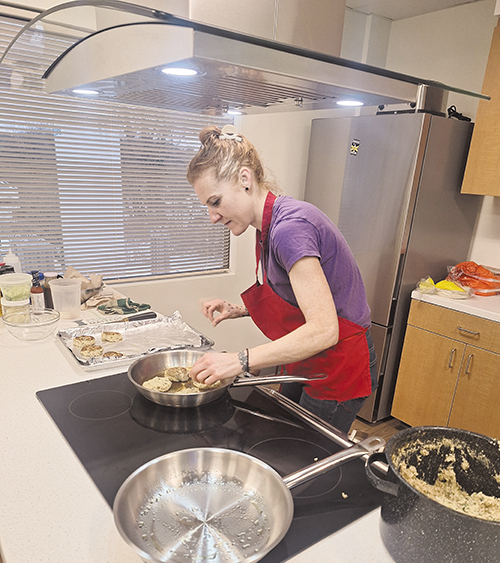
The instructor of the session on vegan-forward foods prepares a dish in the teaching kitchen.

Saint Francis and its community partners also engage in advocacy and in efforts to remove barriers to healthy eating. "We hope to change the landscape of the community," Alessi says.

She says wide swaths of Hartford — particularly the North Hartford area – have high poverty levels and a prevalence of chronic disease. There has been disinvestment from these communities, with investment going toward affluent areas, Alessi says.

In these urban neighborhoods, there are no full-service grocery stores. Alessi explains that these areas are "food swamps. There is a lot of low-quality food," with little nutritional value.

In the Greater Hartford area, the hospital's latest community health needs assessment noted, 42% of the patient population had two or more comorbidities that are uncontrolled — including hypertension, type 2 diabetes, and congestive heart failure — leading to frequent visits to the emergency department.

The Food Is Medicine program was piloted at the three Hartford-area safety net clinics then broadened to local patients served by Trinity Health Of New England's medical group. Patients identified by their providers as using the emergency department frequently for uncontrolled chronic conditions are eligible for the six-month intensive behavioral change program.

Patients who join the program receive counseling, education and resources on healthy eating and healthy lifestyle choices. They get access to cooking classes at a teaching kitchen, help with medication adherence, and help using blood pressure monitoring equipment provided by the program.

Community health workers provide intensive support to participants and help them address social needs. They assist participants in accessing healthy food, including at the Joan C. Dauber Food Pantry at Saint Francis, and ensure the participants know how to prepare it.

The chronic disease management coach role is a new one for the community health workers. Alessi says the Food Is Medicine program has trained the participating workers in the skills needed for chronic disease management.

Connecticut Health Foundation, a statewide nonprofit, granted $50,000 to Saint Francis and its partners to evaluate the effectiveness of community health workers "providing high-value services in chronic disease management," explains Alessi.

She notes that "Traditionally, community health workers screen for social care needs and facilitate closed-loop referrals to community resources."

Alessi says initial results from the safety net clinic pilot and from the rollout in the medical group show that many participants adopt healthy behaviors, including more healthful eating. She says that among other positive health impacts, participants have reduced their return visits to the emergency department and improved their control of their blood pressure.

At the local level, Saint Francis and its Hartford-area community partners advocate for greater access to healthy food. They've supported the opening of a grocery with sliding-scale pricing as well as a hydroponic farm that uses efficient methods to grow food for the community.

Trinity Health and its partners also are working with local bodegas as part of their social impact investments to include more nutrient-rich offerings in their selections.

Alessi says the work promises to achieve change on multiple levels. "We are driving policy change and clinical change," she says. "It's a great balance of both."

— JULIE MINDA

CHA Publications

Reprint Requests

Would you like permission to reprint an article from one of CHA's publications? To do so, please use our online request form. Please allow our team 1-2 business days to respond to your request.