
Through a program Central Kentucky's Saint Joseph Health started in the fall, patients who have an increased risk of readmission can get help with their post-hospitalization needs.
The Community Paramedicine Program that Saint Joseph of Lexington, Kentucky, launched in October dispatches a paramedic and social worker to the homes of recently discharged patients who have conditions that make them prone to readmission. The two-member team assesses how well the patients are equipped to heal at home and helps them address medical and socioeconomic barriers to a successful recovery.
Saint Joseph's program already has achieved a success rate of more than 90% when it comes to preventing seven-day readmissions and a more than 80% success rate for 30-day readmissions.
Saint Joseph's Austin Roush explains that "community paramedicine is a proactive, hospital-based care model designed to support high-risk patients after they are discharged from the hospital, when they are often most vulnerable to complications, confusion and readmission." Roush is the system's director of paramedicine.
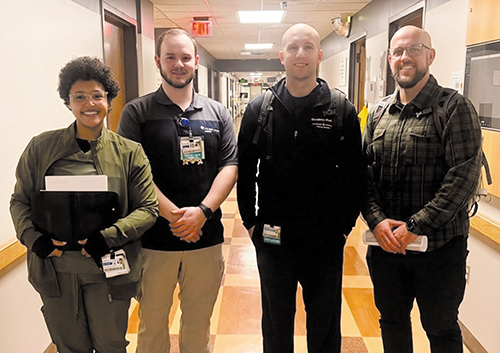
The program "provides a wraparound service to vulnerable patients who need a little extra help in the healing process," Matt Grimshaw says. He is president of Saint Joseph, a CommonSpirit Health subsystem with eight hospitals and a network of about 100 additional sites in 20 Central Kentucky counties.
Investment in the community
To implement the model, Saint Joseph developed a pilot program about a year ago with the Lexington Fire Department. Saint Joseph then received the necessary certification to operate the program itself before bringing the Community Paramedicine Program fully in-house.
The program's staff includes a licensed community paramedic, a social worker, the director of paramedicine and a medical director.
Saint Joseph offers the paramedic and social worker visits to patients who have complex medical conditions and medication regimens, need early post-discharge support, and/or face socioeconomic barriers. Medical conditions that put patients at high risk for readmission include sepsis, pneumonia, heart failure and chronic obstructive pulmonary disease. The program also is available to new moms at risk for preeclampsia or elevated postpartum hypertension.
Patients can enroll in the program during their admission to the hospital.
They usually receive their first home visit within 96 hours of discharge. During their initial visit, the paramedic-social worker duo assesses patients' risk level, evaluates their home environment for barriers to recovery, completes a medical evaluation, reinforces education on their condition, reassesses medications, and ensures follow-up care plans are in place and that the patients are able to complete them. The team also assesses patients' food security, transportation and housing stability. They spot gaps and work to find solutions. They normally complete a follow-up visit with a similar agenda.
Roush says Saint Joseph covers all the costs of the program, including personnel, program infrastructure, training and certification, equipment, clinical oversight and data tracking. "This investment reflects Saint Joseph Health's commitment to its community and its values," he says.
Specialized training
Community paramedics are trained beyond traditional paramedics and learn to provide preventive, longitudinal care.
While Saint Joseph's paramedic is equipped to care for patients in acute emergencies, he does not respond to emergency calls. His focus is to make home visits to patients post-discharge.
Roush notes that the service the community paramedic provides for Saint Joseph patients is different from traditional home health care in that it is not billable to payers and it is for a particular type of patient — those who need immediate, short-term help to transition home after hospital discharge for a chronic condition. Saint Joseph offers traditional home health services to patients suited to that type of care.
A healthy start
Already, the paramedic-social worker team has made over 150 in-home visits in the Lexington area. Roush says that so far, "the program has been well received by patients, clinicians and hospital leadership."
Roush says the team has found that there is improved patient confidence after discharge, better medication understanding and adherence, strong chronic disease management and appreciation for the in-home, personalized care. Over the long term, Saint Joseph is monitoring how the program impacts readmission rates and health care costs, with a particular focus on high-risk conditions.
Grimshaw says the program is "redefining what it means to care for patients beyond the hospital walls."
He says by "emphasizing education, trust and compassionate care," the program "is one more way that Saint Joseph Health lives our mission."