
Many states and several major health and medical organizations, including the American Medical Association and the American Academy of Pediatrics, are not endorsing the new vaccination schedule released by the Centers for Disease Control and Prevention.
Meanwhile, Catholic health systems are figuring out what to recommend to their patients, and some pediatricians say more parents are questioning their advice on what vaccines their children should get and when.

"It does create confusion," said Dr. Shephali Wulff, an infectious diseases physician and chief quality officer for SSM Health. "I think it created mistrust in the general public, because you have health systems and professional societies who now are in conflict with the CDC, and patients who are stuck in the middle, and that's not fair.
"What's happening in the CDC is creating more noise. It's amplifying vaccine hesitancy."
The new CDC guidelines recommend immunizations against 11 diseases for every child. Vaccinations against COVID-19, RSV, the flu, rotavirus, meningitis and hepatitis A and B are now recommended for those at high risk, or when doctors recommend them in what's called "shared clinical decision-making."
In announcing its recommendations, the CDC said the schedule follows "a scientific review of the underlying science, comparing the U.S. child and adolescent immunization schedule with those of peer, developed nations."
The agency also said the guidelines allow for more flexibility and choice, "with less coercion" and ensure that all the vaccines covered by the previous immunization schedule are still available to anyone who wants them through Affordable Care Act insurance plans and federal insurance programs.
"It does create confusion. I think it created mistrust in the general public, because you have health systems and professional societies who now are in conflict with the CDC, and patients who are stuck in the middle, and that's not fair.
"What's happening in the CDC is creating more noise. It's amplifying vaccine hesitancy."
— Dr. Shephali Wulff
Meanwhile, the American Academy of Pediatrics is sticking with guidelines that call for immunizations against the 18 diseases that for decades had been on the CDC's schedule. "Health officials did not cite new data justifying the changes but instead appear to have modeled the schedule largely after Denmark's, which has a significantly different population and health care system," the American Academy of Pediatrics said. "They also did not follow the standard process of consulting the CDC's Advisory Committee on Immunization Practices (ACIP) during a public meeting."
According to KFF, a nonpartisan health policy research group, 28 states had announced as of Jan. 20 that they are departing from federal guidelines for some or all childhood vaccines.
Real people, rising cases
Dr. Jesse Goodman, a professor of medicine and infectious diseases and an attending physician at Georgetown University, spoke with other experts about the changed CDC schedule during a webinar hosted Jan. 9 by the Association of Health Care Journalists. He bluntly discussed the symptoms and outcomes for people who contract diseases that can be prevented through vaccinations. For example, he noted that 25% of people who get hepatitis B later develop cancer or cirrhosis.
Goodman said the revised CDC schedule "will definitely cause confusion, indecision and general erosion of confidence, and as a result, access will be reduced, particularly for the disadvantaged, and fewer people will be immunized, resulting in more disease transmission and outbreaks, hospitalizations and deaths."
In an indication of how hesitancy around vaccinations appears to be affecting the nation's health, during the same week the CDC issued its new recommendations, the American Academy of Pediatrics announced there were more cases of measles last year than any year since 1991. The 2025 tally released by the CDC shows 2,255 confirmed cases, compared to 285 confirmed cases in 2024. Of the 2025 cases, 93% were people who were unvaccinated or their vaccination status was unknown, the CDC said.
Wulff said because childhood diseases had mostly vanished in recent years, most SSM Health clinicians are not used to seeing them. "As measles began to spread, we would get text messages from pediatricians questioning whether antibiotic rashes might, in fact, be measles."
Following the states
Doctors at SSM Health are suggesting patients follow the vaccine schedule recommended by the pediatricians group. Doctors with the Springfield, Illinois-based Hospital Sisters Health System are doing the same.
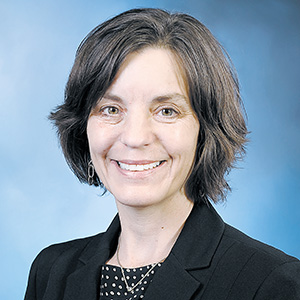
"A substantial body of evidence demonstrates that recommended childhood vaccines in the United States are safe, effective and essential for protecting children's health," Dr. Leanne M. Yanni, the system's president and CEO of Illinois Physician Enterprise, said in a statement. "At Hospital Sisters Health System, we support the guidance from respected medical organizations such as the American Academy of Pediatrics, which thoroughly evaluates research and develops evidence-based recommendations for physicians nationwide."
Dr. Douglas Waite is the senior vice president and chief medical officer for Covenant Health, which serves patients in several states, including Maine, Massachusetts, and New Hampshire. Those states have recommended that providers follow the American Academy of Pediatrics schedule, Waite said.

Waite notes that as an infectious disease physician, he knows first-hand the benefits of all 18 previously recommended vaccines and also knows the decades of scientific evidence proving their safety and efficacy. He says the CDC has been an important resource during his career, and he still turns to the agency's website for information on outbreaks and public health notices. However, the latest changes to the pediatric immunization recommendations have led to confusion among patients and parents.
Waite said providers are having to spend more time addressing parents' skepticism about immunizations, which results in longer appointments, and in some cases, impacts the doctor-patient relationship.
The distrust of and misinformation about vaccines resulting from the CDC's new immunization schedule concerns Waite. "It will likely result in more parents declining immunizations," he said. "As the vaccine coverage in our population decreases, we're going to see the re-emergence of some of these infectious diseases, and children and adults will die from preventable diseases. We have already seen this occur with last year's measles outbreak. That's the saddest thing about this."