
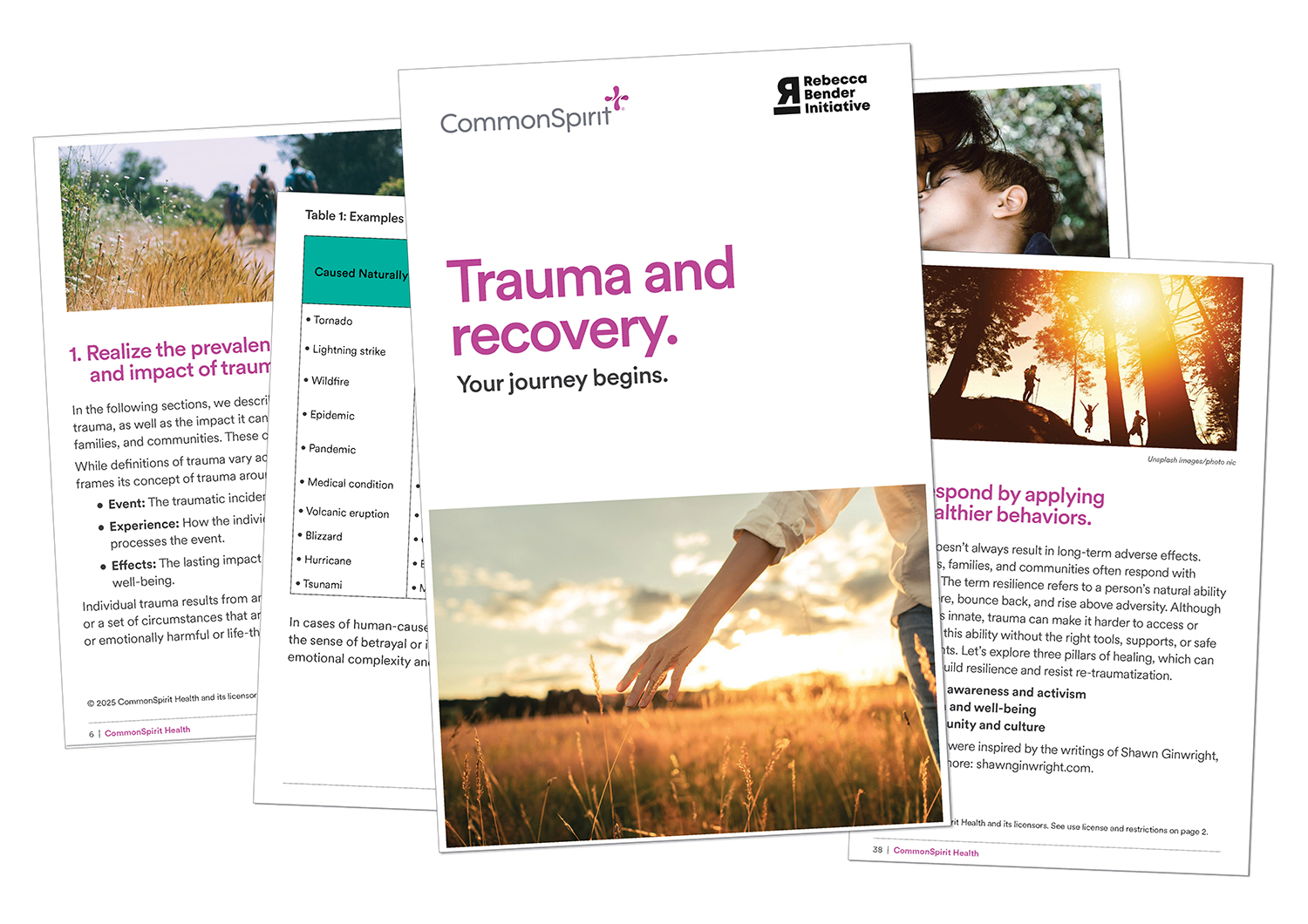
It is estimated that more than 20,000 people are trafficked in the U.S. each year. Their trauma does not end when they escape. Survivors — especially those who go on to work in helping professions — are at high risk of long-term impacts, including “retraumatization” and burnout.


Developed by survivors, for survivors
In creating the booklet, Gibbs and Bender drew upon their own experiences as human trafficking survivors. They also leaned on the expertise of other survivors as well as psychologists and other experts, including from CommonSpirit.
From survivors to advocates
In 1992, at age 14, Gibbs was lured from a stable, middle-class home life in rural New Jersey by a man who promised to rescue her from struggles she was facing so she could lead a new life. He instead forced her into prostitution. After two nights, she was arrested, which saved her from her trafficker. Her recovery was long and difficult. She faced retraumatization, including when law enforcement and health care workers treated her poorly.
Gibbs pursued a microbiology career and married. When she was 31, she saw a documentary about human trafficking that changed her life. It put a name to what she’d experienced as a teenager. She began connecting with others in the survivor community, consulting for anti-trafficking organizations and writing books about her experience. She joined Dignity Health, a predecessor of CommonSpirit, in 2015 to oversee its anti-trafficking programming. She’s since been instrumental in creating educational resources for health care workers and others, so that they better understand how to provide trauma-informed care. She helped develop a clinic system that specializes in providing survivors with that type of care.