
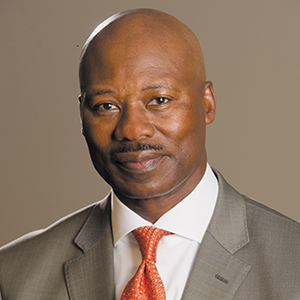
When Dr. Okechukwu Ojogho attaches the blood vessels from a donor kidney to a transplant patient, it thrills him to watch the blood circulate again.
"It's just a beautiful thing," he said, "because you can see it pink up, and especially if it's (from) a living donor, within a few minutes, you can see urine being made before you attach the urine tube to the bladder. So, it's really fantastic."
Ojogho is the program director for the kidney transplant program at Providence Sacred Heart Medical Center in Spokane, Washington, which by Dec. 8 had performed 81 transplants for the year — surpassing its past one-year record of 75 set in 2002 and far outpacing the 59 transplants the center performed last year.
Ojogho sees how kidney transplants transform patients' lives. "Relatively speaking, compared to how they were before the transplant, you see a remarkable improvement in their energy levels, in their outlook on life, and how grateful they are for the opportunity, both to the donors and to the team that helped them get this organ," he said.
Increasing demand
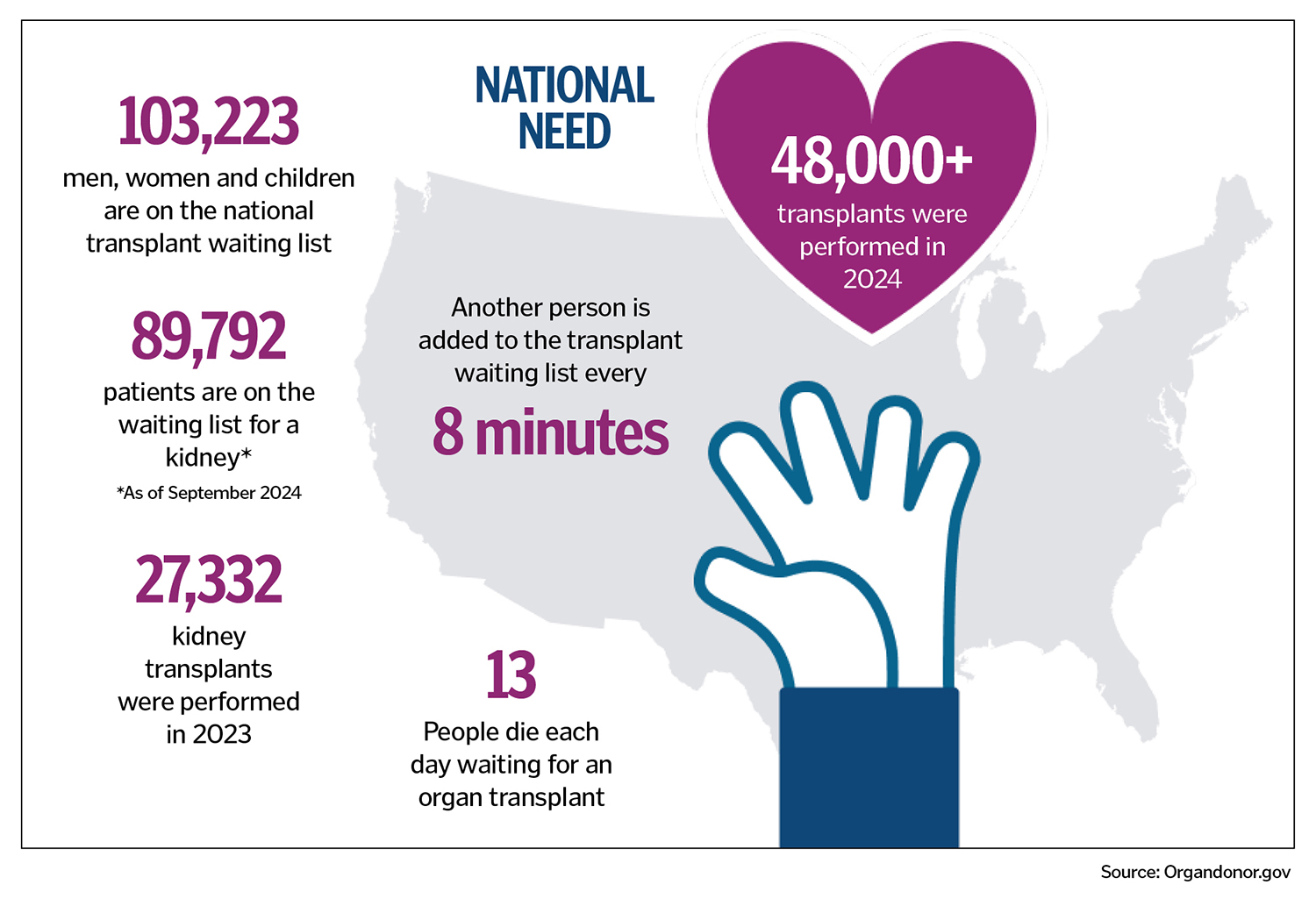
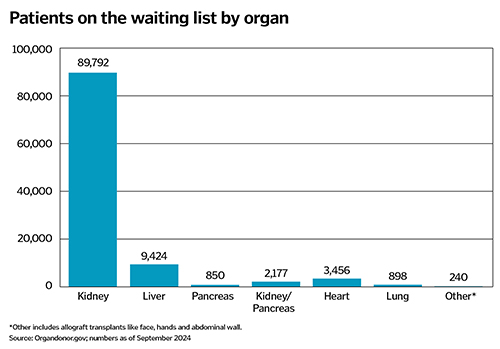
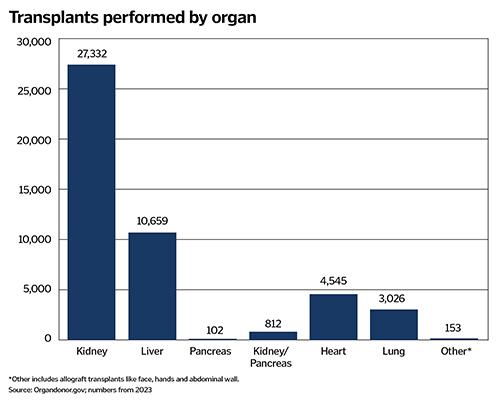
According to the Organ Procurement & Transplantation Network, organ transplants are on the rise nationally. They increased by 3.3% in 2024 and have risen 23.3% since 2020. Lung and liver transplants have had the highest increases, with a smaller increase for kidney transplants: 27,759 total nationwide last year, a 1.6% rise from 2023. The demand for kidneys continues to grow, with more new candidates added to the national waiting list each year, according to the Health Resources and Services Administration.
Providence Sacred Heart is the only place in the inland Northwest region for patients to go for a kidney transplant outside of Seattle, about 280 miles away, or to hospitals in Idaho or Montana, about 250 miles away.

Kourtney Salib, the office manager for the hospital's kidney transplant program, credits the record number to several factors. Over the last couple of years, the hospital has been able to fully staff the program at the physician level. Before, it had been difficult to recruit the right specialists. It now has three full-time transplant nephrologists, four surgeons, and a physician assistant. In all, there are about 20 hospital staffers on the kidney transplant team.
When the team's staffing was short and an organ was available, they had to be "pretty mindful and conservative," Salib said, about whether they could care for the patient afterwards.
"Over the last couple of years, we've been able to solidify our physician team, and so we've been able to accept more organ offers," Salib said. Previously, the hospital had hired physicians for short stints to fill gaps in the program, she said.
Conversely, in November, the hospital announced a temporary pause in its heart transplant program because of "key vacancies," according to a press release. The hospital performed six heart transplants this year. It is helping patients on its heart transplant waitlist transition to other centers. It will continue to deliver care to patients on the waitlist and to previous transplant recipients.
Salib said the kidney transplant team has been able to handle more operations because they work so well together and have created a smooth process. "They are the most dedicated people that I've ever worked with," she said. "They truly care for these patients and the good that we're doing."
The team is reviewing and enhancing their workflows and transplant acceptance practices, and they discuss with local and regional nephrologists what defines a good candidate and what those specialists can do to make sure candidates are ready for transplant.
"We're really building that relationship, because those nephrologists will refer to us, and then we'll transplant the patient, and we'll send them back," Salib said. "We're kind of that intermediary care team for them, so they trust us with their patient."
Handling logistics
Both Ojogho and Salib credit organ procurement organizations, specifically LifeCenter Northwest, for coordinating waiting lists and organ recovery and educating the public about organ donation.
As of September 2024, nearly 90,000 people nationwide were waiting for kidneys, according to the Organ Procurement and Transplantation Network. Patients in the Spokane region can wait up to six years, Ojogho said. If patients find a living donor, which is ideal because the kidneys are generally healthier, a transplant can be set up within a matter of weeks to a couple of months. Only about 25% to 30% of kidneys nationwide come from living donors, he said.
"We don't do enough of (living donations) that we'd like," he said. "We have to be able to raise awareness around that, the need for organs in general and living donors in particular."
Fortunately, kidneys from deceased donors can last long enough to be flown across the country before transplant, he said.
Salib said that since kidneys from a deceased donor often arrive in pairs, transplant operations are often coordinated one after another for two patients on the list.
Sometimes, during follow-up appointments, patients meet each other in the waiting room and realize that they received kidneys from the same donor. "They start talking and interacting, and they're both joyful and joyous of their journey," she said.
Patients will occasionally meet the donor's family, and a Providence Sacred Heart social worker can help them through that emotional process, she said.
Ojogho said the team is mindful that a donor family might find the transplant process emotionally challenging. "But to see that it turned around and created life in someone else, it helps them know that they've made a great decision," he said.
He says it's satisfying to know he's had a hand in helping others, and to hear from patients as they move on to healthier lives.
Before a transplant, some patients might have to drive 100 miles one way, three times a week, for dialysis. A transplant can make a "huge quality of life difference," he said.
"It just makes you find joy in the calling that you have, that this is how you want to participate," Ojogho said. "This is how you want to help other people. And for me, I think I get that back in blessings in different ways."