
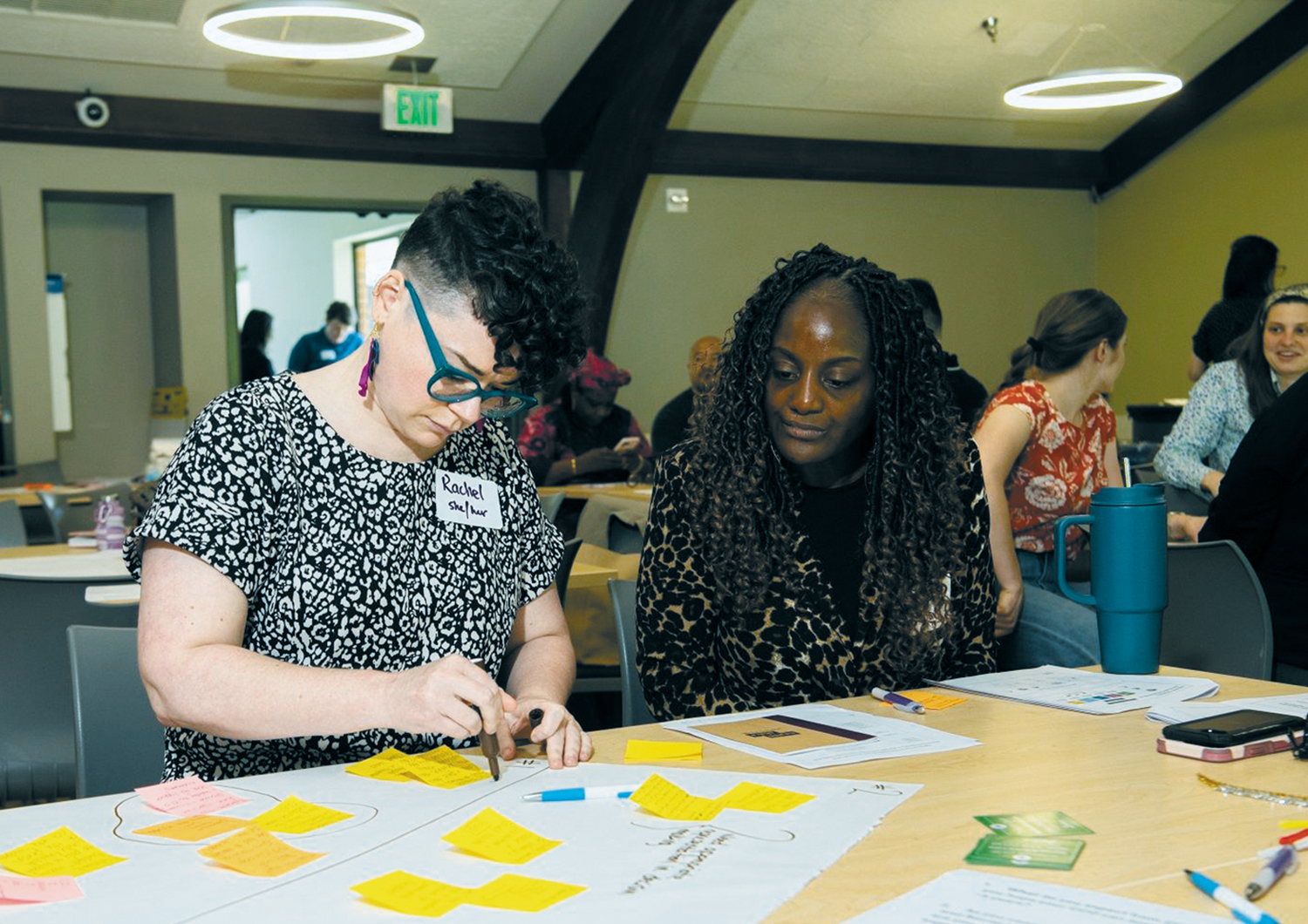
Around 2010, the leaders of multiple health organizations in the Pacific Northwest began noting that, because of new or evolving government requirements, they were expending significant time and resources conducting community health needs assessments and developing plans to address the needs. They also were making requests for the same information from community members and organizations.
They wondered whether they could pool their expertise and resources to share the costs and burdens of creating these assessments.
The health organizations decided to form the Healthy Columbia Willamette Collaborative and have since achieved results that illustrate the power of partnership. Now they want to build on their success in partnering on the assessments. They are looking for more ways to address community needs together.
Joseph Ichter is senior director of community health investment for Providence Oregon, which is part of Providence St. Joseph Health. He says through the Healthy Columbia Willamette Collaborative, "we build networks and connections with organizations that have relationships that we may not have. We rely on the community-based organizations and other partners to do lots of outreach and help us gather data, because you need trusted partners to get the data."
Phyusin Myint is chief health equity and impact officer of Health Share of Oregon, a coordinated care organization that is part of the collaborative. She says the collaborative is "very visionary." She adds, "HCWC really is centered in the power of collective impact. We believe that the interest-holders coming together in collaboration creates the best outcomes for our community to address health disparities. To be able to support this work feels really impactful and exciting."
Erin Jolly is a public health strategy supervisor with the Washington County Public Health agency, which also is part of the collaborative. "Our intent is to move towards similar goals and outcomes," she says.
Advancing health equity
According to the Healthy Columbia Willamette Collaborative website, the group is "dedicated to advancing health equity in the quad-county region" that is made up of Clark County in Washington state and Clackamas, Multnomah and Washington counties in Oregon. Portland is the county seat of Multnomah County. The collaborative bills itself as a "platform for collaboration around health improvement plans and activities that use combined resources to improve the health and well-being of local communities."
This public-private partnership is made up of a dozen organizations in the quad-county region, including public health authorities, coordinated care organizations, and health systems and facilities. A coordinated care organization is a health plan designed to serve people insured under Medicaid.
Each of the dozen members is represented on the collaborative's executive committee as well as on subgroups with specific functions.
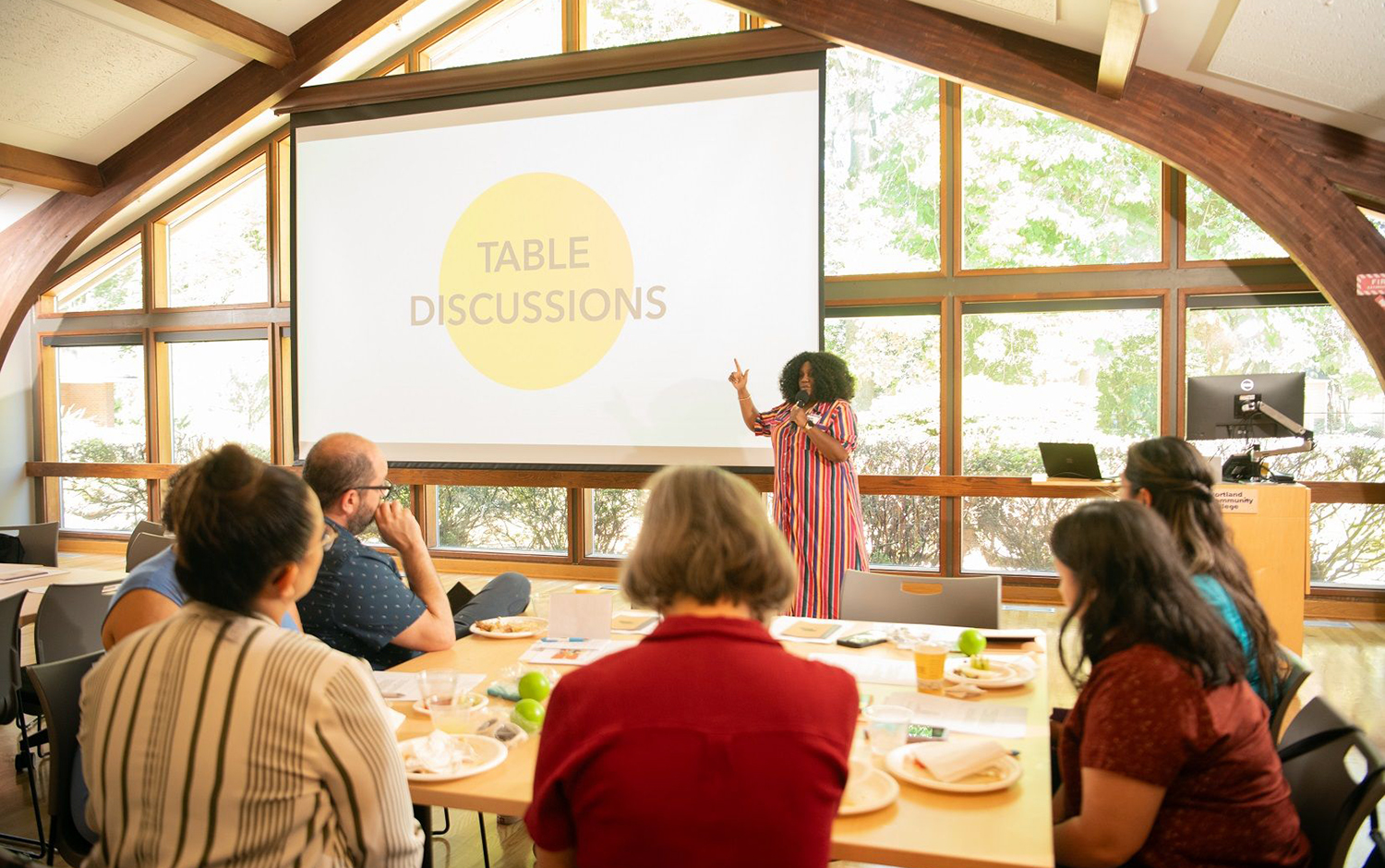
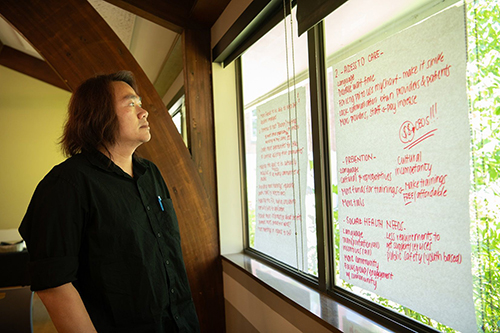
With the help of community organizations, the collaborative produces a regionwide community health needs assessment every three years. One is underway now. Key to the process are multiple focus groups and listening sessions as well as a community health survey and analysis of data. Community leaders help both to develop the focus groups and community surveys and to facilitate them. The collaborative uses this vital input from hundreds of community members, leaders and community-based organizations to learn the region's needs.
Maria Tafolla, Health Share of Oregon director of community health partnerships, sums up that the community health needs assessment process "is driven by community." The collaborative does "resonance checks" with community-based organizations and leaders throughout the process to ensure that the assessment accurately reflects the reality on the ground.
Each cycle, the collaborative members or sometimes a consultant uses the findings to write up the community health needs assessment. The members use that assessment as the basis for the reports they submit to the government and make public under federal law every three years. They also use the reports to develop plans to address the identified needs.
Michael Anderson-Nathe has been involved in this process since 2014 in a variety of roles, most recently as a consultant. He says that moving beyond describing needs to also addressing them as a cohesive group will mean that the group will be able to take a more regional approach to issues and have more impact through shared financial responsibility.
Focus on prevention
The collaborative will release its next iteration of the assessment later this year.
Some top priorities the collaborative identified in the 2022 report included mental health and substance use disorders, health-related social needs, economic security, and access to care and services. Members of the collaborative have since implemented their plans to address these needs.
Ichter notes that in addressing needs, Providence facilities ensure they remain aware of the impact of racism, discrimination and inclusion; culturally responsive care and services; and trauma-informed care and services.
Myint adds that there is a longstanding legacy of barriers related to health inequities, and that is reflected in these reports. She says it's essential for all the organizations that address the needs to get upstream and prioritize prevention.
A family of organizations
Uniting a dozen organizations to create a comprehensive and useful needs assessment has been challenging, Ichter, Myint and Jolly acknowledge.
"We're trying to address everyone's needs, and like it is in a family, that is not always the easiest thing to do," Ichter says. "We're seeing that we need to listen and act to keep all our partners engaged and willing to continue."
Jolly notes that some challenges arise from the organizations having different partnerships, catchment areas, health needs reporting requirements and timelines, and ways of addressing identified needs.
Myint adds that "it is a challenge to balance our organizations' individual needs with the group's needs. If we are not aligned in what we are doing, it can erode trust," and cause group dissention.
Another challenge to this collaborative approach, says Ichter, is that there are "a lot of cooks in the kitchen" so it can be difficult to arrive at a single report. Most of the participating organizations tailor their own individual reports, using the collaborative's findings as a foundation, which can help solve for this problem. Providence tailors its local hospitals' community health needs assessments in this way.
Strong foundation to build on
Despite the challenges, the participants say the collaborative presents them with a great opportunity and there are many successes to point to.
They are saving time and resources by working together, Ichter says. He notes that the shared approach reduces the amount of research that each collaborative member must do and the burden on partner organizations, such as community-based organizations that assist with gathering input from their clients through focus groups and other methods.
And they are building strong relationships that benefit all the participants well beyond their work on the assessments.
Myint says the group members also can coordinate their efforts more easily, with all working from the same page to address community needs.
Jolly agrees, noting that collaborative members have been able to work toward similar goals because they're responding to a common data set pointing toward the same community concerns. The collaborative members' pursuit of strategies in their plans are impacting real concerns, such mental health conditions, addictions, housing instability and lack of access to health services.
Jolly notes that several members of the collaborative have been partnering on some of the strategies that they've outlined in their community health improvement plans.
But so far, Ichter says, there's been no unified effort by the collaborative to develop and implement a joint community health improvement plan.
Now that their collaborative is in a mature phase, the organizations are exploring how to build upon this strong foundation to also work together on solutions to the issues raised.
While this effort is in its infancy, Ichter, Myint and Jolly have high hopes.
"We're putting process improvements in place to continually improve and learn from our prior experiences," Jolly says.
She adds, "There's just a really engaged, passionate, collaborative group right now, and there's a lot of energy going into really making this as strong as it can be."