The Holy Cross Health medical building in the Oakland Park neighborhood of Fort Lauderdale, Florida, had been underutilized for years. Medical offices occupied only about a third of the space, and the building hadn't been updated since it was built in the early 1970s.
Meanwhile, a community health needs assessment showed that people wanted more access to health and social services. They had trouble affording and accessing fresh foods. They wanted help with personal finance issues and with finding and keeping a job.
They wanted a place to belong.
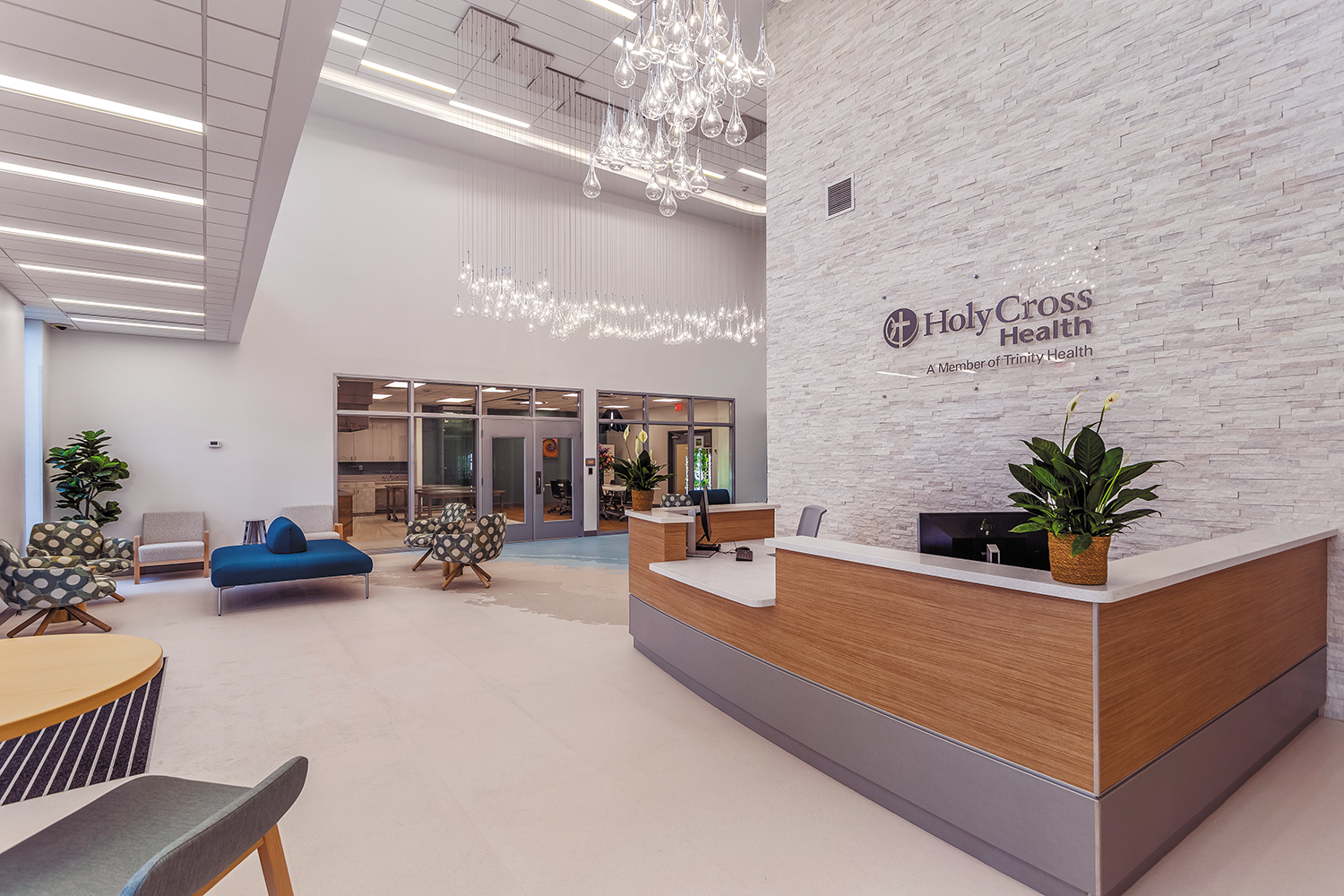
In early June, a ribbon cutting ceremony marked the opening of the Holy Cross Family Health Center, a 15,000-square-foot space on the first floor of the medical building.
The health center is part of Holy Cross Health, a member of Trinity Health.
The center, made possible through $4.9 million in donations, includes 11 exam rooms, a teaching kitchen, a laboratory, a pediatric therapy center anchored by an indoor artificial tree with hanging swings, a low stimulation room for pediatric patients to calm themselves, office space for community health workers, and classroom and meeting spaces. In addition to primary care, wellness checkups and immunizations, patients can get medical nutrition therapy and access to culinary medicine to help them manage and prevent chronic diseases.
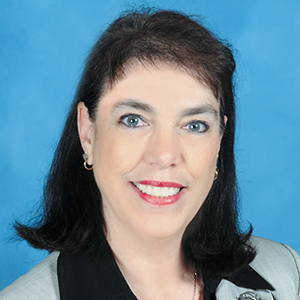
Kim Saiswick, Holy Cross vice president for community health and well-being, referred to how the system's sponsor, the Sisters of Mercy, and their foundress, Catherine McAuley, are often associated with the symbol of a "comfortable cup of tea."
"And so that's what we wanted," she said. "We wanted people to feel when they are here, it's a comforting environment. We're here for you."
And at the ribbon cutting, she noted, the hosts offered visitors tea in porcelain cups.
Serving diverse needs
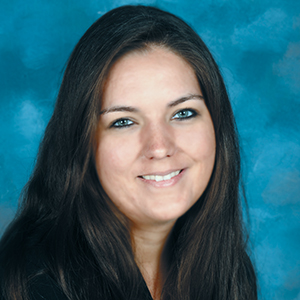
Saiswick and Kristen Schroeder-Brown, healthy living program manager, joked that even though both are nurses, they became architects to decide what they wanted in the family center and how everything should look.
Through the needs assessment, they had a good blueprint. The building is in a "high-priority" ZIP code, which means 40% or more of its population is Black or Hispanic and many people are on Medicaid. Broward County, where Fort Lauderdale is located, has residents from more than 200 countries speaking more than 130 languages. About a third of residents reported they are often or sometimes worried about running out of food. They also said they needed job skills training and support groups for things like domestic violence and healthy eating.
"So we thought, in a perfect world, let's build a one-stop where the whole first floor is everything you would need to get things going, and so that's what we envisioned, and worked very hard on," Saiswick said.
In response to gaps identified in the needs assessment, in 2023 Holy Cross opened a smaller clinic in the historically Black Sistrunk neighborhood, about 7 miles away. Many of its patients report they hadn't seen a primary caregiver in at least 10 years. That clinic's décor features artwork done by African, Caribbean and Black Americans.
"We feel that the people who are coming in need to feel comfortable in the space that they're in," Saiswick said.
They built on that experience to plan for the family clinic.
Creating a welcoming space
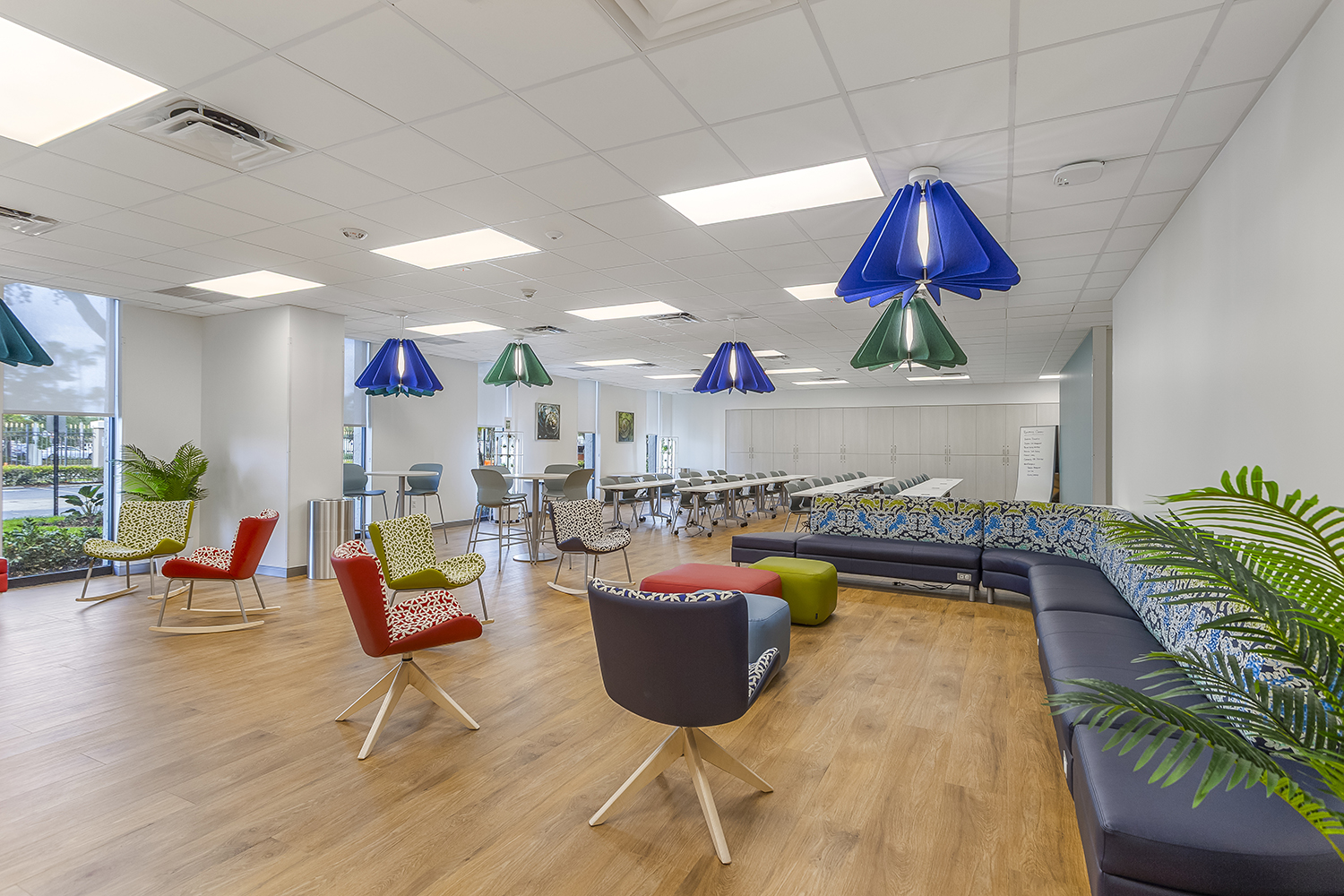
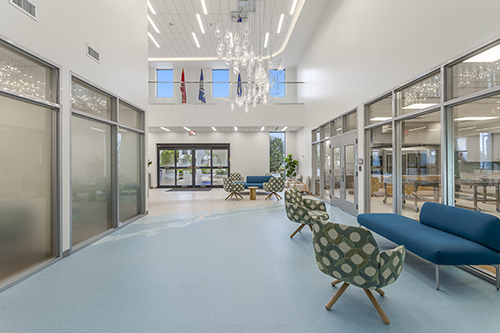
Soothing ocean-themed artwork and frosted glass doors in the new clinic lend airiness and privacy. One multifunctional space has different seating options, including rockers, gliders, couches, and high-top tables to accommodate diverse needs and preferences.
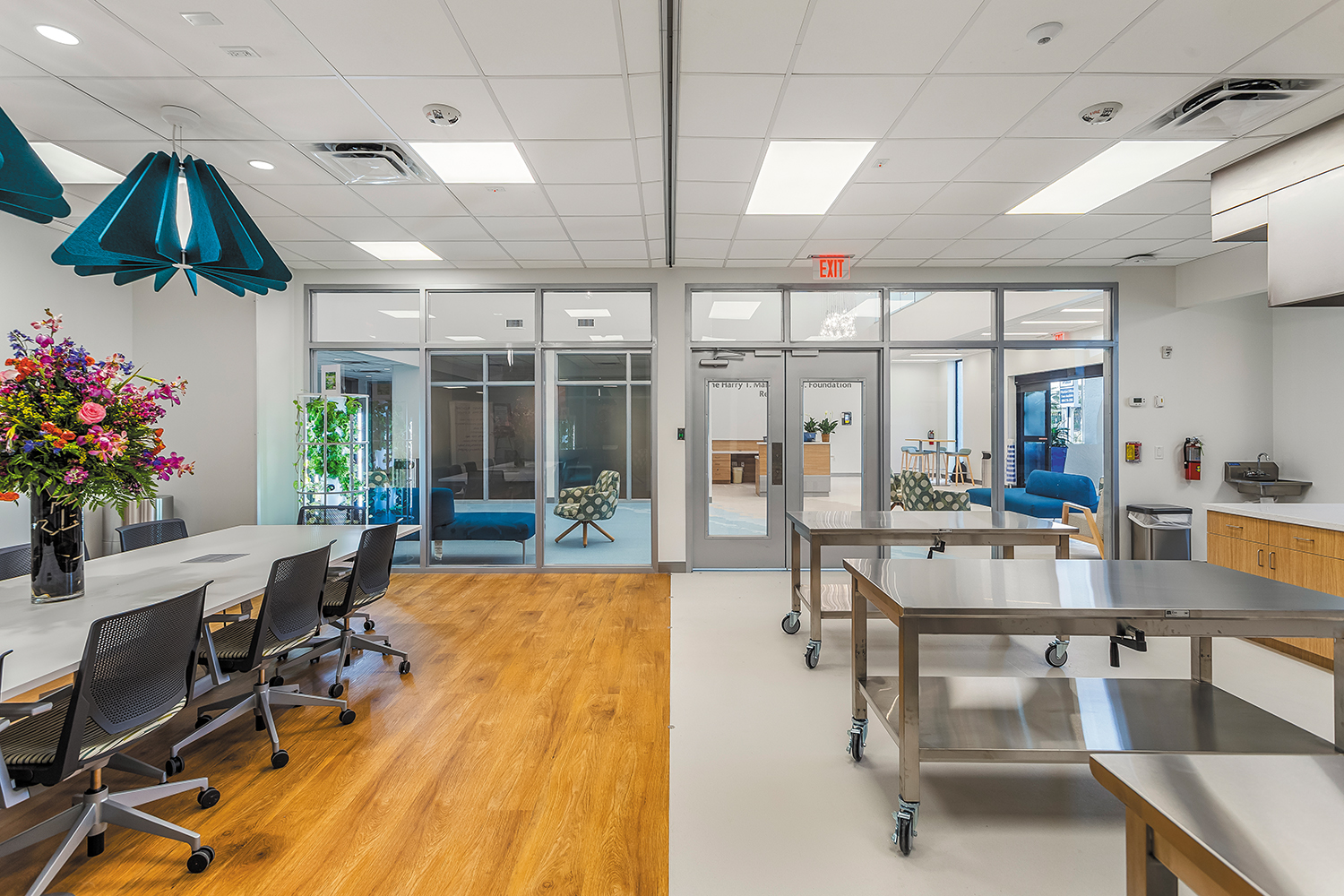
A teaching kitchen is adjacent to a conference space, ideal for when one spouse is cooking during a diabetes education class while the other watches.
Aeroponics towers grow lettuce and herbs to use in cooking classes or to serve visitors. People are curious to see how the plants grow. In fact, recently there was enough lettuce to serve the members of a diabetes prevention class. "The class was so excited," said Schroeder-Brown.
The staff comes up with different ways to make healthy recipes that appeal to the diverse patient population. "We have made great efforts to be aware of that and very cognizant of it, and to incorporate some of those preferences into the cooking," Saiswick said.
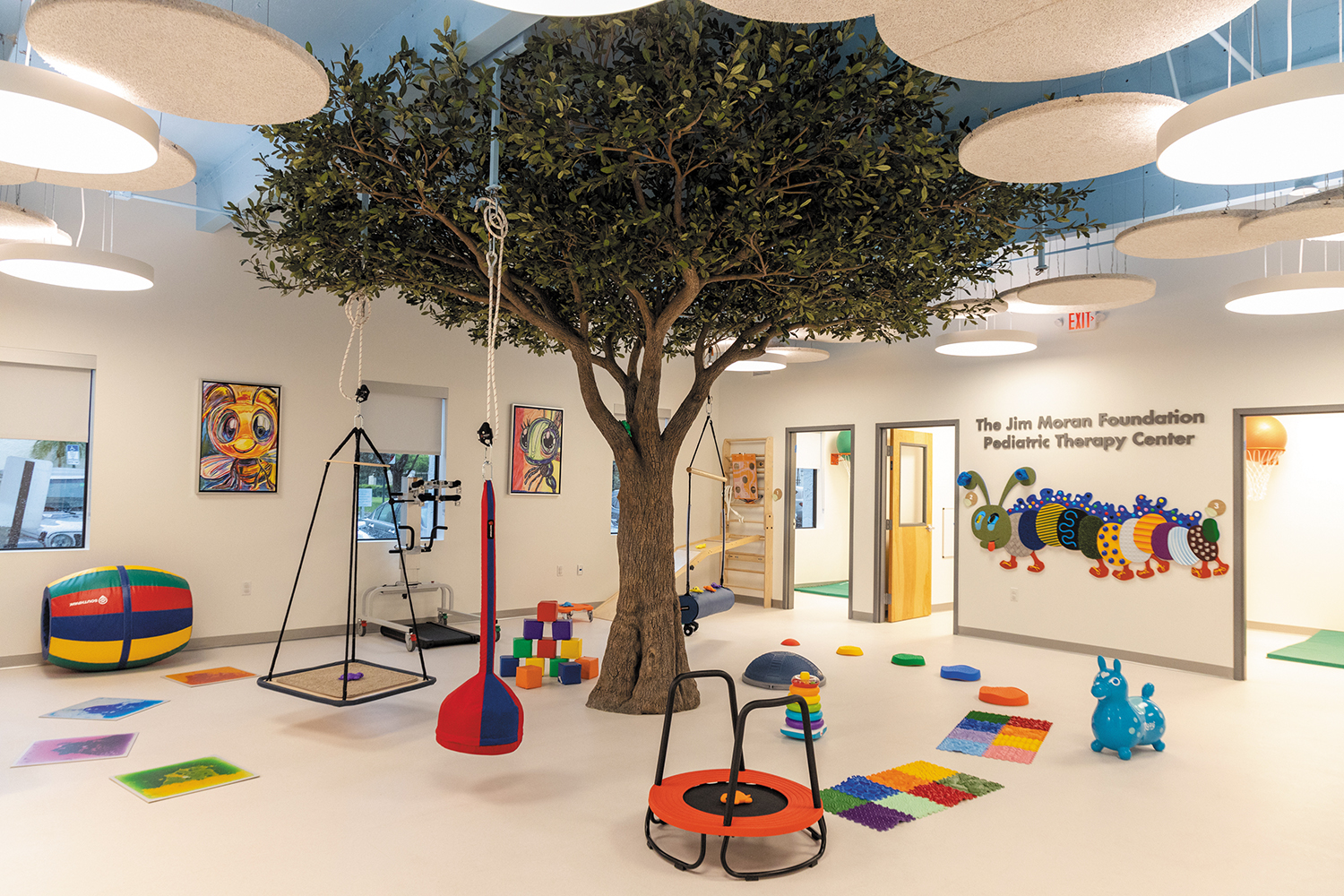
A pediatric therapy center includes equipment for children to work on motor skills. A tree centered in the room has swings hanging from its branches. Schroeder-Brown's 4-year-old son comes to the clinic two hours a week for therapy to help with motor, speech and daily living skills and loves it.
"We really wanted it to be a space that kids wanted to come, where kids were excited to learn, and a place that would also be calming," Schroeder-Brown said. Parents are thrilled because there is ordinarily a six-month minimum waiting list for pediatric therapy, but the center's first patients were able to get in right away. "They were so excited and so thankful," she said.
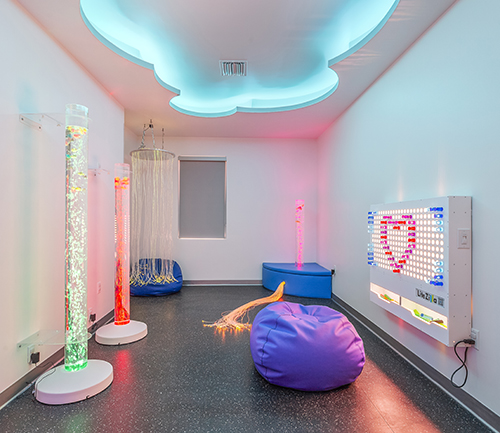
A low-stimulation room, for children to calm themselves or relax for therapy, includes a custom ceiling with a cloud-shaped cutout that can be lit in different colors. Children can play with thin strands of rope lighting or a light-up pegboard or watch bubbles and small toy animals floating in bubble towers.
'This is the space for me'
Plans include setting up workshops on resume writing, interviewing skills, personal finance, and budgeting. Center organizers also would like to set up more support groups for parents of neurodivergent children, domestic violence survivors, and seniors, specifically for LGBTQ+ seniors and those with HIV. About half of the people living with HIV in Broward County are aged 50 or older, and the center is a few miles from Wilton Manors, a city that is a LGBTQ+ hub.
The building's additional three floors are being renovated for a variety of specialty medical practices, in a strategic move to bring specialty care closer to the community.
Saiswick and Schroeder-Brown said that at the open house, they took note of the astounded faces of visitors. They have tried to extend the same hospitality to those who have visited since. Too often in other places that serve vulnerable communities, people don't feel safe or the furnishings aren't the nicest, Saiswick pointed out.
"Everybody deserves the best it can be," Saiswick said. "What we hope is that when folks walk in, they can feel: I belong here, and this is the space for me."