

"A dispute arose between the North Wind and the Sun, each claiming that he was stronger than the other. At last they agreed to try their powers upon a traveler, to see which could soonest strip him of his cloak. The North Wind had the first try; and, gathering up all his force for the attack, he came whirling furiously down upon the man, and caught up his cloak as though he would wrest it from him by one single effort: but the harder he blew, the more closely the man wrapped it round himself. 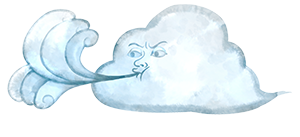
Then came the turn of the Sun. At first he beamed gently upon the traveler, who soon unclasped his cloak and walked on with it hanging loosely about his shoulders: then he shone forth in his full strength, and the man, before he had gone many steps, was glad to throw his cloak right off and complete his journey more lightly clad.
Persuasion is better than force."1
I've been thinking about this Aesop's fable a lot lately, perhaps because it's cold out as I write this, perhaps because the chill in the air these days sometimes feels more about the frostiness of the times than of the weather.
This issue of Health Progress focuses on Seeking New Solutions in health care. We delve into several of the major issues affecting health care and society, highlighting policy, programs and approaches that make a positive difference or offer education in areas where health care systems can learn from one another. Articles explore topics ranging from crafting public policy that protects poor and vulnerable populations, to preventing gun violence, improving staffing flexibility, responding effectively to disasters and caring for immigrants. 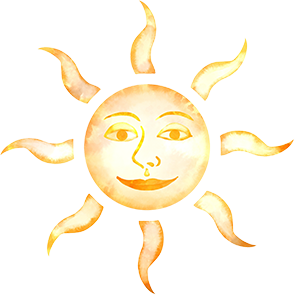
And so why am I returning to a Greek fable from around 600 B.C.? I think it's because in times of societal uncertainty, I see more examples of warm, informal networks, of people looking out for one another, standing up for one another, and extending support and mercy to others.
Another translation for the lesson at the end of this fable reads: "Kindness effects more than severity." I think this holds true in our social networks (whether an electronic group chat among real-life friends or an honest-to-goodness conversation around a kitchen table), as people may be increasingly uncertain of their trust in institutions, they turn to strengthen relationships with one another.
I generally associate with a fairly civic-minded lot. Many of them work for the media and truly believe that reporting as fairly and accurately as they can is a societal good. Those who don't work in journalism still tend to consume a lot of media, and they discuss it, and contact their elected officials to voice their views. They're engaged, but my sense is that they don't always feel heard these days.
Complexity and nuance have taken a back seat to the bombastic in some quarters, and while we may hope that course corrects, are we sure it will? I, for one, don't want to live in a society where shouting others down becomes accepted practice. A clever social media post has its place, but so do listening, discerning and influencing based on one's own example and actions, not name-calling. I support a little more Sun and a little less North Wind. I hope that's reflected in these articles.
NOTE
- Aesop's Fables, trans. V. S. Vernon Jones (1912), Project Gutenberg, www.gutenberg.org/files/11339/11339-h/11339-h.htm. The published version of this work uses the British spelling of the word traveller. It has been adjusted here.