
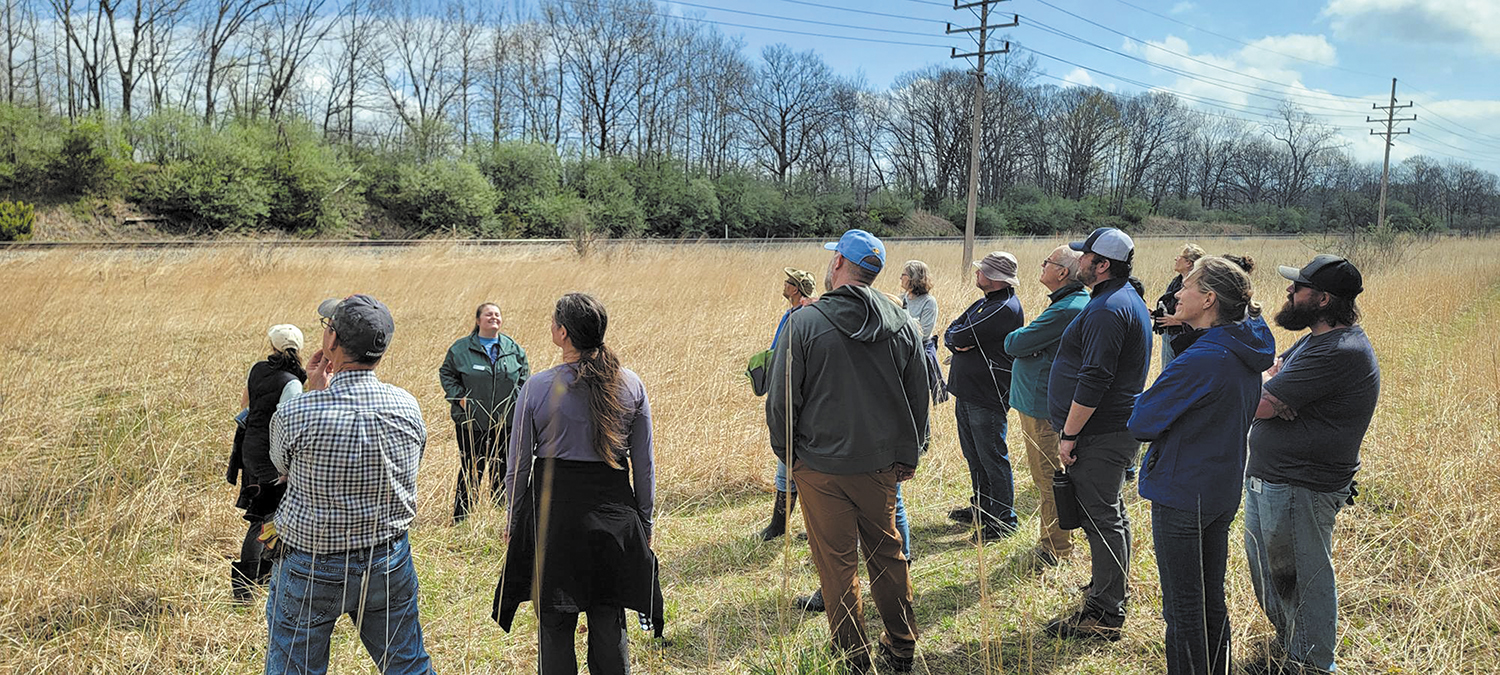
But over time, the natural landscape deteriorated, even becoming unsafe in places.
"Some of the areas were really washed out, lots of debris and invasive species," Sapkiewicz says.

Now, nearly one-third of the hospital's 340 acres has been transformed into an area for recreation and reflection. Patients, their families, medical and other staff, and the surrounding community enjoy walking and running paths with views of the Huron River and lined with native plants and flowers.
The initiative, Hospital Without Walls, has created a very popular spot.
"People are saying, 'Oh my gosh, I go there all the time,'" Sapkiewicz says. "We've had some community members tell us they come over every morning to run."
Outdoor space as healthcare
Restoring the hospital's 103 acres, starting last year, has included controlled burning of woodlands, wetlands and prairie habitats to encourage native plant growth and inhibit invasive plants. Collapsed boardwalks were replaced and new stairs installed.
Sapkiewicz says enhancing the area is one way Trinity Health Ann Arbor fulfills its Catholic mission to be a healing presence.
"We really take a mind, body and spirit approach to taking care of our community, prioritizing their needs and addressing those greatest concerns that impact health," she says.
Spending time in nature is associated with improved physical and mental health, according to the Harvard T.H. Chan School of Public Health. Better sleep, lower blood pressure and reduced risk of chronic disease can result from enjoying green spaces and the exercise it encourages. Researchers also noted a decreased risk of psychiatric disorders.
"Even as little as 10 to 20 minutes outdoors can have all of those impacts," Sapkiewicz says.
Being outside reduces stress hormones, which can help prevent burnout, Sapkiewicz says. "Hospital Without Walls provides a nice opportunity for our clinicians and caregivers to decompress, to create some balance in their demanding day."
Stewardship of the land
Trinity Health Ann Arbor borders the city of Ypsilanti, Michigan, where nearly a quarter of residents live in poverty. Hospital President Alonzo Lewis says Hospital Without Walls is especially valuable considering this "underserved, at-risk" area.

"Not only does Ypsilanti have fewer parks and green spaces than Ann Arbor, but the ones they have aren't as well cared for," Lewis says. "We love having the opportunity to fill that void for a city that hasn't been able to invest in expanding their own green spaces."
Hospital Without Walls also addresses the health of the surrounding environment. Trinity Health Ann Arbor stores salt on hospital grounds for treating its parking lots in winter, and administrators wanted to prevent it from entering the bordering Huron River. The improved area includes over 8,000 feet of bioswale — a shallow, plant-rich channel that captures and filters stormwater — designed to prevent salt runoff.
"Oftentimes people look at stewardship as being fiscally responsible, but this project also reflects the Catholic value of stewardship," Lewis says. "It gives us the ability to honor the natural resources that have been entrusted to us and to invest in their proper care and nurturing."
An ongoing, living, breathing process
A $400,000 grant from the National Fish and Wildlife Foundation paid for the restoration.
"It took time to find a funder that fit so nicely with our intentions for this very nontraditional route of impacting health," Sapkiewicz says. "But we are blessed to have a team that truly believes in our mission."
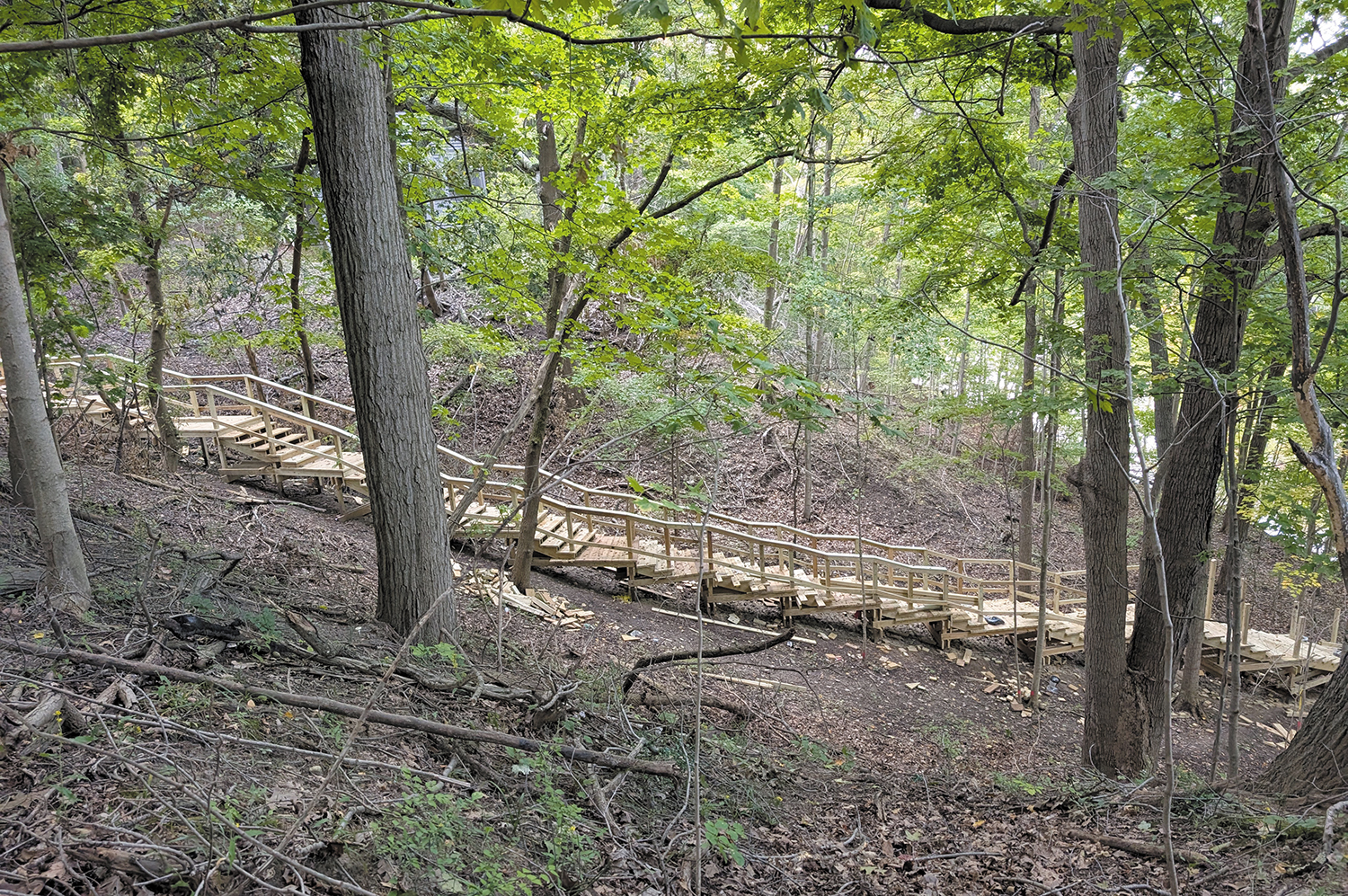
"Volunteers were absolutely instrumental," Sapkiewicz says.
More volunteers as well as funding will be needed for future improvements. Ball fields, pickleball courts and a picnic pavilion are all possibilities for the space. Lewis envisions an "Adopt-A-Highway"-style campaign in which community members and organizations take responsibility for tending to specific areas.
"Hospital Without Walls is going to be an ongoing, living, breathing process," Lewis says.
Facilities for the vulnerable
Another of Lewis's dreams is for some of the acreage outside of Hospital Without Walls to become a place to house some of the area's unhoused citizens. Trinity Health Ann Arbor already has dedicated an existing building to temporarily house people while helping them rebuild their lives. Lewis would like to see new units built on the campus's undeveloped land.
"So this green space is kind of like phase one for us in terms of a thoughtful, longer-term plan, and how we can create more meaningful impact in our community as an anchor institution," Lewis says.
Lewis says hospitals without green space on their campuses still can provide their communities with outdoor enjoyment.
"There's no reason why a hospital can't find a green space somewhere in the community and partner with local government to exercise the same journey we've been on," Lewis says, "to refurbish, recreate, reenvision, reimagine those spaces and tie them back into the organization's health and wellness strategy for the community."