
Last summer, Necomedes "Medy" Alisna of Edmonton, Canada, was visiting one of her daughters in Houston when she felt chest pain. She went to St. Luke's Health-The Woodlands Hospital, and what happened there in the following weeks is still beyond explanation.
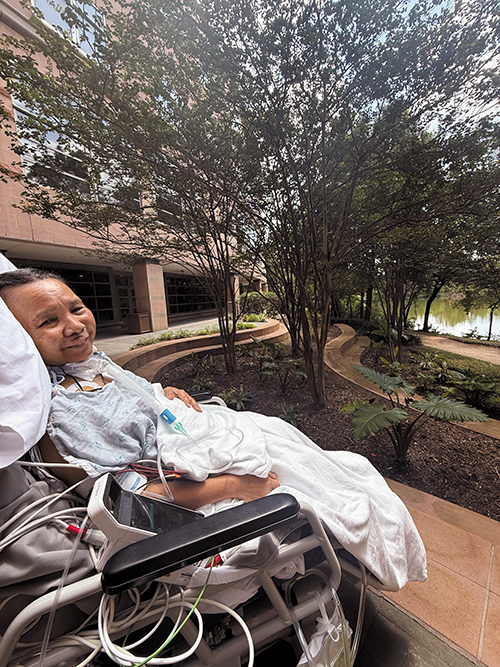
"We work with a lot of sick patients," said Dr. Vivek Patel, a cardiothoracic surgeon with the hospital. But after what Alisna went through, he said, her recovery was "nothing short of a miracle."
The hospital is part of CommonSpirit Health.
Alisna, 65, arrived at St. Luke's Health-The Woodlands' emergency room on July 11, and doctors diagnosed her with coronary artery disease. Five days later, Patel performed quadruple bypass surgery. While the surgery was major, it was routine for the hospital and went smoothly.
But soon afterward, Alisna's heart and body started to swell. "She had a profound inflammatory response," Patel said.
About 12 hours later, he took her back to the operating room to figure out the issue. While the bypasses looked great, he had to keep her chest open, because her heart had swollen too much to fit properly inside.
"She progressively got sick, and then to the point where her heart conduction system just stopped," he said.
The hospital team put Alisna on an extracorporeal membrane oxygenation, or ECMO, machine that took over for her heart and lungs.
Patel said more than 90% of bypass patients do well afterward. When ECMO must be used after heart surgery, he said there is typically a 50/50 chance of survival, though at St. Luke's Health- The Woodlands, the survival rate is about 75%.
Family support and connections
Alisna and her family have many connections to nursing and they found connections to the St. Luke's Health-The Woodlands staff. Three of Alisna's four daughters are nurses. One, Julien Pangilinan, is an ER nurse at St. Luke's Health-The Vintage Hospital in Houston. Pangilinan's husband, Rico, is an operating room nurse at St. Luke's Health-The Woodlands.
Alisna is from the Philippines, where she worked as a nurse. At St. Luke's Health-The Woodlands, she recognized the last name of Beige Aldaba, the ICU manager. Alisna had once treated Aldaba's father-in-law in the Philippines. Aldaba hadn't known her father-in-law, but she and Alisna had an instant bond. She began to affectionally call Alisna "Nanay" and Alisna's husband, Ronald, "Tatay," Filipino terms for mom and dad.
"They're warm people, so it's really not hard to be able to establish that kind of relationship with them," Aldaba said of Alisna and her family. "But they were always there."
The staff knew the family relied on their Catholic faith and kept a small Jesus figurine near Alisna, placing it on top of the ECMO machine and moving it with her into the operating room.
Aldaba tells her co-workers it is a blessing they get to work in the ICU and that they care for patients who are in their most vulnerable states. "It is a blessing because every single day we come to work, we get to have an opportunity to serve others and to bless them because of our ministry," she said. "Our ministry is not preaching. Our ministry is healing, improving the well-being of those we serve."
Preparing for the worst
While on ECMO, Alisna continued to have complications. She had to have a minimally invasive heart pump installed in order to come off ECMO. She required a ventilator to help with her breathing, and that led to a tracheostomy. Her organs started to fail, and her heart went into ventricular fibrillation for three days, a condition that is usually fatal.
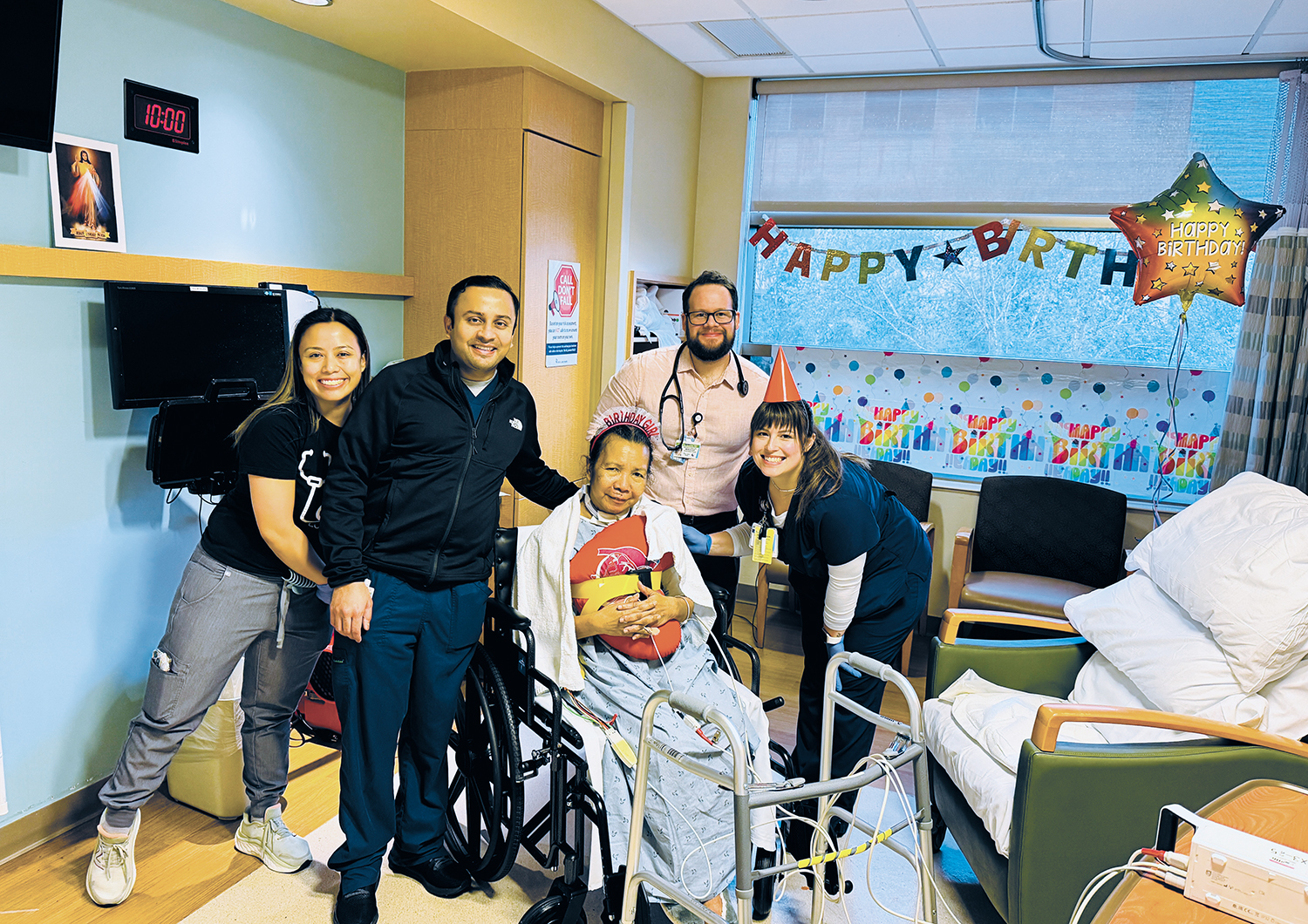
Alisna was so sick that Patel wasn't sure what else he could do. "I had already prepared the family," he said. "And I told them, we don't really understand exactly what's going on, which was incredibly frustrating because we like to know the problem so we can fix it."
Julie Ann Acedera, a daughter who lives with Alisna in Edmonton, said the family began calling others to alert them to her mother's worsening condition. "And on top of that, we were doubting ourselves," she said. Acedera and her siblings had urged their mother to undergo the bypass surgery.
On July 22, with hope fading, Patel prepared to close Alisna's chest, but first he examined her heart again. Dialysis had reduced the fluid in her body, and her heart looked less swollen. He had tried to shock her heart directly using internal paddles.
That's when the inexplicable happened.
"Her heart came right back," Patel recalled. "She had a normal rhythm, and it was perfect."
He immediately thought three things: OK, this is great. And: What is going on? Also: The road to full recovery will be long. He knew everyone, especially Alisna, would have a lot of work ahead.
"Her heart woke up," he said. "Things were better, but it still takes a long time to recover."
After Patel closed Alisna's chest, she needed a few more surgeries to stop internal bleeding but eventually was taken off the ventilator, feeding tube and dialysis.
The first time Aldaba, the ICU manager, saw Alisna awake and smiling after the breathing tube was removed, she burst into tears. "And I literally told her, 'This is not good. I just got in here, and now my makeup is ruined.' And then she started laughing."
Aldaba said: "She was a miracle."
'Like a celebrity'
In all, Alisna was hospitalized for two months, with three weeks in intensive care. She had more than a dozen surgeries and more than a dozen additional procedures. She was discharged Sept. 10. Ultimately, she walked out of the hospital, off dialysis and eating on her own.
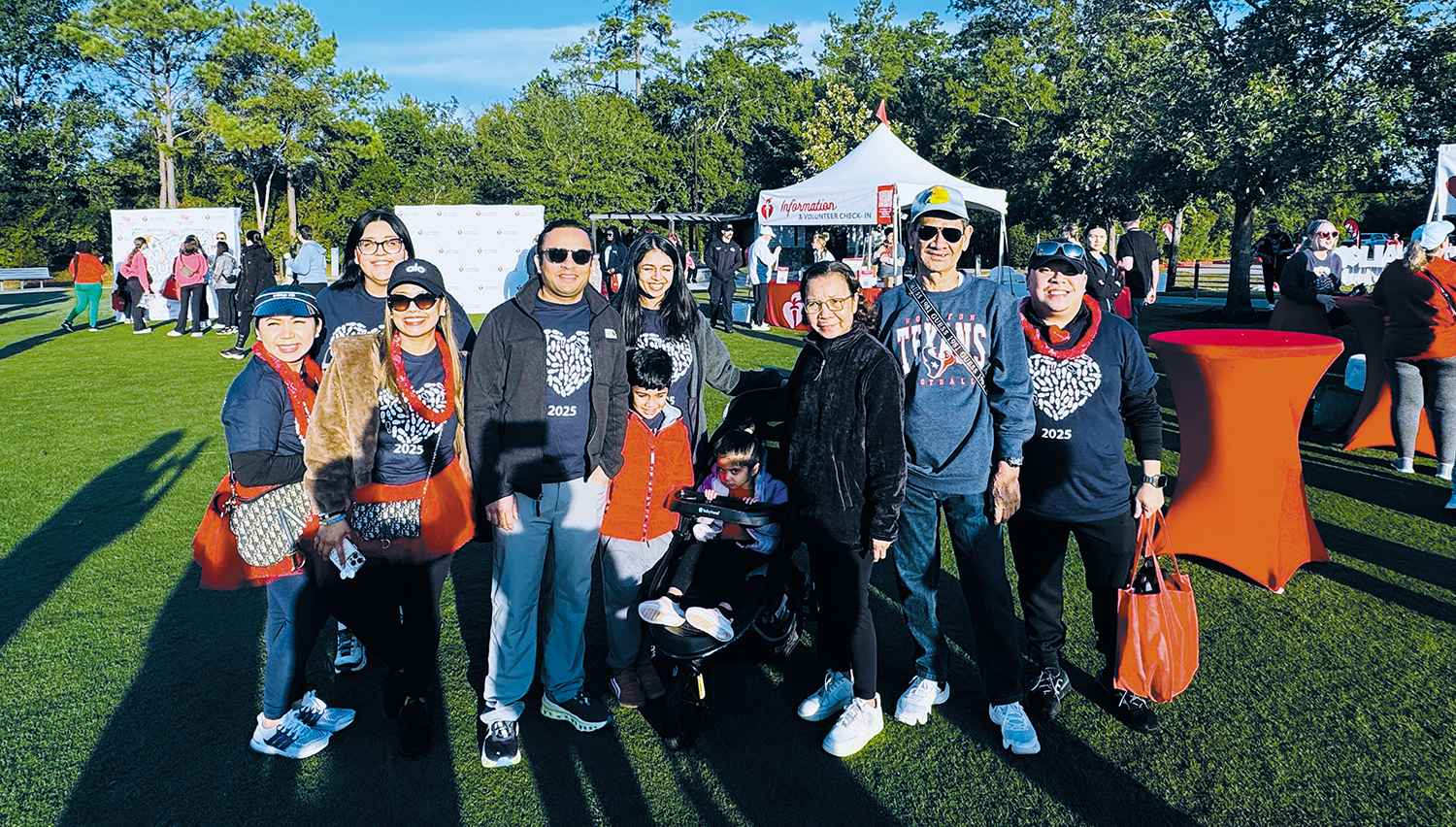
Shortly after discharge, her feeding and tracheostomy tubes were removed in the clinic. At the end of October, she reunited with nurses and caregivers at the local American Heart Association Heart Walk. "Medy was like a celebrity," Patel said. "She was like an influencer. Everyone wanted to take pictures with her."
Patel says Alisna's family clearly appreciated the nurses, who took such pride in their work: Every time she came into the operating room, he pointed out, her hair was neatly braided. "They took really good care of her as a person," he said, "which I think is a testament to the team that we have."
He said Alisna is tough, resilient and has a great support system. "I'm not Catholic, but I certainly think God was looking out for her, because it's a lot to undergo and come out on the other end. And I think we're all better for having known her, too," he said.
Alisna continues to recover and walks one hour a day on the treadmill. She suffered no neurological or kidney damage from her ordeal.
"I'm so good," Alisna said in a recent interview.
She said she was extremely grateful for the staff at the hospital. "I feel like they're my family," she said.
She said staff always made sure her prayer book and rosary were with her along with the Jesus figurine. Her family and caregivers knew she had shaken the sedation and regained her lucidity when she could remember her prayers.
And she knows her prayers were answered during her long hospital stay. Even when she prayed one morning for a sip of water, she recalled, a nurse came along with ice chips.
"And so all the miracles," she said, "I feel it. I feel it."