
With the recent legalization of physician-assisted suicide in multiple states, about one-third of the U.S. population now lives in a state where the practice is legal.
In line with the Ethical and Religious Directives for Catholic Health Care Services, Catholic health systems and facilities do not offer assisted suicide. But the practice's legalization has introduced complex ethical and clinical questions and concerns for them.
During a recent CHA webinar, three ministry ethicists illuminated some of these questions and provided insights on how Catholic healthcare providers can think about and approach the concerns.


The presenters emphasized that when patients face the type of debilitating suffering that might cause them to ask for physician-assisted suicide, providers should seek to understand the patients' needs and address them in a comprehensive and holistic way.
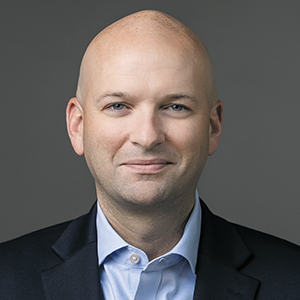
"We have to be very clear about what we can and cannot do according to the norms of Catholic healthcare," said Nicholas Kockler, vice president for system ethics for Providence St. Joseph Health. When patients request assisted suicide, he said, "we can lean into the conversation … and that can be the springboard for a broader conversation about what their needs are. Because often these requests might reflect an unmet need.
"So let's try to better understand that in a patient-centric sort of way," he said.
Kockler, Mark Kuczewski and Michael McCarthy presented the May webinar, "Physician Aid in Dying: Ethical and Clinical Questions," part of CHA's Emerging Topics in Catholic Health Care Ethics series. Kuczewski is a medical ethics professor and director of the Neiswanger Institute for Bioethics at Loyola University Chicago Stritch School of Medicine; and McCarthy is an associate professor with the graduate program and director of healthcare mission leadership for the Neiswanger Institute.
Legalization trend
Kuczewski told webinar participants that with the legalization of physician-assisted suicide in Delaware, Illinois and New York within the last year, 13 states now allow the practice. He said that the first state to do so — Oregon in 1994 — set the trend, and its statutes have become a model for the other states.
Kuczewski explained that most of the statutes apply to adult terminally ill patients with decision-making capacity and whose condition is expected to prove fatal within six months. The laws emphasize giving these patients information on their options. The laws also grant physicians legal immunity to provide patients with a lethal dose of medication to self-administer.
Kuczewski said that while the state laws do not mandate that clinicians provide assisted suicide, complicated questions have arisen around providers who conscientiously object to the practice. For instance, to what degree would ministry providers be advancing assisted suicide if they provide information about it at patients' request, or if they refer those patients to providers who offer it?
He emphasized that ministry facilities in the 13 states should be well prepared to respond if patients make the request. The providers should at least make clear to the patients what they can and cannot offer. He said providers also should document the patients' request and the details of the conversation in the electronic medical record.
Revised directives
McCarthy told webinar participants that recent revisions to the Ethical and Religious Directives by the United States Conference of Catholic Bishops have a direct bearing on how ministry providers should approach questions around physician-assisted suicide.
Specifically, Directive 56 deals with the concepts of ordinary and extraordinary treatment, or how end-of-life decisions should be made; Directive 59 covers the topic of euthanasia, or what ministry providers cannot offer; and Directives 61 through 63 delve into the provision of physical, spiritual and psychological support. Those latter directives cover what should be offered to suffering patients.
McCarthy emphasized that these directives make it clear that suffering patients do not have to go to extraordinary lengths to get treatment for serious illness and that ministry providers must provide holistic care and may not intentionally cause the death of patients.
He explained that Directive 27 deals with cooperation and referrals. It says that if patients or their decision-makers ask for interventions that conflict with church directives, the providers may not directly refer patients to providers that do provide those options. But he said they can transfer the patients' care to providers that the patients have chosen on their own.
McCarthy said some of the most complex questions around cooperation have to do with the extent to which ministry providers can help patients who make choices that are ethically illicit. He asked rhetorically what it might look like when "we're not cooperating with the process of the physician aiding the dying — not contributing something essential — but that we somehow want to continue to accompany that patient through the dying process."
Good conversations
Kockler described multiple scenarios to illustrate complications that can arise for ministry facilities and their providers in states that have legalized assisted suicide.
For instance: What if a patient in the intensive care unit does not want to endure the pain of rehabilitating from a stroke and instead asks about assisted suicide? What if a longtime, chronically ill patient asks clinic staff about all options for if he or she can no longer live independently? What if a hospice patient with advanced cancer and severe pain asks about drugs to hasten his or her death? What if that hospice patient chooses to go elsewhere to obtain physician-assisted suicide, but the ministry hospice team still wants to provide accompaniment?
Kockler cautioned against assuming that palliative care is an answer to all such dilemmas. He said research shows the most common reasons patients request assisted suicide are that they fear losing their autonomy, they fear becoming increasingly dependent, they lament not being able to engage in meaningful activities and they do not want to lose their dignity. Clinical care alone cannot address these concerns.
So, he posited, how can ministry providers field patients' requests for assisted suicide in a way that stays true to the ministry's mission, avoids illicit approaches, and honors the patients' dignity while also meeting their needs?
He said that the key is for ministry providers to talk with patients, to understand at a deep level the needs and concerns they have, and to find holistic ways to address those needs. He said ministry providers must be a steadfast presence, refusing to abandon the patient.
Quoting the Vatican's 1980 Declaration on Euthanasia, Kockler said, "What a sick person needs, besides medical care, is love, the human and supernatural warmth with which the sick person can and ought to be surrounded by all those close to him or her, parents and children, doctors and nurses."