
As director of food and nutrition services at Providence Portland Medical Center in Oregon, Michael Tjaden makes sure patients get delicious meals that nourish and help heal their bodies. But he also enjoys serving up a little nourishment for patients' souls.
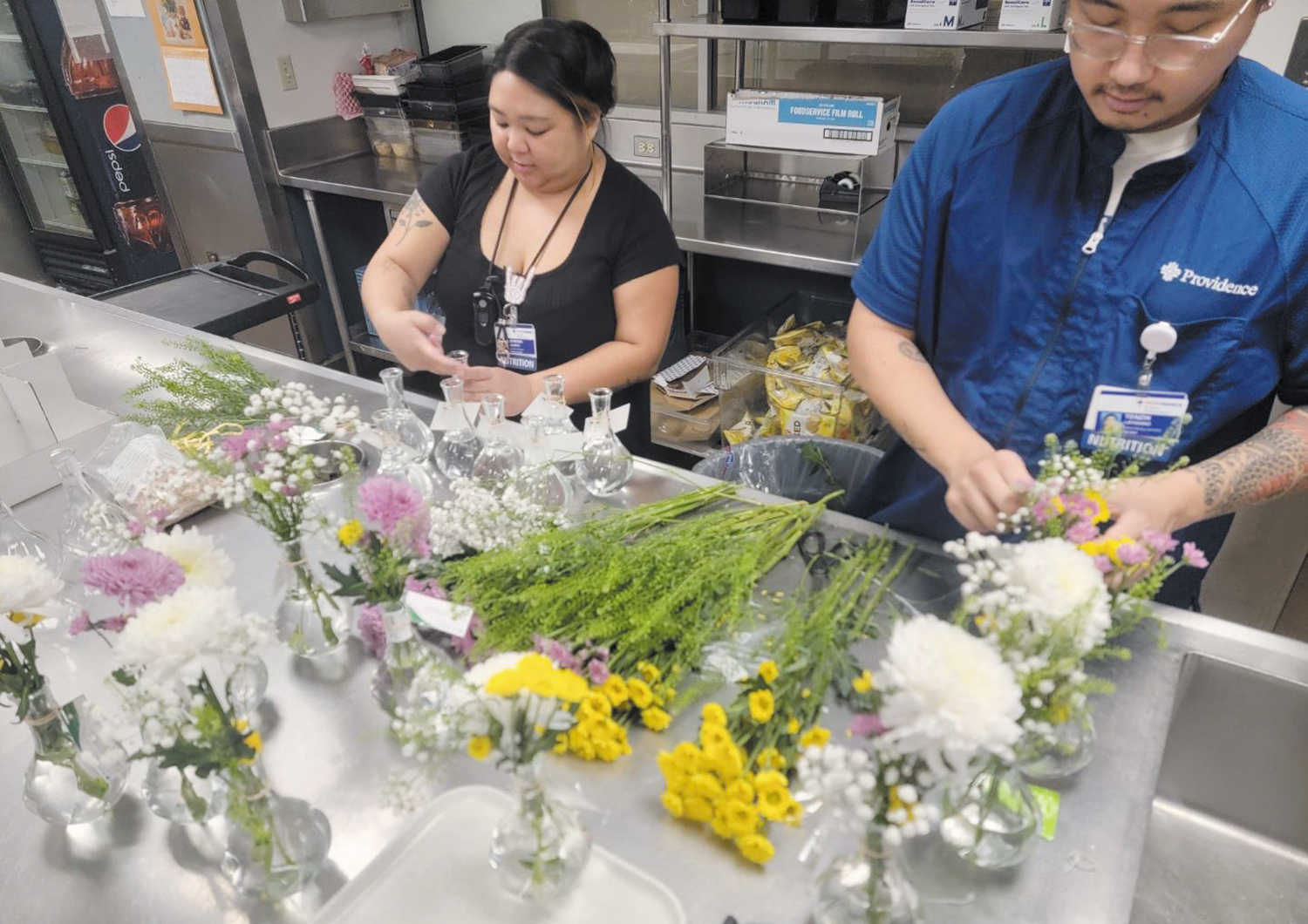
Members of his team identify which patients at the hospital, part of Providence St. Joseph Health, might need an extra boost. Then, they deliver a small vase of flowers to their room.
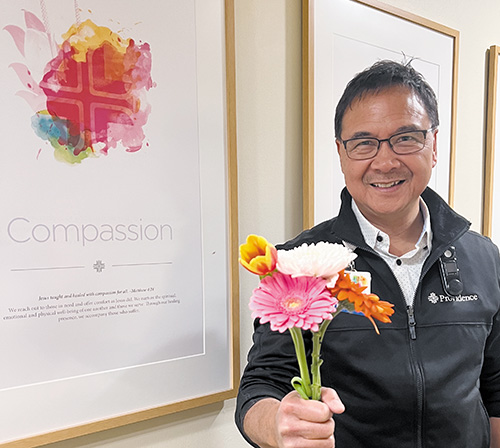
Sometimes, patients aren't sure how to react.
"It goes from, ‘Oh my gosh, it’s so wonderful,' and sometimes we get the reaction of, 'Why don’t you hand this to someone else?'" Tjaden said.
If family members are in the room, often they stop later to thank the food and nutrition services worker, saying how much the flowers meant to their loved one. "It’s been overwhelmingly positive," Tjaden said.
Compassion in bloom
Until about 10 years ago, the hospital had a similar flower program headed by a food service supervisor, Patrick Helling. He brought flowers from his own garden to share with patients, and so did other employees. The effort, called Let Your Compassion Bloom, ended when Helling retired.
Tjaden got the idea to restart the program last year. To get feedback from patients at the 483-bed hospital, his staff typically round to 20% of the rooms, seeing nearly 100 patients a day. Team members ask about the menu, the temperature and quality of the food, and the courtesy and helpfulness of the food and nutrition staff.
"So it’s just basic questions that we learn from patients. But sometimes, all they want to do is talk," Tjaden said with a laugh.
The staff saw that sometimes patients are lonely, or they’re emotionally drained, and they need a lift.
Tjaden thought about the Let Your Compassion Bloom program and decided to reseed it, so to speak. The patients who really needed a boost, he thought, should get flowers. "It was a human need," he said.
Growing and distributing
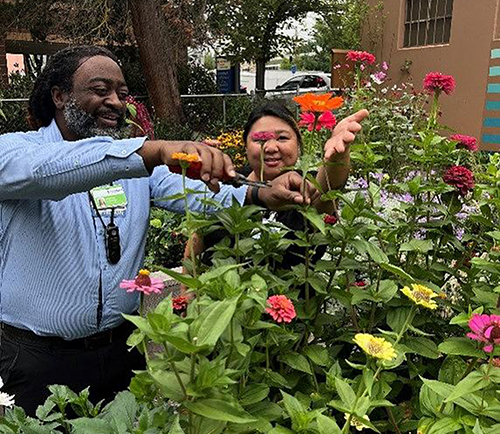
He and other members of his team grow flowers, mostly dahlias, in the Providence Portland community garden, just east of the hospital. Other hospital departments also tend beds in the garden and contribute those flowers. During the winter and early spring months, Tjaden's team buys flowers for arrangements with department funds. They deliver about 50 bouquets a week in the colder months, and more than 100 in the warmer months when more flowers are available.
Sometimes, food and nutrition services provide vases of flowers for other caregivers on the floor to deliver to rooms. Sometimes they add bouquets to the department’s "WOW cart," which has coffee, snacks, cookies and word puzzles for patients and families to enjoy.
Sometimes, Tjaden's staff simply deliver flowers to nurses' stations for those workers to enjoy. "Because when we partner with our nurses, it helps our department, because we work together as a team, right?" Tjaden said.
Certain patients can’t have flowers in their rooms, so Tjaden's team is thinking about delivering something different, such as balloons or artificial flowers.
Each room delivery comes with a card saying the flowers are from food and nutrition services and asking patients for feedback on a survey sent by email. "Thank you for allowing us to serve you during your stay!" the card says in part.
Tjaden has noticed higher satisfaction rates. Press Ganey scores, a widely used patient survey system, "skyrocketed” in 2025, from about 40-45% to more than 80%, he said.
Giving away flowers wasn’t about raising the score, Tjaden said. "It was about the compassionate care, something very small that has a very large impact.
"We care for the poor and the vulnerable, right? But we also know that it’s not just about the nourishment for the care of the patients. It's about the human connection, and also about the moments that are needed most for the patients."
It’s an effort Tjaden and his team look forward to growing in the coming year.