
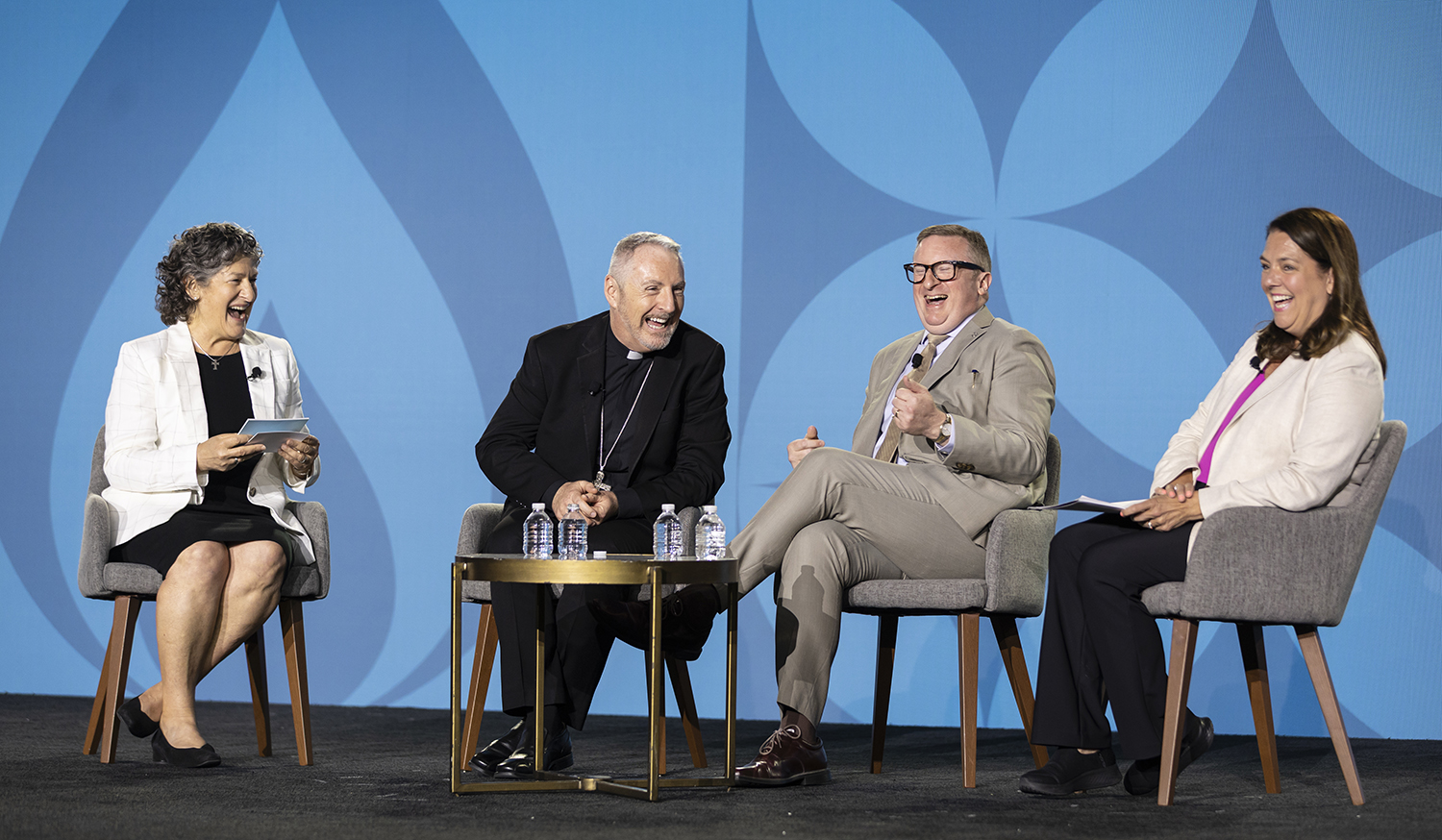
Several leaders of the church and its ministries examined this key question during a panel discussion at the 2026 Catholic Health Assembly. CHA President and CEO Sr. Mary Haddad, RSM, moderated the session titled "United for Change: Catholic Leadership in Advancing Human Flourishing and the Common Good." The panelists were Archbishop John J. Kennedy, secretary for the disciplinary section of the Vatican's Dicastery for the Doctrine of the Faith; Steven P. Millies, professor of public theology and director of the Bernardin Center at the Catholic Theological Union in Chicago; and Kerry Alys Robinson, president and CEO of Catholic Charities USA.
Consensus emerged among the panelists that the church and its ministries must unite to bring hope to people in need. Robinson said the ministries of the church "are realizing ... that we are so much stronger together. It's a natural partnership, because we are kindred spirits, (we use the) same language, same resources to draw from and same population that we care about."
Working in silos
The panelists surfaced numerous challenges that people are facing across the world. Robinson referenced the many people in need of material goods, including the chronically homeless. She said there is a continual onslaught against human dignity.
On a deeper level is a more existential need, she said: Everyone is searching for meaning.
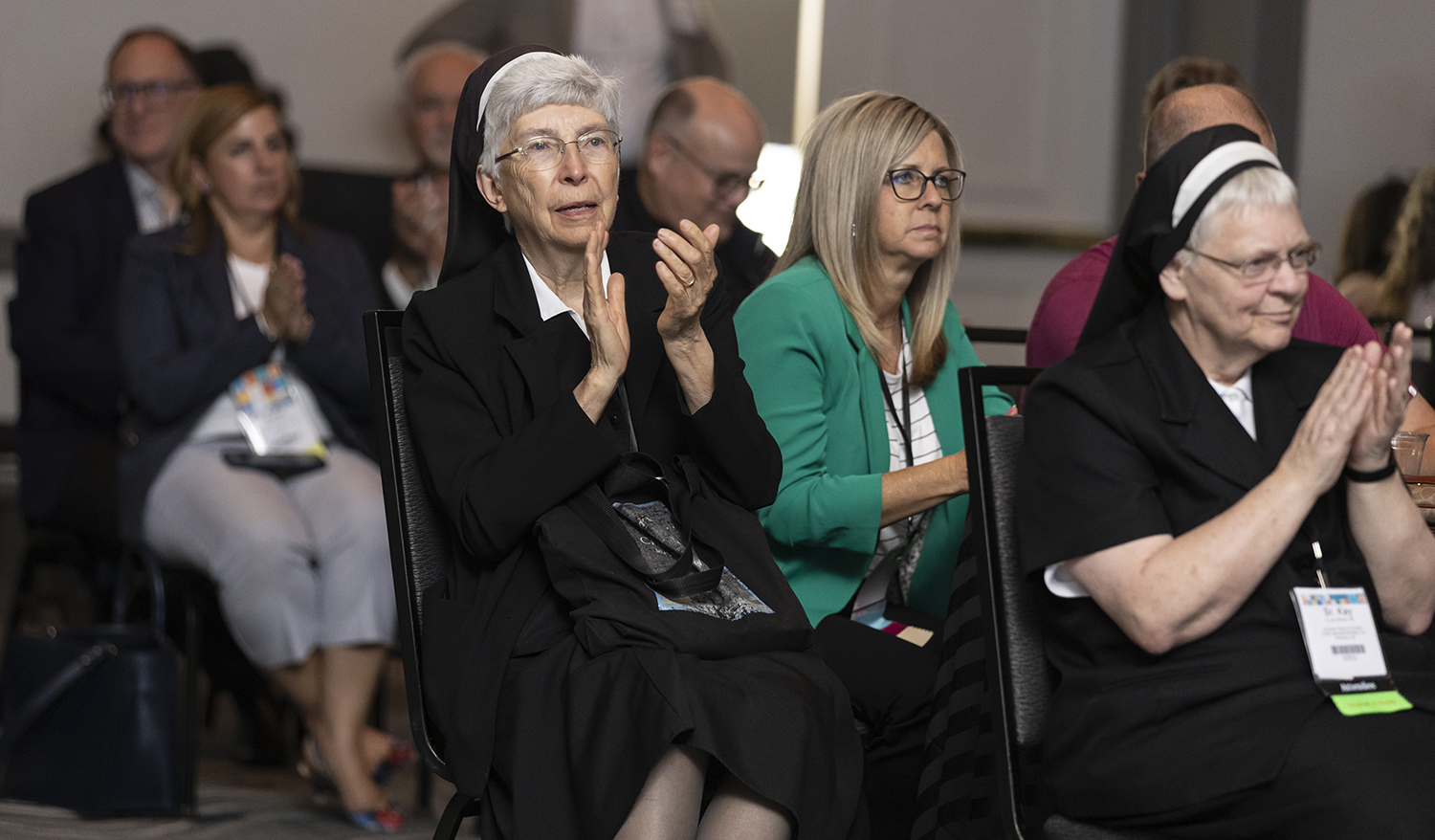
Millies added that there is an individualism and "siloing" that has crept into the church and its ministries, resulting in many of them confronting barriers alone. He called this separateness a "dangerous habit."
Friendship and fraternity
The panelists said the answer to such challenges can be found in Catholic social teaching, and it has to do with unity.
Millies said Pope Leo XIV's Magnifica Humanitas encyclical contains a "shocking, jaw-dropping" concept that can provide an answer to the challenges the church and its ministries are facing. The pope linked the social teaching of the church with shared discernment. In other words, Millies said, "We're doing this together." He added that Pope Francis' Fratelli Tutti encyclical provides ideas for how to cooperate. Millies said that encyclical reframed Catholic social teaching, putting solidarity, friendship and fraternity at the heart of everything the church pursues.
Robinson noted that as a representative of the largest humanitarian network in the world, Catholic Charities USA, she could attest to the value of the church's ministries working together for good. She said it's important for those ministries to continue to commit to that work, and to expand it.
She noted that Catholic Charities is focused on telling the story of the good work going on in the church, and she said storytelling is an important tool to advance solidarity in the future. She said stories can "show people that there is a reason for hope, and who doesn't want to belong to such a consistent conscious effort to be a beneficial presence in the world?"
Interacting with the secular world
Archbishop Kennedy noted that there is a wealth of talent to draw from in the Catholic Church, to be part of the work that needs to be done. He mentioned multiple times that young people could play a vital role. He said that youth today are drawn to Catholicism and expressing curiosity and interest in its timeless teachings.
He said the church should be willing to show the world the hope it offers.
Millies acknowledged that it can be awkward to work through the challenges of encountering the plurality of the secular world, but he pointed to the example of church leaders who have been open to change as a model. For instance, in the early days of the HIV/AIDS crisis, when Catholic sisters were treating those with the disease, they faced severe backlash from groups that said they were not doing enough. Rather than balk at the criticism, they looked inward, Millies said, and determined they should bring their HIV/AIDS work more in alignment with gospel values.
Not alone
To frame how the church and its ministries can work together, Archbishop Kennedy called to mind his experiences as a three-time pilgrim on the Camino de Santiago in Europe. He said pilgrims encourage one another, sharing supplies with people who are faltering and providing aid to them. He said, "It does change your mind on how you see your life. ... it makes you more grateful, and it makes you more aware of the needs of other people, and that you're walking with them. .... If we try to help each other a little bit more, the world could be a better place."
He added, "None of us is walking alone. That's the meaning of the church. We have a way forward. We can do it together."