
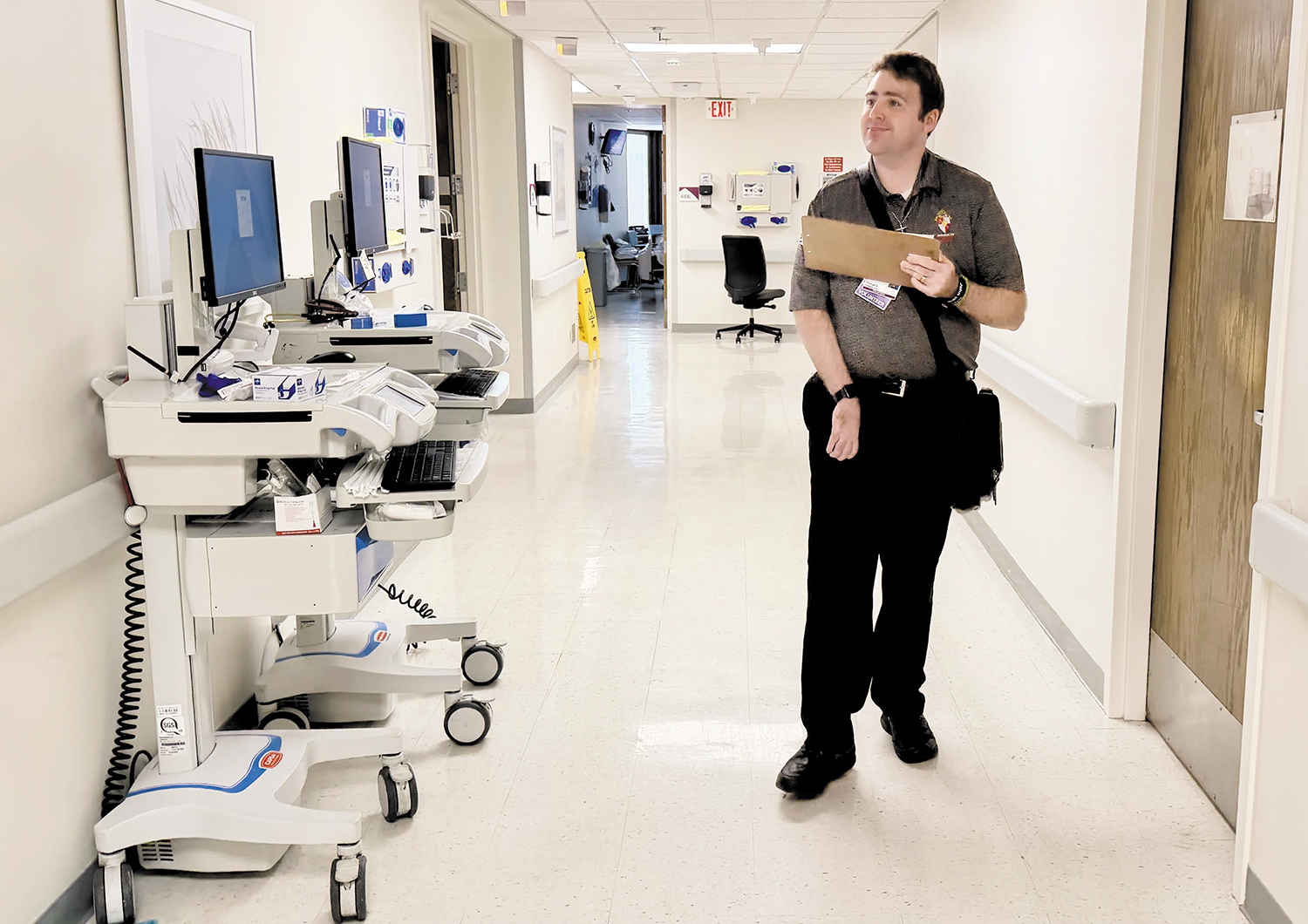
When Fr. Justino Moreno was a seminarian two years ago, he believed he was well-equipped to provide pastoral care to people who are sick and dying and their families. He had experienced the deaths of beloved grandparents, accompanied close family members through cancer treatment, and studied pastoral care in seminary. He felt prepared to provide spiritual support to his future parishioners.
But after spending two months in a chaplain shadowing program at Ascension St. Vincent's in Jacksonville, Florida, he found that hands-on experience — and the opportunity to process those experiences with the hospital's spiritual care team — was essential to preparing him for priestly ministry.
"I honestly was not expecting to learn so much as I did," he said.
Fr. Moreno, at the time a Diocese of St. Augustine seminarian studying at St. Vincent de Paul Regional Seminary, participated in the shadowing program at the 528-bed Ascension St. Vincent's Riverside. In the program, seminarians become oriented to the hospital setting and accompany chaplains who work there. The seminarians gradually take a more active role in that work. They then perform the chaplaincy functions on their own, including visiting patients, family members and staff and assisting with sacramental ministry throughout the hospital.
Now an ordained priest serving as parochial vicar at Holy Faith Parish in Gainesville and assisting at St. Augustine Church in Gainesville, Fr. Moreno said he continually draws on what he learned at Ascension St. Vincent's. For example, he recently made a pastoral visit to a hospitalized parishioner and the parishioner's family. He said the patient was very relieved to have a priest who was comfortable and confident providing spiritual support.
Fr. Moreno said the two months at Ascension St. Vincent's "served me so much, so I could do this type of ministry when I'm called to do it."
An evolving collaboration
The St. Augustine diocese currently has 31 seminarians.
Deacon Stephen Arnold, an Ascension St. Vincent's chaplain specialist, said seminarians nearing ordination complete a pastoral care practicum, such as in a jail, a prison or a social outreach ministry. Frank Wyler, Ascension St. Vincent's spiritual care manager, said the diocese had difficulty finding opportunities for seminarians to complete in-person practicums at the outset of the COVID-19 pandemic. So the diocese approached Ascension St. Vincent's about hosting the seminarians. "We just said, 'Yeah, we'd love to do that because we're all about building that relationship with the diocese,'" Wyler recalled.
He added that many parts of the country are experiencing a priest shortage, "and so it was very important to me, and just who I am as a person wanting to help people grow, just giving a place for seminarians to come and learn more about what hospital ministry looks like."
Through collaboration, the hospital, the diocese and the seminary determined the format of the shadowing, and beginning in 2024 the seminary offered it as a practicum option. Three seminarians participated in the shadowing program in 2024, none did in 2025, and two did this year.
Arnold noted that the program is evolving. This fall, the hospital will begin welcoming men training to be permanent deacons to complete a shadowing practicum at Ascension St. Vincent's. In the future, the hospital will invite new seminarians for a short stint to get initial exposure to the hospital and its chaplaincy department, with the expectation that many will return for the two-month program later in their studies.
Four areas of formation
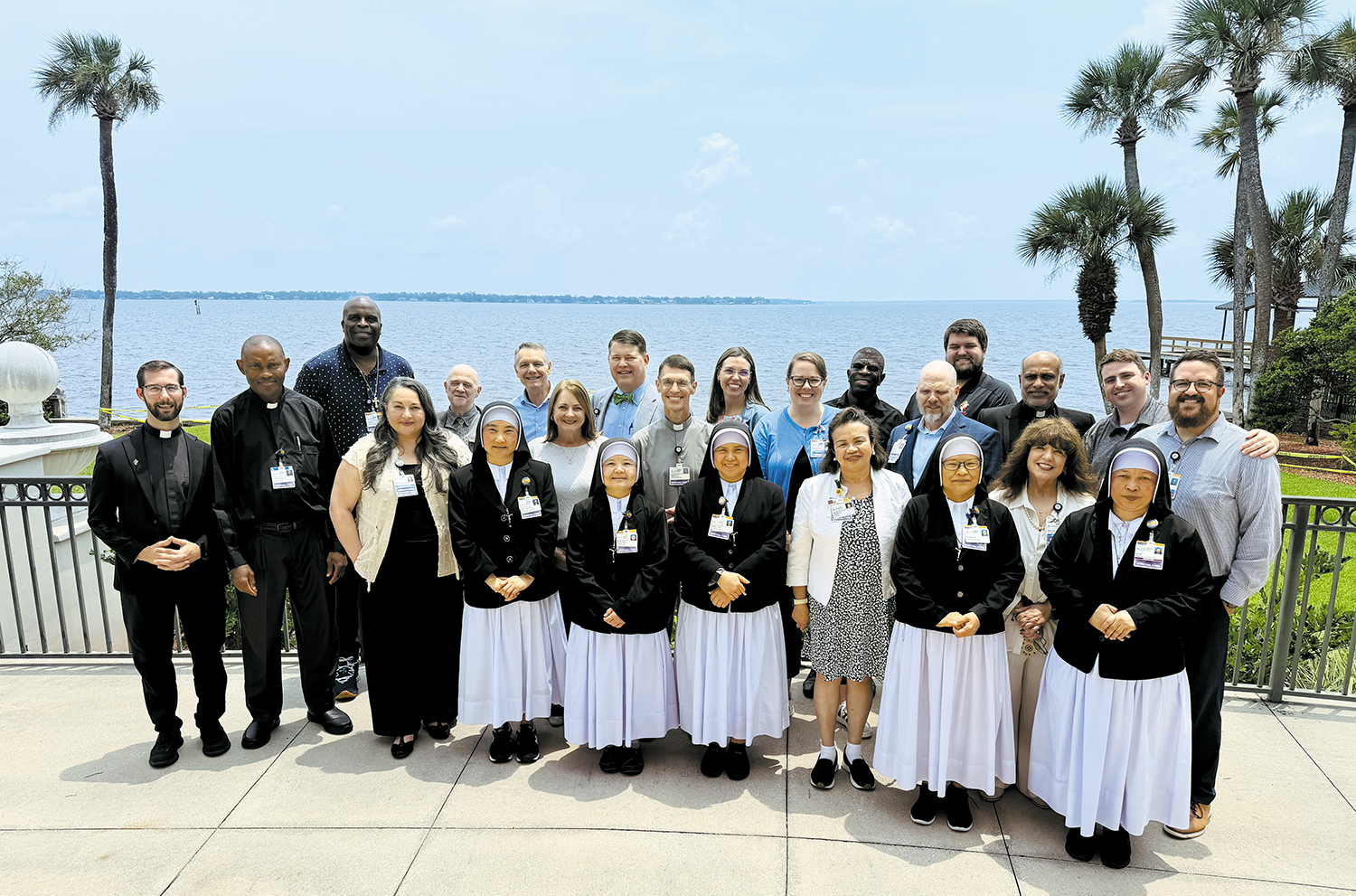
Ascension St. Vincent's Jacksonville includes four hospitals. Its spiritual care team includes 11 chaplains, two full-time priests, two priests who serve on an as-needed basis and a manager. These team members perform a variety of roles, including providing emergency and crisis care to patients and families, responding to referral requests and sacramental needs of patients and families, and offering education and spiritual support to staff.
Arnold said the camaraderie among team members, along with intentional supports within the department have been key to the team's effectiveness. Team members support one another in the often-difficult work of spiritual caregiving, through debriefings, ongoing discussions and idea-sharing and stepping in for colleagues who need a break. It is typical for team members to participate together in on-campus Masses then have lunch together to fortify their bonds. The team also frequently completes "verbatims," in which they process difficult situations they're working through, preserving patient anonymity. They also frequently discuss materials, such as articles on how to understand patient needs.
Fr. Moreno said that being immersed in this department and all these activities enabled him to deepen his own priestly formation, which the seminary teaches is focused on four realms: human, intellectual, pastoral and spiritual. "This experience really helped me in all of them," he said.
Part of a family
Seminarians Jacob Crowell and George Gilbert completed their shadowing this summer. Crowell said while he is still discerning his path, he likely will become a parish priest. He said an unexpected godsend that came from the Ascension St. Vincent's practicum was working with people from many faiths, "and being able to learn how to best work with them and pray with them as well. You know, these are our fellow brothers and sisters in Christ … and to be able to work together for the common mission of Jesus — Jesus Christ's mission here on earth — has been a true blessing."
Gilbert said healthcare chaplaincy had not been on his radar screen until Bishop Erik Pohlmeier of the Diocese of St. Augustine saw qualities in him that the bishop thought would be great for chaplaincy and suggested he complete his practicum at Ascension St. Vincent's. Gilbert underwent surgery as a child to address severe seizures associated with Rasmussen syndrome, a neurological condition. The procedure cured his seizures but resulted in a loss of motor skills on his right side.
Despite all the time he has spent in medical settings because of his condition, at the outset of the practicum, he wasn't entirely at home in the hospital. "With anything new, there's always a little element of kind of uncomfortability, and also at times that you feel like you're over your head," he explained, "but (with) more and more exposure to it, I've noticed that there is more of growing confidence, and also a great growing joy to just bring comfort if need be, and also just to be present to the patient."
He said over the course of the shadowing, he has been "falling in love with the ministry" of healthcare chaplaincy and feeling "like I'm one more associate in a big family."
Win-win-win
Arnold said having the seminarians as part of the spiritual care team has been a "win-win-win," with the seminarians preparing well to help people spiritually, the diocese gaining a beneficial practicum site and the hospital expanding its team's reach.
He added that the hospital's chaplains learn more about themselves and their own ministry as they guide the seminarians. They also like seeing the vibrancy of newcomers to the priesthood. And, they're enjoying the relationships they're building with the seminarians.
Wyler added that the Catholic health ministry generally has been concerned about a chaplain shortage, and particularly a shortage of priest chaplains. Similar collaborations between Catholic health systems and dioceses could help to address that, he said.
For Fr. Moreno, shadowing helped him better grasp how he can extend the ministry of Jesus Christ through pastoral care. He said of the patients and families he visited: "They know that there's somebody that I believe in that's encouraging me to visit them; and, you know, nobody does that for fun, right?
"And so we do it because we care about them."
Further reading:
Two CommonSpirit hospitals launching chaplain shadowing program for seminarians