
When 22-year-old Kylee Haines of Roseburg, Oregon, learned early this year that she could join other local students in making a film to build awareness of public health threats to young people, she jumped at the chance.
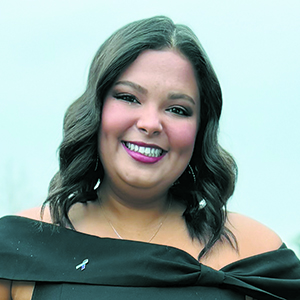
Having survived a suicide attempt and then having found a passion for advocating for mental health, she says she "knew being a part of this would be meaningful and impactful for the mental health community."
She is one of nearly a dozen students who signed on for the Student Creator Project from CHI Mercy Health's Mercy Foundation. The grant-funded program offered the young people — including Roseburg-area middle school, high school and college students — the opportunity to participate in a series of workshops on filmmaking. The project culminated in a whirlwind production day, with the students filming their public service announcements.
Half the students produced an announcement on suicide prevention and mental health. The other half produced one on distracted driving.
Haines, a sophomore at Roseburg's Umpqua Community College, helped produce and played the lead role in the video on suicide prevention. She says taking part in the project "was absolutely incredible and life-changing."
"The film is a reminder to check in on those around you and to remind others that they aren't alone in their struggles," Haines says.
She says she hopes the film "truly does save a life — that's the whole point."
Sex, lies and videotape
CommonSpirit Health's CHI Mercy Health is a 174-bed hospital in Roseburg, in southwest Oregon. Lisa Platt is executive director of CHI Mercy Health's Mercy Foundation and Marion Pearson manages the foundation's violence prevention program. They say the Student Creator Project goes back decades. Beginning in the early 2000s, the Roseburg hospital offered a program that enabled young people to film vignettes about public health threats to be shown to their peers. The hospital called the program Sex, Lies and Videotape, in a nod to a 1989 movie of the same name.
The program petered out, but in 2010, Platt attended a conference on child abuse. That sparked her memory, and she spurred the project's resurrection. Under the new iteration called Youth Media Project, young people produced videos that could be shown on local television stations. The pandemic ended that program.
A couple years ago, Platt and Pearson again revived the project, though it has taken some time to regain momentum. This year, they've reimagined it as the Student Creator Project. Now, they're involving individuals and organizations with filmmaking and promotion expertise in supporting the students and teaching them skills to make their own films. In the past, the students had a less hands-on role.
Key players in this year's rollout were Jake Tranter and the nonprofit Douglas Public Health Network. As a youth, Tranter participated in Mercy Foundation's legacy film projects, and he says he found the experience "magical." After graduating and serving in the military, he founded Spiderking Studios, which provides film production services in Douglas County, Oregon. Tranter credits his love of filmmaking in large part to Mercy Foundation's programming. He and his team now lend their expertise to the Student Creator Project. The Douglas Public Health Network helps promote the project and produces a behind-the-scenes documentary of the work that goes into the films.
Lights, camera, action
Platt, Pearson, Tranter and representatives of the Douglas Public Health Network spent late 2025 planning and preparing for this year's rollout. At the start of this year, they publicized the opportunity to youth. The marketing push included news releases, messages sent through the local school district and higher education network, presentations to youth groups, and posts on social media. Any youth aged 14 and up (or, younger, with parents' permission) could participate.
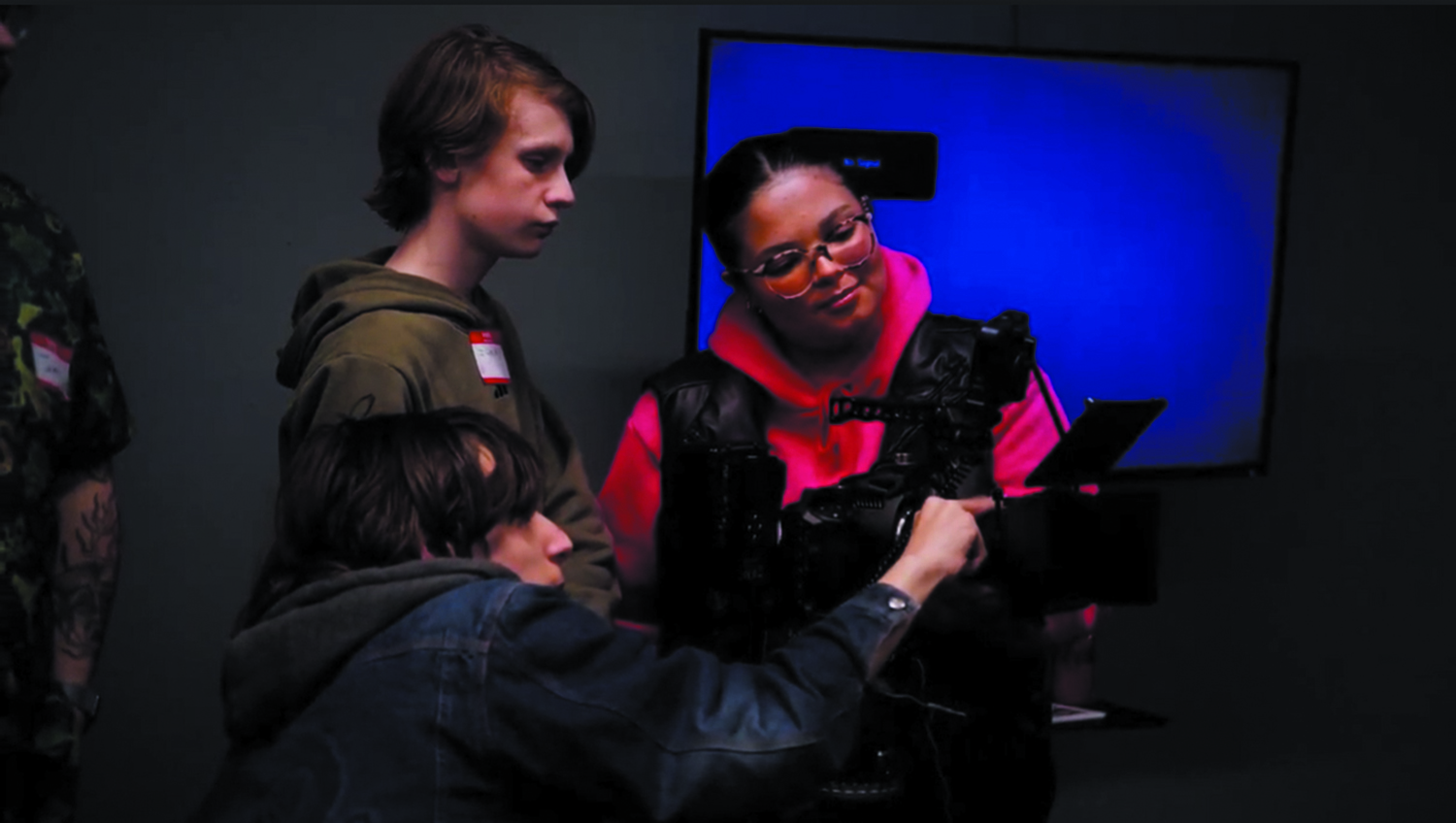
Seven students and three volunteers made up the final group of participants. Mercy Foundation offered several weeks of workshops, including hands-on lessons on storyboarding, scripting, acting, sound, lights and cameras. During those weeks, the students also chose their topics and began mapping out plans for their videos. Then, on a very full production day, the students, volunteers and Spiderking staff completed the filming. Spiderking staff then edited the videos.
The foundation premiered both films at a March 11 screening at Roseburg Cinema. More than 50 people attended. Now that the films are out, the foundation is working to get them released on social media, through media outlets and at schools.
"Choose to Stay"
Haines had never created a film before. During the workshops, her group learned about and discussed all that would go into their production. One group member excelled in storyboard writing, another in angle and scene setup, another in scripting, and another in props. Haines' own story formed the plot.
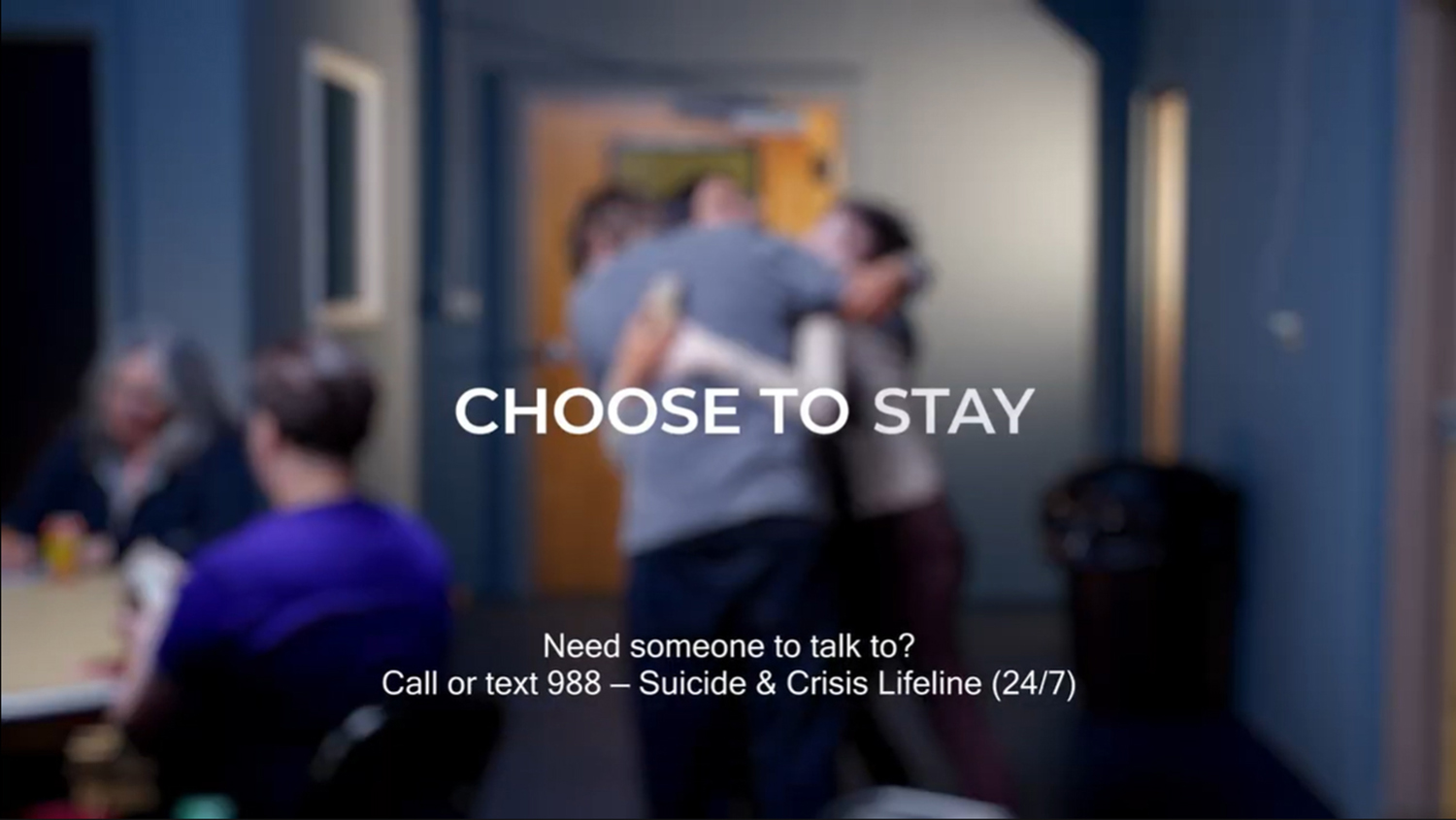
In the video, which runs just over a minute, a teenage boy approaches friends at a lunch table and laughs that he'd made his last "F" in school, implying he'd end his life. In the next scene, a young woman who had been at the table — Haines — contemplates a suicide note she'd written to her mom. In the following scene, the friends — including the boy who had received the failing grade — worry about where Haines is. She approaches them and, relieved to see her, they embrace her. This message appears on screen: "Choose to Stay." Afterward, a screen lists resources for those with mental health challenges.
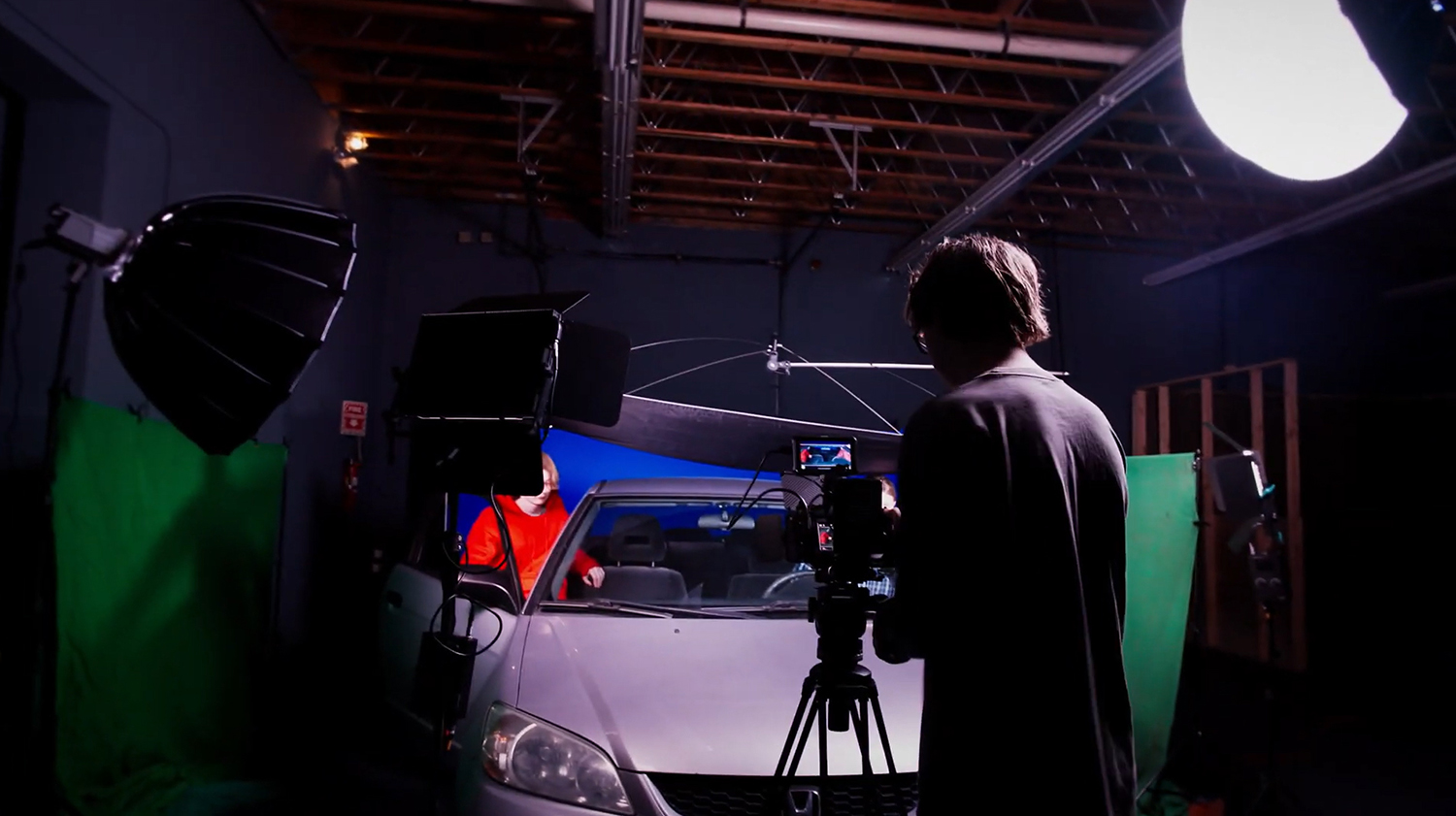
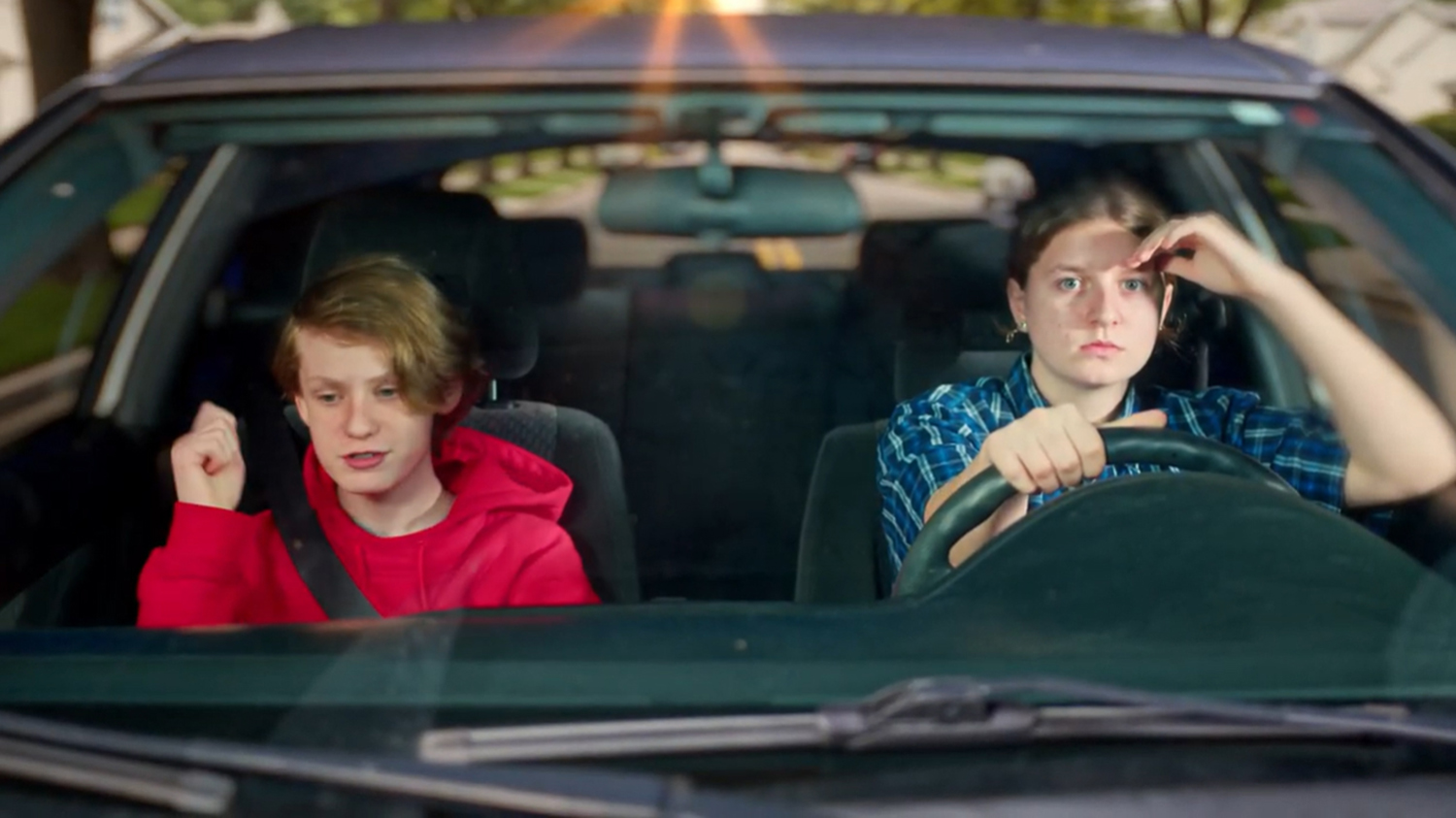
The video the other student group made features a teenage girl driving a young man through a neighborhood. The passenger constantly makes distracting comments and movements. Her attention diverted, the girl slams into a trash can, narrowly missing a pedestrian. A message — "One Distraction is All It Takes" — is followed by a screen listing organizations that address public health threats to the community, such as distracted driving.
Pearson estimates the foundation used about $20,000 to support the filmmaking. Most of the dollars came from CommonSpirit Health's Mission and Ministry Fund.
Reaching the right audience
Platt says Douglas County encompasses many diverse communities, including some where young residents confront numerous stressors. Pearson adds that they face many weighty socioeconomic issues, as is reflected in community health needs assessments. The foundation's violence prevention work seeks to help reduce public health threats such as child abuse, human trafficking, substance misuse and assault, and mental health-related harms, which are some of the topics that students have addressed through the film projects over the years.
"We want to build awareness and provide resources and support, so we can build up protective factors, so people can stay healthy," Platt says. "The goal is to reach kids through their own peer group."
Pearson says the students' films can make a huge impact. "Their voices are important, and their voices are not always elevated like this," she says. "This is a chance for them to connect to their community, make new friends and address the issues that may be affecting them and their friends in a heavy way."
Platt says exposing youth to these weighty topics through film is much better than seeing them turn up in an emergency room, harmed by an assault, accident or other life-threatening incident.
Haines says she hopes the films reach the right audience. "It's about turning awareness into advocacy, and that's what we all did."