
In the middle of the night three years ago, Chief Nursing Officer Tracey Smithson got a phone call about a pregnant patient coming from a rural area several hours away from St. Dominic Hospital in Jackson, Mississippi. The patient, in labor and bleeding, had called 911 from her home.
The paramedics who picked her up could not find a hospital nearby that could properly care for her — the one they stopped at did not offer the specialized care she needed in its emergency room. The woman received blood there and the ambulance continued to Jackson.
When the woman arrived, she was in critical condition. She survived, but the baby died after delivery.
The staff debriefed afterward. "We said at that point: We've got to do something different here," Smithson recalled. "We've got to bring this to attention."
The hospital, part of FMOL Health, recently opened an obstetric emergency department that is staffed around the clock with an obstetrician and support staff. Pregnant patients can get immediate evaluation and treatment for conditions like preterm labor, bleeding or high blood pressure, and bypass the traditional emergency room. A 2024 article in the American Journal of Obstetrics & Gynecology reported that there has been a rise in such programs over the last two decades, with the first thought to have been launched in Florida in 2007 by the Ob Hospitalist Group. The article said clinical outcome data for OB-EDs is scarce.
The authors go on to say: "We believe that safe, high quality, and financially sustainable care for pregnant patients is elevated in a specialty-specific OB-ED. We anticipate that the number of OB EDs will continue to increase across the U.S. as a financially solvent model of care."
Institutions with OB-GYN hospitalists on staff have lower rates of maternal morbidity, according to a study from the Mayo Clinic.
Ob Hospitalist Group lays claim to being the nation's largest OB-GYN hospitalist provider. The company reports supporting 240 OB-ED launches nationwide, including with Providence St. Joseph Health, CommonSpirit Health and Trinity Health. It says the partnerships ensure 24/7 coverage, uplift best practices in maternal care and reduce the workload and burnout of local private physicians.
Mercy Health — St. Rita's Medical Center
Mercy Health — St. Rita's Medical Center in Lima, Ohio is one of several Bon Secours Mercy Health facilities with an OB-ED. Lima, about 78 miles southwest of Toledo, Ohio, is considered rural. The OB-ED, which opened in April 2025, serves as a vital link to patient care unavailable elsewhere, says Dr. Abeer Ahmed, the hospitalist in charge of the department.
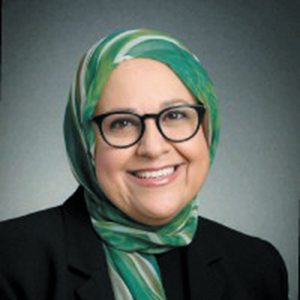
Ahmed said some smaller hospitals in the region have closed their OB units, so patients who otherwise would have delivered there come to St. Rita's.
She said one advantage of having an OB-ED is a better work-life balance for obstetricians. The doctors only get notified about a patient who comes to the department if the patient is admitted to St. Rita's. Ahmed is one of five primary OB-GYNs staffing the St. Rita's OB-ED, and other Ob Hospitalist Group providers can be called to fill gaps in the schedule, she said.
While Ahmed and her colleagues commute to Lima for their shifts, she said the model reflects a thoughtful approach to assuring access to specialized care in areas where recruitment can be challenging. "This structure allows the hospital to support local OB providers and helps ensure patients continue to have access to expert care, even when staffing sources are limited," she said.
HSHS St. Elizabeth's Hospital
Dr. Elizabeth Vonderhaar is a medical director for Ob Hospitalist Group who leads the OB-ED at HSHS St. Elizabeth's Hospital in O'Fallon, Illinois, about 25 miles east of St. Louis. The hospital delivered 716 babies last year. Vonderhaar said the OB-ED allows St. Elizabeth's to offer a higher level of obstetrical care than some other hospitals can.
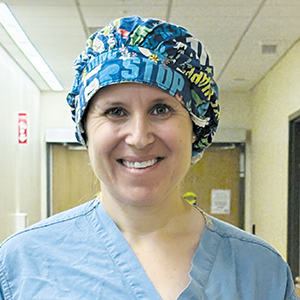
"If you've been doing obstetrics long enough, you know that things can change very quickly," she said. "Everything can be going perfectly with your pregnancy, and you can still have an emergency."
Vonderhaar is one of five core team members who cover St. Elizabeth's OB-ED, which opened in 2024 and uses a model similar to the one at HSHS St. John's Hospital in Springfield, Illinois. The department is staffed by labor and delivery nurses highly trained in obstetric emergencies, and they conduct a monthly planned OB drill with nurses, residents and physicians, as well as surprise drills involving multiple departments.
Vonderhaar also worked with Ob Hospitalist Group while practicing in Alaska. "They know what they're doing," she said of the nationwide network. "They're the champions of maternal health. You never have a question that is left unanswered."
Vonderhaar hears positive feedback from patients and families. Emergency care, especially for somebody who's scared about the well-being of their unborn child, is invaluable, she said. "It's seeing that provider's face and knowing that they have somebody taking care of them and making sure that everything's OK," she said. "It's always very appreciated."
Tracy Mensing, HSHS St. Elizabeth's Women and Infants Center manager, said in a statement: "By providing around-the-clock access to specialized obstetricians and nurses in a dedicated space designed just for them, we're living out our Catholic mission to protect and honor the dignity of both mother and child. It's our privilege to offer peace of mind and compassionate care when families need it most."
St. Dominic Hospital
Smithson said St. Dominic's OB-ED is just one way to address high maternal health and infant mortality rates in Mississippi. In 2024, the state's infant mortality rate of 9.7 deaths per 1,000 live births was the highest in the nation, according to the Mississippi State Department of Health. In August, state health officials declared a public health emergency over the rate, which hit its highest point in a decade. Meanwhile, the 2025 March of Dimes Report Card says the state has the highest rate of preterm births, or babies born before 37 weeks of pregnancy.
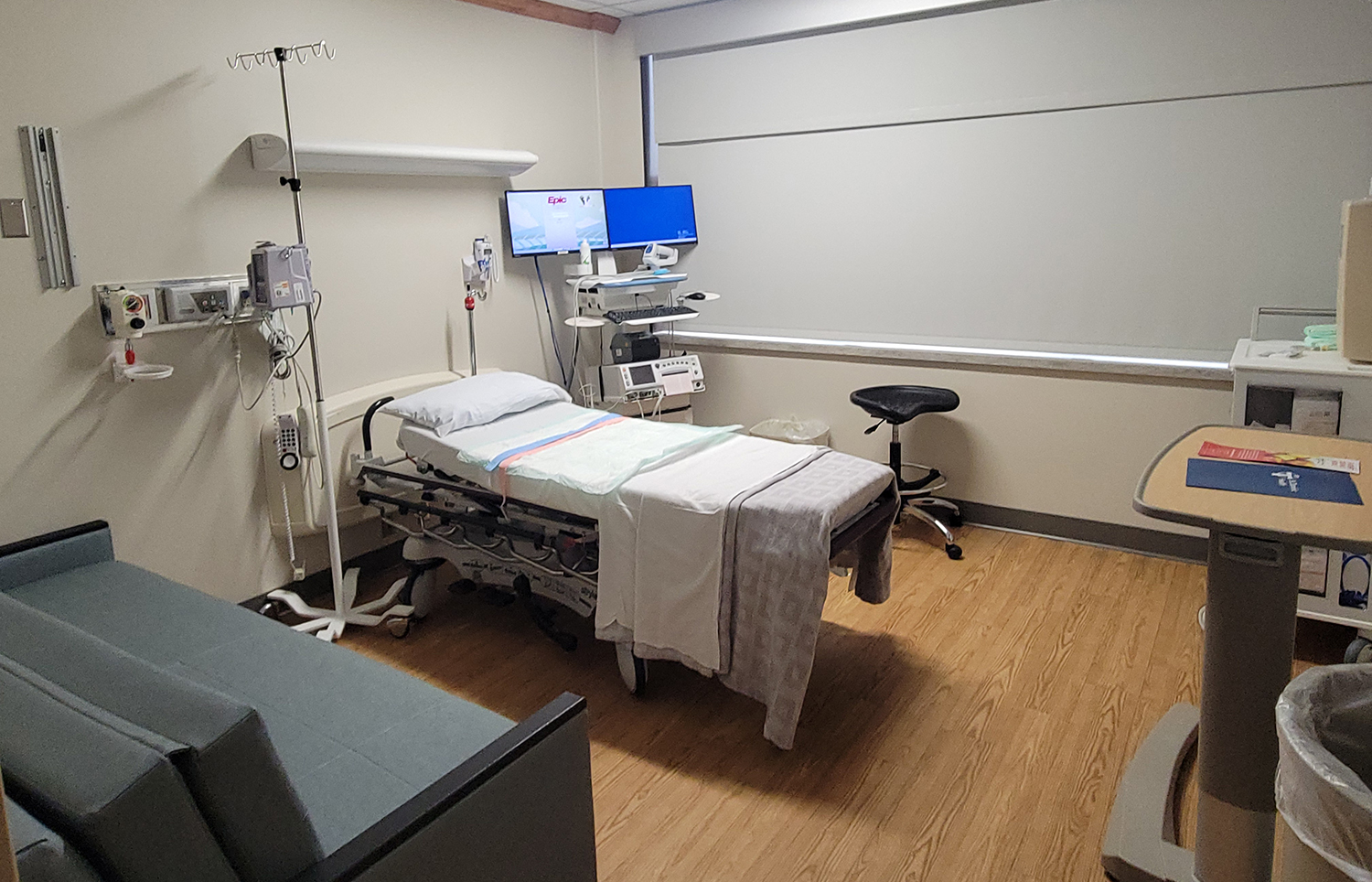
The OB-ED at St. Dominic has eight beds and is adjacent to the labor and delivery unit. The hospital had to delay opening the OB-ED for a few months as Ob Hospitalist Group hired enough physicians to work at the hospital, she said. There are not many OB-GYNs in the state, she said.
She said the arrangement helps OB-GYNs in the OB-ED have a better work-life balance. "I think they're loving it quite a bit," she said.
It also helps expectant mothers from the entire Jackson region. "We are just seeing people that we haven't seen before, driving in, coming from rural areas," she said.
While the OB-ED normally takes expectant mothers who are 18 to 20 weeks pregnant, it is looking into whether women who are miscarrying earlier in their pregnancy can be helped in the quieter environment of the OB-ED rather than the general emergency room.
"How can we meet these patients a little better than just having them sit in the ER? It's just a hectic place that you don't want to be, and so we'd rather have them up in the loving and specially trained hands of our nurses in the OB-ED," Smithson said.
She noted that St. Dominic is situated on a hill next to the interstate, in view of everyone who passes by. The FMOL Health logo, which includes a cross, and other crosses are prominent on the buildings.
"A lot of people will say, 'I drove towards the crosses.' We get that a lot because of the impact we have in our community," she said. "Sometimes you just do it because it's the right thing to do."
Mercy
Mercy Hospital St. Louis and Mercy Hospital South, both in suburban St. Louis, have handled more than 17,000 visits since their OB-EDs both opened in March 2025, according to an April press release. Both departments are run by Mercy clinicians, and each include an obstetrics hospitalist, an advanced practice provider, specialty trained nurses and patient care technicians.
"Giving our pregnant patients a place they can seek care in a less hectic environment than a traditional emergency department helps them feel a bit more comfortable in an uncertain situation," said Dr. J Todd Glass, chairman of the department of OB-GYN at Mercy Hospital St. Louis, in the release.
The OB-EDs replaced maternity triage units to offer a higher level of care with more oversight. The new OB-EDs have seen 20% more patients in their first year compared to the triage units.
One such patient was Mary Ridgeway, who went for a routine ultrasound at Hannibal Regional Hospital in Missouri when she was 28 weeks pregnant. The ultrasound showed the baby's heart beating very fast and it was later determined to be in supraventricular tachycardia, a type of fast heart rhythm. Ridgeway was admitted through the OB-ED at Mercy Hospital St. Louis and was there for 11 days for monitoring and treatment. She returned in August for an induction, again being admitted through the OB-ED. Baby Bodie was born healthy at 37 weeks.
"My husband and I were taken care of every single time we walked through those doors with compassion and care," she said in a statement. "We had great experiences at Mercy Hospital for every single visit we had."