
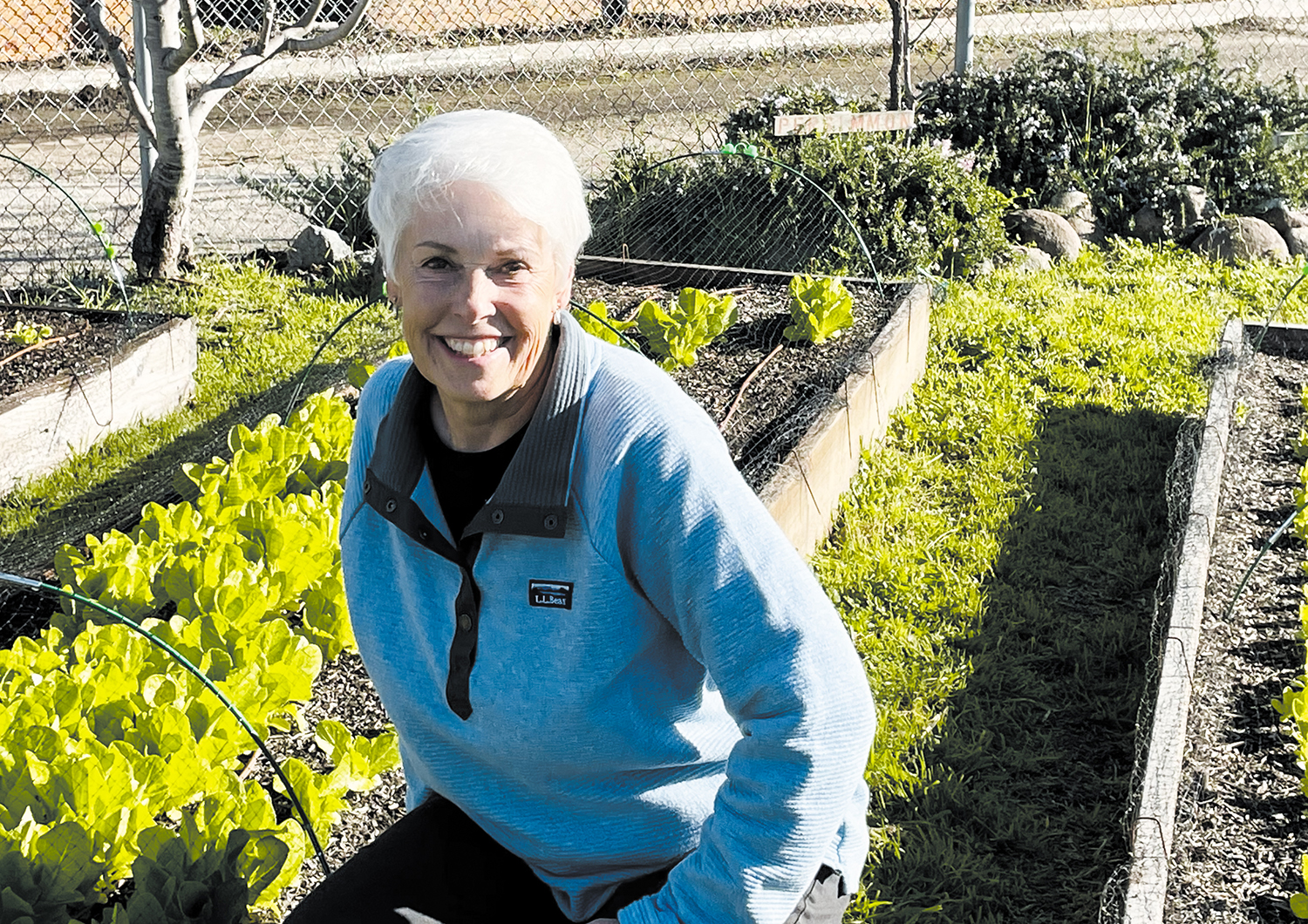
For 20 years, Sr. Mary Ellen Leciejewski, OP, worked as a high school French teacher. It was a job she relished ("I love high school kids. They've got such a lively spirit!") but in the early 1980s, she heard a talk from Sr. Miriam Therese MacGillis, a sister of Saint Dominic of Caldwell at the forefront of ecology and sustainability.
The talk changed Sr. Leciejewski's life. The Adrian Dominican went on to earn a master's degree in ecology and to work for Catholic Healthcare West, now Dignity Health, as an ecology program coordinator. Dignity Health is part of CommonSpirit Health, a system with more than 2,200 care sites and 142 hospitals in 24 states.
Sr. Leciejewski now serves as CommonSpirit's system vice president of environmental sustainability. She spoke with Catholic Health World about the challenges and triumphs of integrating environmental stewardship with health care. Her responses have been edited for length and clarity.
When you started in health care more than 30 years ago, was your focus a lot different than it is now?
I was called upon precisely as their "green teams" began to sprout at our facilities. Green teams are passionate, hospital-based groups championing sustainability. It was like popcorn— you know, one here, one there. But they needed somebody to formalize it and turn it into a program. I visited each hospital to establish relationships, and participated on national committees including our supply chain, real estate, food and nutrition services, mission, and communications teams. We collaborated to establish goals and metrics and a plan related to sustainability.
Now, I lead and oversee sustainability program development, implementation, and evaluation, and provide direction so that we will ensure a course of sustainability. I still engage with the stakeholders, of course, which I love. Our collective dedication to these duties and responsibilities is driven by a singular purpose: to cultivate a more sustainable and healthier environment for our patients and communities.
I assume that in more than 30 years there's more structure and awareness?
At times it was like you're pushing the rock up the hill, and now it's like, get out of our way! I thought enthusiasm would wane. No way. Our employees are just so enthusiastic and passionate and interested in it because this is their future. This is the planet they are living on. So they want to know, "What are we doing?" And they want to be engaged and a part of it. Even with demanding full-time roles saving lives and keeping hospitals running, they are deeply involved. For many, it's more than a commitment— it's their juice, their passion.
I understand CommonSpirit was an early signer (along with Ascension and Providence St. Joseph Health) of the Laudato Si' Action Platform. How is CommonSpirit intentionally incorporating Laudato Si' into its sustainability work, making the mission connection clear?
When we include diverse departments into our sustainability report, we sometimes face the question, "How does their work directly relate to sustainability?" My favorite analogy is: If you think of sustainability as a piece of fabric with all these beautiful colored threads, you can't take any of the threads apart without ruining the fabric. The tighter it is, the stronger it is. So if you think you can get rid of a certain department, no matter how small, and say it doesn't count— it does. All of it counts.
From a faith perspective, this is one way we're making integral ecology, one of the core themes ofLaudato Si', come alive, because we need to hear both the cry of the Earth and the cry of the poor. If we don't have a healthy planet, we don't have a healthy human being. Let's make that connection there— we're all part of the fabric. We try to make it as easy as possible for people to make that connection.
What are your biggest frustrations in doing this work? What do you wish would happen that's not happening?
Since we've become a big system, it's just moving as one and trying to find out, OK, what are you doing over there? What are you doing in this hospital? If it works for you, St. John's hospital, it's probably going to work for all of us. Let's make sure we all know about it, so we can share the best practices and the challenges. Are we all dealing with the same challenges? Because if we are, that means we need to work on this together, maybe at a higher level.
This unified effort drives our ambitious system-wide goals, like achieving net-zero emissions by 2040 and a 50% reduction in operational greenhouse gas emissions by 2030, building on CommonSpirit's legacy of promoting health as well as a healthy planet.
Tell me about some of the more interesting ideas that come from one hospital that you then try to spread, maybe systemwide.
Our hospitals generate waste every single day, much of it plastic.
One of our reviews highlighted items like the common, single-use plastic needle counter — essential for tracking needles during surgery. To drastically reduce this nonrecyclable waste, we partnered with a company to develop a mostly biodegradable version, advancing our goal of greener operating rooms.
To illustrate further, one of our environmental services leaders contacted me and said they use a germicidal spray that comes in a bottle with a trigger sprayer that they don't like. They reached out to that company and asked them to send it without the sprayers. This will result in a plastic reduction of over 55,000 plastic sprayers. My tenure in this role has underscored a fundamental truth: Even the smallest innovations collectively yield significant progress.
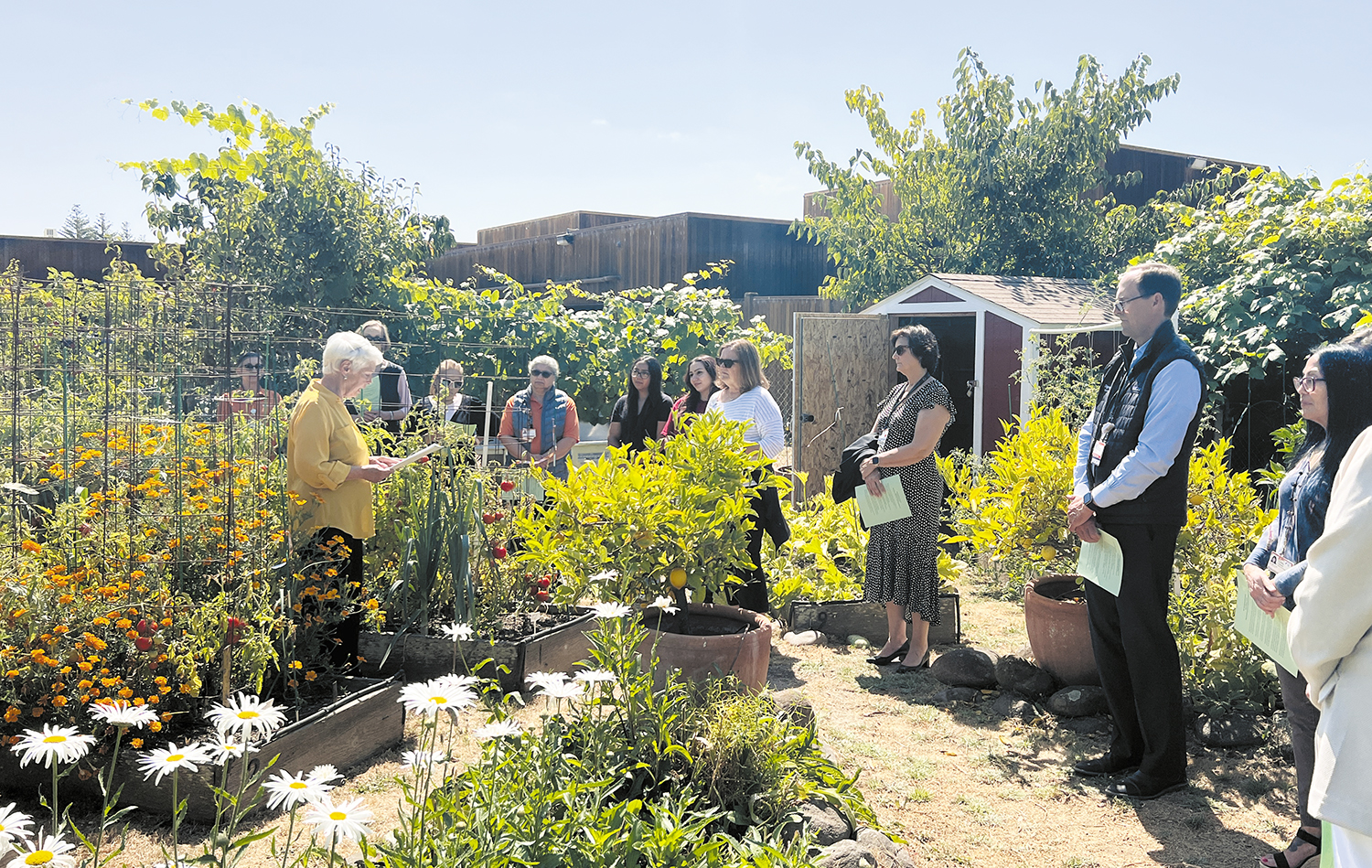
Another beautiful example is out of Dignity Health's Dominican Hospital in Santa Cruz, California, where I have my office. We knew there was food insecurity in the community and decided to plant a food garden in 2004. Now we grow roughly 3,000 pounds of food every year that goes to Grey Bears, a local food bank. When we had our Pilgrimage of Hope for Creation event in 2025, we invited people from Grey Bears to come and talk to us, and that was really eye opening for us. We realized, "Oh, our food is going there! We really are making a difference in our community."
Things can get pretty bleak out there. How do you stay hopeful?
I think I keep hopeful because there are so many people that are still coming on board now, and I don't think of it as getting easier or more difficult. Things are getting more complex, and we're moving faster. You have the development of AI (artificial intelligence). Health care systems are getting larger.
But I think it's important to keep that complexity in mind as we move forward and make decisions. As things get more complex, there's a greater level of interdependence. We're more resilient when we work together.
Every part of the system needs to be vital and functioning for every other part of the system to be vital and functioning.
We've got so many creative people in CommonSpirit, I just want to tap into that creativity and the talents that we've been given. As it says in 2 Timothy 1:6-7, "For this reason I remind you to fan into flame the gift of God, which is in you through the laying on of my hands. For God did not give us a spirit of timidity, but a spirit of power, of love and of self-discipline."
The work is getting more collaborative among health systems and organizations like Practice Greenhealth, Health Care Without Harm, the American Hospital Association, the Healthcare Anchor Network and CHA. That's good. I don't think there's a lone wolf anymore. It's a team effort, and it's comforting to know that we're not alone in this, that there are others who are dedicating their life to sustainability. I think we just need to believe that we're capable of doing good work together, so that our basic human needs are met. That's our mission, so that we build a strong and sustainable future.