

Aidoc (pronounced "A-doc") is described by Chesterfield, Missouri-based Mercy as "an AI clinical decision support platform designed to prioritize acute findings on medical imaging." The health system says the tool has helped patients and doctors prioritize what needs to be addressed right away.
It may also pick up an "incidental finding," something that a scan wasn't ordered to look for but was detected anyway, such as evidence of a blood clot when a scan was meant for an abdominal issue.
In a white paper recently released by Mercy, researchers outlined more than 50,000 incidental findings in just five months, from January through May.
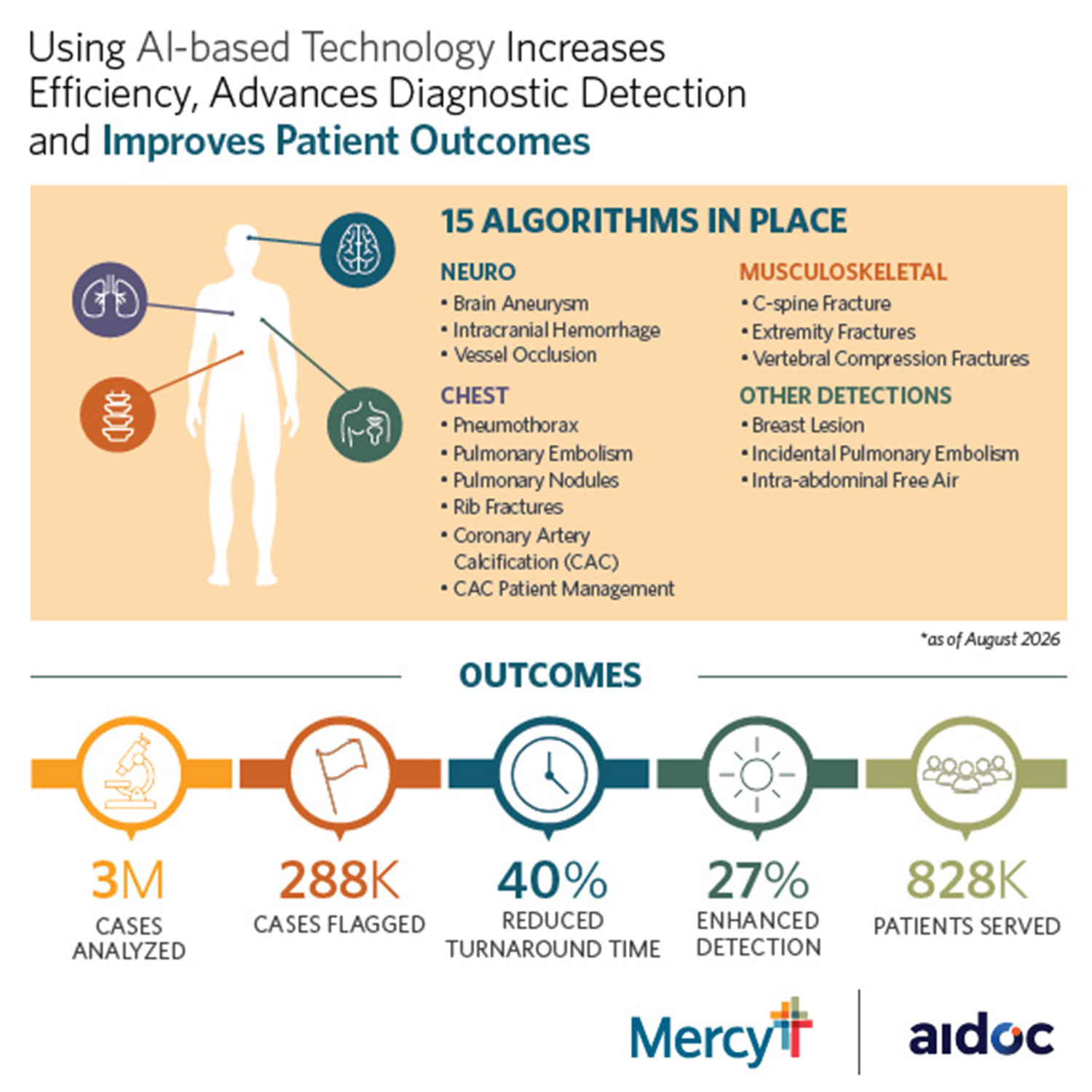
Mercy began a phased rollout of Aidoc in January 2025, and it's now in use throughout the system.
Mercy is the only Catholic health system out of 12 that have formed the Diagnostic AI Consortium with Aidoc. The systems plan to work together to share lessons they've learned in using diagnostic AI.
Dr. John Mohart, Mercy executive vice president and chief operating officer, spoke with Catholic Health World about the Aidoc platform and how it is changing how Mercy caregivers work. His answers have been edited for length and clarity.
What is Aidoc and what does it do?
Aidoc is an AI solution that interprets imaging studies. It looks at CT scans and X-rays and instantaneously comes up with an AI-generated read, and then it surfaces it to the radiologists, and it prioritizes those reads. So it not only evaluates the images, but if it's something bad, it elevates it to the top of the list, which is also really important, taking care of patients.
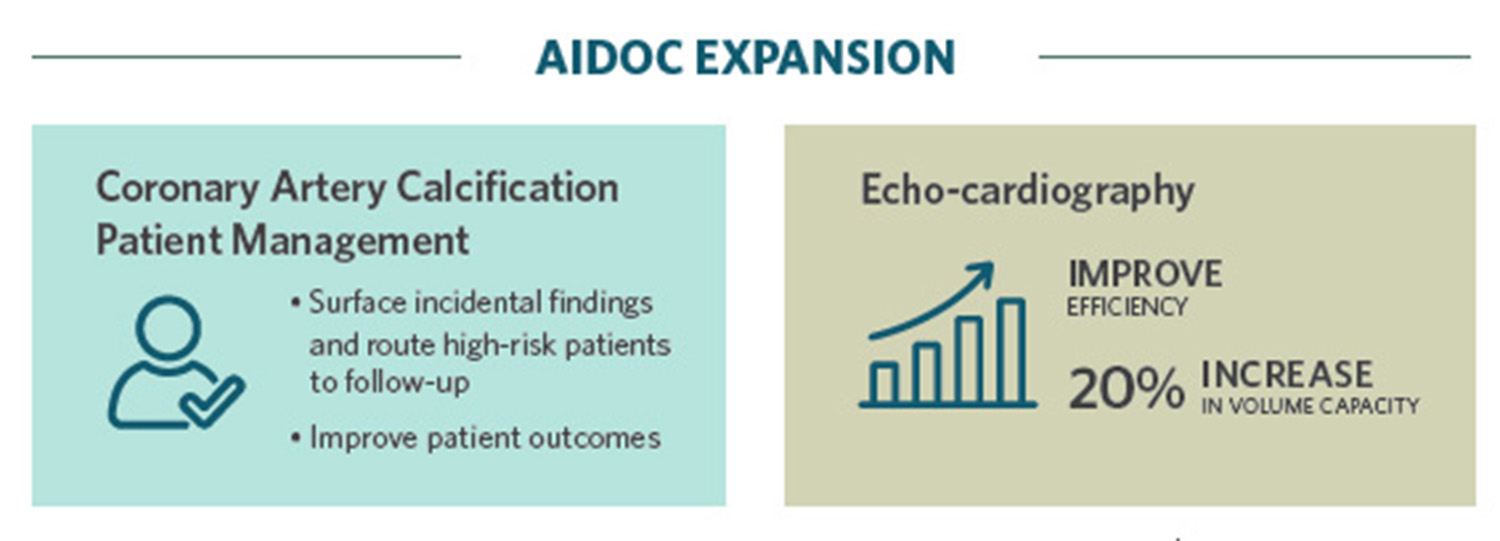
But it's more than that. We're developing a foundational model where it can search the electronic record as well, and find out what patients are at risk for, and help it even get smarter for follow-up and for diagnoses.
It's fantastic that you get all these results. But there's challenges that come with that, too. How do you pick and choose what you're going to deal with, and do you have the people, time and resources to do that?
That's exactly the challenge. Finding something is only valuable if you act on it. We made a deliberate decision not just to implement the technology, but also to build the infrastructure around it. We have teams and processes in place to make sure patients get the right follow-up, are connected to the appropriate specialist or primary care provider and don't fall through the cracks.
If I came in as a patient, I'd want to know about every significant issue that can be identified, not just the reason I came in for the scan. If someone comes in with shortness of breath and the scan rules out a blood clot, that's good news. But if the same scan also shows a suspicious lung nodule that could become cancer, we have a responsibility to catch it and act on it.
One example is heart disease. We found that about 6% of patients getting CT scans for reasons unrelated to their heart had evidence of significant coronary artery disease and didn't know it. Those are opportunities to intervene earlier, often before a serious event occurs.
That's why we manage this centrally rather than leaving every individual provider to navigate it on their own. It creates a more consistent, reliable process and helps ensure patients get the care they need.
What surprised you about this tool?
Two things: the accuracy and the speed. The tool doesn't just tell a radiologist there's something concerning. It points directly to the exact area of the scan that needs attention. That saves valuable time and helps clinicians focus immediately on what matters.
The prioritization has been just as impressive. If a patient in the emergency department has a life-threatening condition such as a brain bleed, that scan can be pushed to the top of the reading queue. We've seen situations where patients were diagnosed and treated sooner because of that capability.
What's also remarkable is how quickly the technology continues to improve. The more it learns, the more precise it becomes. That's exciting because every improvement creates another opportunity to help patients get answers faster.
How does this address workforce issues? You may not need as many humans to look at these at first anymore, but you may need more to address the issues you're finding.
The reality is that we're facing a significant shortage of radiologists, while imaging volumes continue to grow.
What we've found is that AI doesn't replace radiologists. It helps them do their jobs more effectively. The radiologist is still the expert and still makes the final decision. The technology helps identify urgent findings faster and reduces some of the burden of sorting through an ever-growing volume of studies.
In many ways, it allows radiologists to focus more of their time and expertise on the patients who need them most.
At the same time, you're right that finding more important conditions creates additional follow-up work. We've invested in patient navigators, nurses and support teams who help make sure patients understand the findings, get connected to care and stay on the right path. Discovering a problem is only the first step. Helping patients address it is where the real value comes from.
I know we're talking about proper, ethical uses of AI in healthcare. Is this use a clear slam dunk, or do you still have to be careful?
We should always be careful with AI in healthcare. Any tool that affects patient care deserves rigorous evaluation and ongoing oversight.
That said, this is one of the clearest examples I've seen of technology helping us deliver better care. It helps identify serious conditions sooner, improves efficiency, supports clinicians and creates opportunities to achieve better outcomes for patients.
We don't simply turn a tool on and trust it. Every solution goes through a structured review process, and clinicians remain responsible for medical decisions. In this case, we felt confident moving forward because the technology has been extensively validated and approved for clinical use.
Ultimately, if we have a tool that can help us diagnose patients earlier, improve safety and potentially save lives, I believe we have a responsibility to use it thoughtfully.
Did it take a lot of lead-up work to get this going? One of Mercy's strengths is harnessing technology to improve outcomes.
It absolutely required preparation. For years, Mercy has invested in technology, clinical integration and operational capabilities needed to make innovations like this work across a large health system. Having a unified electronic health record across our footprint gives us the ability to deploy tools consistently and at scale.
But the technology itself isn't the most important part. Our mission is to get healthcare right for every patient we serve. That means reducing missed diagnoses, improving access and helping people get the right care at the right time.
One of the things I'm most passionate about is making high quality care available regardless of where someone lives. If you're in a small rural community, you deserve the same expertise as someone receiving care at one of our largest medical centers. Tools like this help extend that expertise beyond the walls of any one hospital.
In many ways, that reflects the spirit of the Sisters of Mercy. They went to where people needed care. Today, technology allows us to do something similar by bringing expertise to patients wherever they are.