

CommonSpirit Health sites.
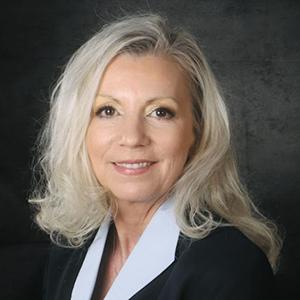
Gail Daly, system senior vice president of clinical operations, integration and optimization, conceived and launched the program known as Care Base. Since its start in 2021, Care Base has evolved into what she calls a "virtual hospital."
"I like to look at it as a state-of-the-art healing facility where we're supporting and facilitating innovation while providing really great care remotely, and that care is going across the care continuum," says Daly, a bedside nurse before moving into an executive role.
Daly was honored this year by Modern Healthcare magazine with an Innovator Award for leading the development of Care Base. The program's mission, as stated on CommonSpirit's website, is to ensure patients "get the right care, in the right place, at the right time - whether in the hospital, a postacute setting, or at home."
Daly credits Care Base for "improving the patient outcome, decreasing mortality and morbidity, and decreasing clinical variation, and all while doing it with evidence-based practice."
A hub that reaches 19 states
From a hub housed in the top floor of a building next to Dignity Health St. Joseph's Hospital and Medical Center in Phoenix, the Care Base staff of about 700 augments hospitals, clinics and home health providers across 19 states. Dignity Health merged with Catholic Health Initiatives in 2019 to form CommonSpirit. The system encompasses 158 hospitals and 2,300 care sites in 24 states.
Daly says it was in the early days of the merger that a "visionary group" of about 40 leaders from both legacy systems began to lay the foundation for the combined system's virtual services. After the successful deployment of virtual sitters during the pandemic, the system had its proof of concept.
In one of its first expansions beyond virtual sitters, the service line took over dispatching duties for five hospitals in the Sacramento, California, region, deploying emergency response and other teams as needed. That service now covers 46 locations.
Today, Care Base services include monitoring patients remotely both in hospitals and in their homes; handling patient discharges; coordinating patient movement among departments within a hospital; arranging transfers between CommonSpirit sites; and generating referrals to hospitals outside the system.
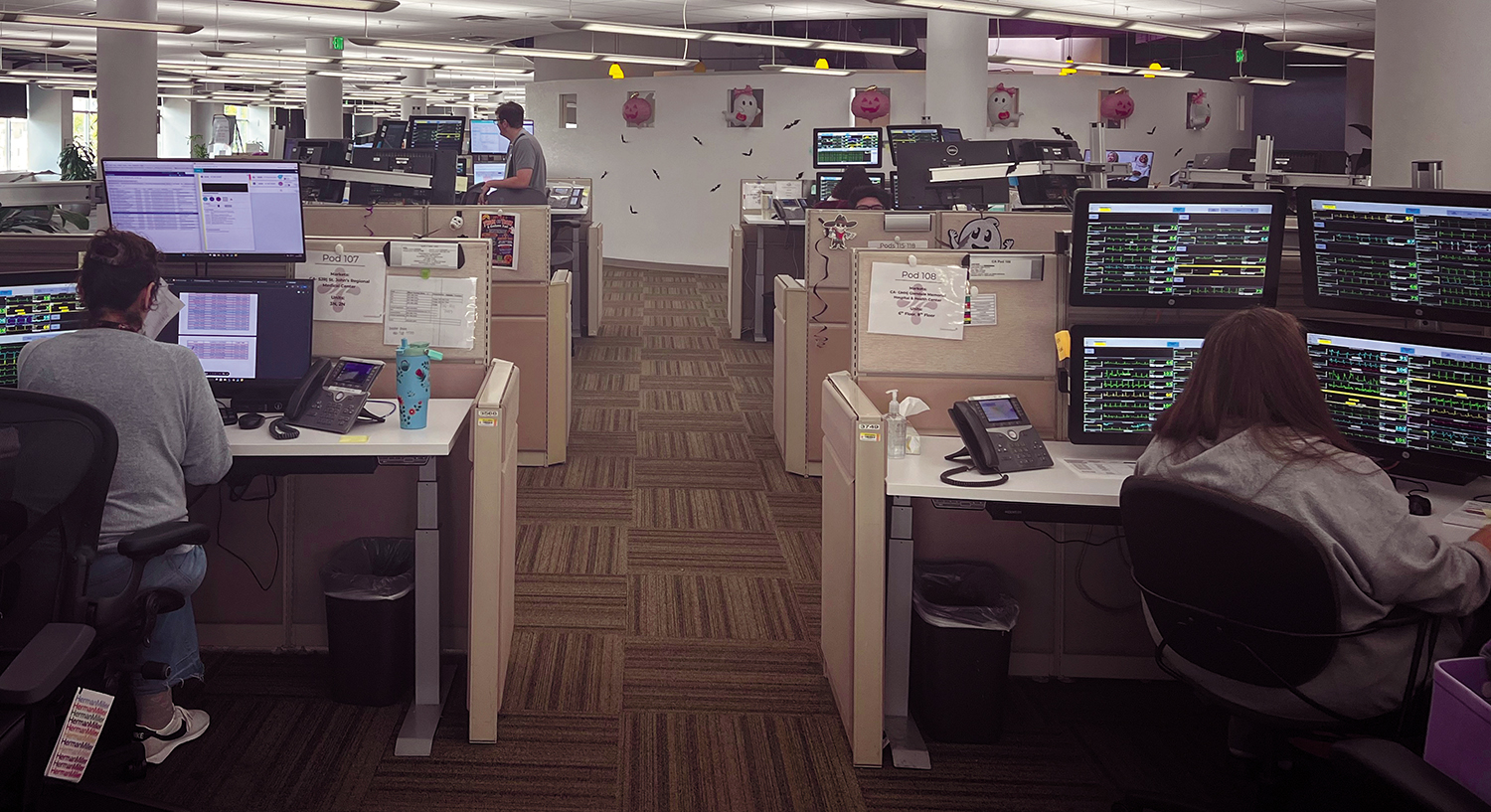
There have been some key factors in creating what Daly terms the "rinse and repeat model" of Care Base, meaning that it replicates its services with the same standards wherever they are provided. One factor was to ensure that appropriate technology was in place and that the technology had redundancies so the services could roll over to other servers if needed. Another was to standardize the codes across CommonSpirit, so that, for example, a code blue at one hospital wouldn't have a different meaning at another.
Daly says Care Base meets needs the system has struggled to address, such as giving patients access to nurses and other clinicians even as the healthcare sector copes with a workforce shortage. She says the program isn't displacing workers or replacing local services but rather supporting staff and bridging gaps.
"I would say we have been closing the gap in the resource needs because those resources aren't there," Daly says.
In fact, she says, Care Base has helped CommonSpirit address inequities in access to care by offering services that might otherwise be unavailable. One example of that is a program that monitors expectant mothers and postnatal women with hypertension. The program reaches people in geographical areas where such care can be challenging to access in person.
Lighter loads, greater efficiencies
In addition to filling gaps, Daly says, Care Base lightens the load on bedside caregivers by taking on some administrative tasks, such as preparing patients for discharge. The remote caregivers, who speak with patients via cameras, can give the patients and their family members as much time as needed to explain post-discharge care because they aren't tending to multiple patients. Taking on responsibilities like this, Daly says, allows hospital staff more time to focus on direct patient care.
She also cites the service line's efficiencies, such as cutting the length of hospital stays for many patients by allowing them to recover at home with virtual monitoring. The service line's overall efficiencies have meant a financial boost for CommonSpirit, which for fiscal year 2026 estimated the savings from Care Base at $95 million.
CommonSpirit also credits the service line for heading off adverse events, such as hospital readmissions from postnatal preeclampsia. In the last fiscal year, the system says Care Base's virtual companion service that supports 82 hospitals and monitors about 25,000 patients prevented 187,900 adverse events.
In the year ahead, Care Base is set to expand to up to 60 more sites. Daly says she and the others leading Care Base continually look for service gaps that can be remotely filled and ways to better tap technology, including the ongoing advances in artificial intelligence, for care and logistics.
Daly sees growing Care Base as an extension of her love for puzzles. "Anything that I see that's a puzzle and I can put together, I'm really interested in figuring out how to make it better," she says.