
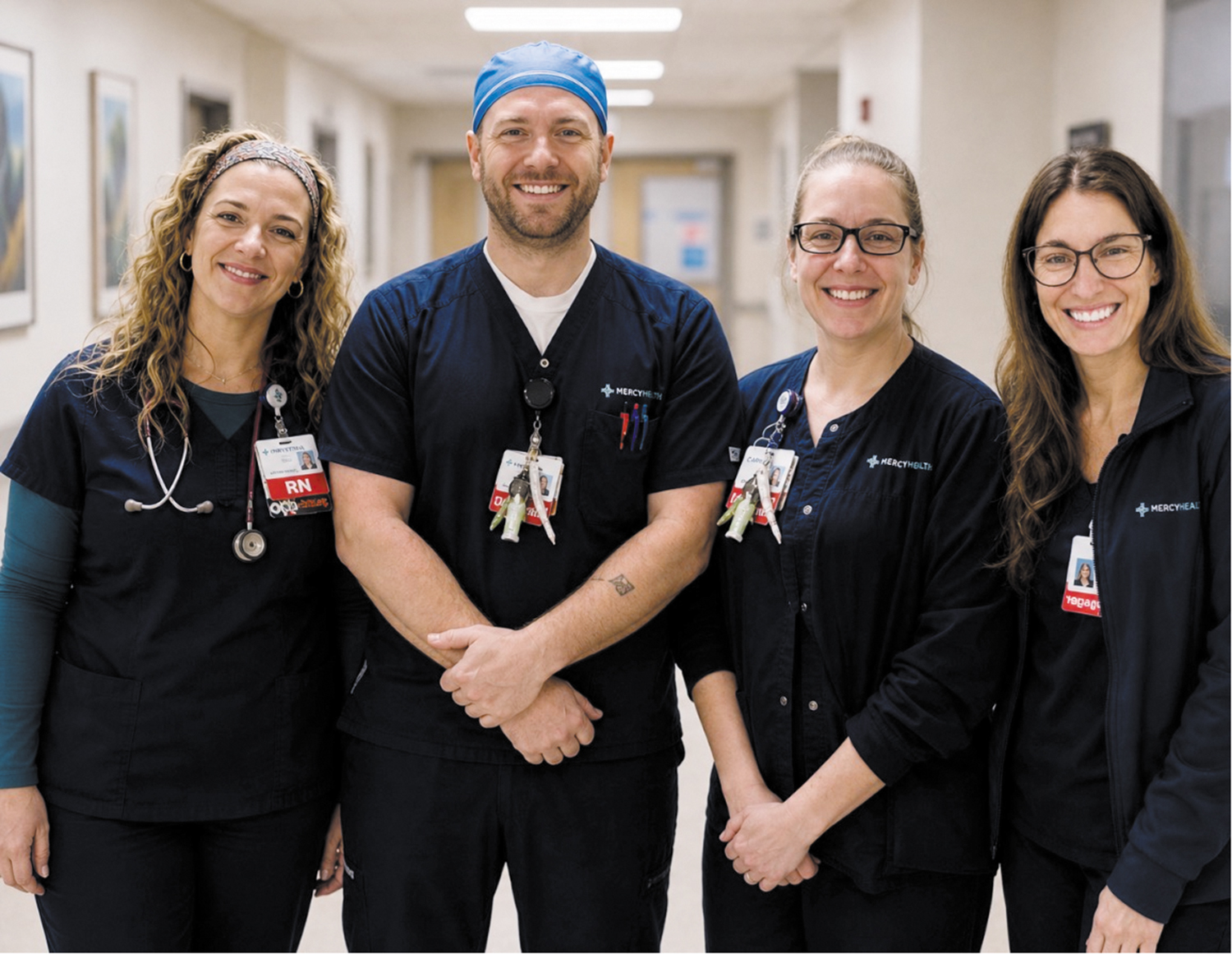
The 82-year-old landed at the hospital last September after apparently living alone in her home for years. (For her privacy, Catholic Health World is not naming her.) Details about her situation were sketchy, but the nurses heard that a concerned neighbor had asked authorities to check on the woman's wellness after an incident involving a burning dish of food tossed into a trash can. When the first responders found the woman alone and disoriented, they brought her to Fairfield Hospital. The hospital is part of Cincinnati-based Bon Secours Mercy Health.
Vanessa Reynolds, nurse manager of the medical-surgical unit where the woman took up temporary residence, says that other than a minor infection, the woman was physically healthy. But cognitively she was struggling.
"I do not think she really had a presenting factor, except 'unsafe to be at home,'" Reynolds says.
The woman also had no apparent relatives nor anyone to speak on her behalf. A judge and then a court-appointed guardian had to research her situation and determine her fate. That is what accounted for her prolonged hospital stay.
"Early on, we did not really have an indication that she was going to stay with us 70-something days, because we did not realize that she was not going to have a guardian or any living family," Reynolds says. "But early on, she made her attachment to us."
A comforting presence
Ben Gable, one of the charge nurses in the medical-surgical unit, recalls that from her first day, the patient was restless. She was constantly walking around the unit. Her chatter was alternately lucid and scattered.
Rather than repeatedly checking on her, Gable pulled up a chair for the woman at the nurses' station. "She sat there and we hung out," Gable says. "And she chatted with everybody."
The next morning, the woman was back at the station, fixing coffee for herself and Gable. In time, he and the unit's other nurses started giving their self-appointed assistant tasks such as folding towels to keep her busy. Other times, they set her up with a computer where she would happily watch cat videos.
Within days, the woman had not only settled in but also became a calm and comforting presence for the nurses. "She is, like, giving advice, and she could bring a lot of calm to a crazy environment," Gable says. "So I always appreciated that."
Cari Shoemaker, another charge nurse in the unit, says the woman could sense what sort of mood the nurses were in. "She would read our energy," Shoemaker says. "That is what she liked to do."
Reynolds says the woman's spirituality embraced New Age catalysts such as crystals and herbs. She talked to the nurses about how their bodies and souls were connected. One of the practices she encouraged among the nurses was to write down their goals and make a plan that would bring them happiness.
"She was trying to heal us before we were trying to help her," Reynolds says.
At home in the hospital
As the legal case to resolve where the woman would go next inched through the court, the nurses took it upon themselves to make her as comfortable as possible. With her permission, some of them went to her home and picked up some of her clothes and familiar items like photos.
"She was here for a long time, and in her confusion, she thought it was her apartment," Reynolds says. "So we wanted to make it feel like her apartment and her home, not just a hospital setting."
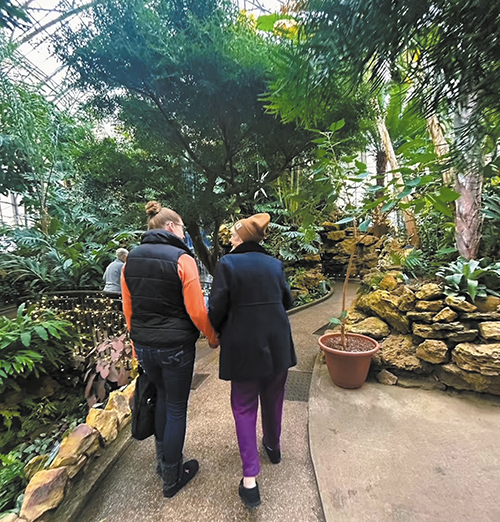
When Gable saw the woman in one of her darker moods, he took her on a walk around the hospital grounds. The outing calmed her, so outdoor walks became routine for the two.
Over time, Reynolds began to cut the woman's hair and do her nails. Shoemaker oversaw what limited medical care the woman needed, and she and the other nurses even opted at times to skirt some of the protocols, such as not waking the woman overnight to check her vital signs. Chrystina Tillery, a bedside nurse, became what the others call a "gal pal" to the woman, forming a profound bond.
Clues to the past
The woman's memories came and went. She would recount bits of her past one day and forget them the next.
The nurses say they did not find it especially surprising that given her cognitive issues the woman had been living alone. She did not have any ongoing medical issues or use any prescription medication. She could perform essential self-care tasks. She did not drive, but somehow she got her basic necessities.
"She had a way of living that she could keep herself alive and going," Gable says.
While patients with dementia are not a rarity in the med-surg unit, Reynolds says patients with no one to speak on their behalf are. So are residents who are in the unit more than 30 days.
Over the weeks, the nurses were able to pin down some of the woman's history with the help of the internet and by what they saw at her home. "We just started kind of doing detective work with her and we found obituaries for her sister and her parents, and kind of pieced it together that way," Gable recalls.
They learned she had a master's degree and had been a teacher, although at what level was unclear. She had been married twice. She loved music and she liked to dance. However, neither they nor the court turned up a living relative or a close friend who could speak on her behalf.
Rough transition
By the time it became clear that the court would need to appoint a legal guardian for the woman, some of the nurses stepped up. In the end, the judge appointed someone who was a stranger to the woman. The guardian decided it was unwise for the woman to return to her home, so arrangements were made for her to move to a memory care unit at a nursing home just minutes from the hospital.
The nurses gave the woman pep talks in hopes of bracing her for the transition. Even so, Gable says, "it was awful." She initially would not get out of bed at the new place. "She did not have a window and she did not really have a community anymore," Gable notes. "She did not have what she had built with us."
The nurses did not give up on their friend, even after she moved into the care of others. They surrounded her as a sort of surrogate family. They made frequent visits. They got her a pet, a mechanical cat that rolls over and purrs. "She truly believes it is real," Shoemaker says. "She tries to feed it."
It took time, but the woman has settled into her new surroundings. Still, the nurses continue to be in her life. Reynolds still does her hair and nails. Gable, Shoemaker and Tillery stop by often to check on her and chat and to take her on occasional outings, sometimes back to the med-surg unit to see her old pals.
"She is so unique because she cannot remember so many things and sometimes goes on these tangents that make zero sense," Reynolds says. "But yet she sees me and immediately knows my private life and asks me about the wellness of my child who has an eating disorder, and all these things. She is concerned with us and remembers us."
And the woman is clearly aware that the nurses from Fairfield Hospital are her guardian angels, if not her legal guardian. "The last time I was with her, she literally said, 'I do not know what I did in the world to deserve you all,'" Reynolds says.
Reynolds assures her friend: "You give us just as much as we give you, if not more."