
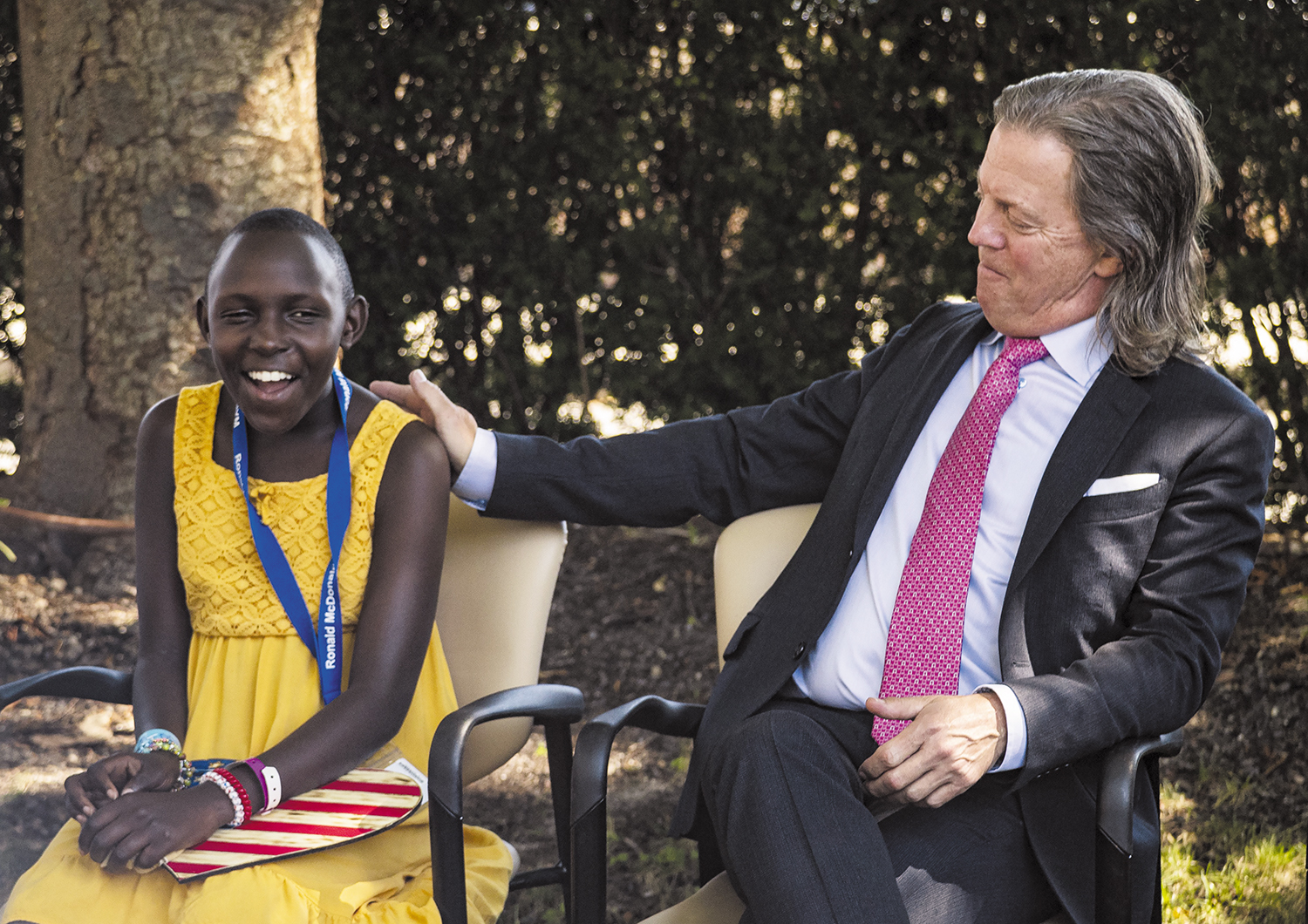
He also saw that it could benefit children from across the globe who the hospital cared for through the Gift of Life International program.
Children who get care through the program at St. Francis, part of the Catholic Health system on Long Island, suffer from heart defects that prevent them from carrying out basic life activities, such as running and playing. Before the development of the minimally invasive procedure in use at St. Francis, patients went through an open-heart operation with chest tubes, leading to a long recovery period and possible complications.
"Everything was being done in the traditional way," Levchuck recalls. "It would be like telling someone in the '50s that we were going to walk on the moon."
The newer procedure, he says, "was a game changer because it enabled us to serve kids quicker, get them in and out."
That advancement expanded the hospital's involvement with Gift of Life, a program that took root in 1975 and that covers expenses for patients' care and travel. Levchuck has been a key player in the program for 30 years, following the path of his mentor at St. Francis, Dr. Paul Damus. Over the years, he has saved about 800 children through Gift of Life. In 2024, he operated on the program's 50,000th patient.
A plea for help from Uganda
Gift of Life got its start at St. Francis when the Manhasset Rotary Club of New York got a letter from a Rotary Club in Uganda about a child who needed open-heart surgery. The Manhasset Rotary Club turned to the hospital for help.
"They spoke to the right people at St. Francis Hospital who said, 'We're all in,' and that's where it started," Levchuck says.
That first operation led to a Rotarian-based effort to bring one child a year from an emerging country to the United States for cardiac care. By 2003, the effort had become the nonprofit Gift of Life International and was arranging lifesaving treatments for thousands of young patients at sites around the world. Last year, it provided cardiac care to a record 6,192 children, bringing the total helped to more than 65,000.
"Every 85 minutes, a child with heart disease is provided care through our global network," the organization boasts on its website.
Ambassadors add cultural component to care
Just as the first Gift of Life patient at St. Francis was from Uganda, so was the 50,000th one, an 11-year-old girl named Brilliant Phillipah. She suffered from a relatively common heart defect, in which an opening between the two main blood vessels leading from the organ needed repair. Instead of closing at birth, as is typically the case, Brilliant's opening grew, causing her heart to work 50% harder than it should, leading to pulmonary hypertension that could be fatal.
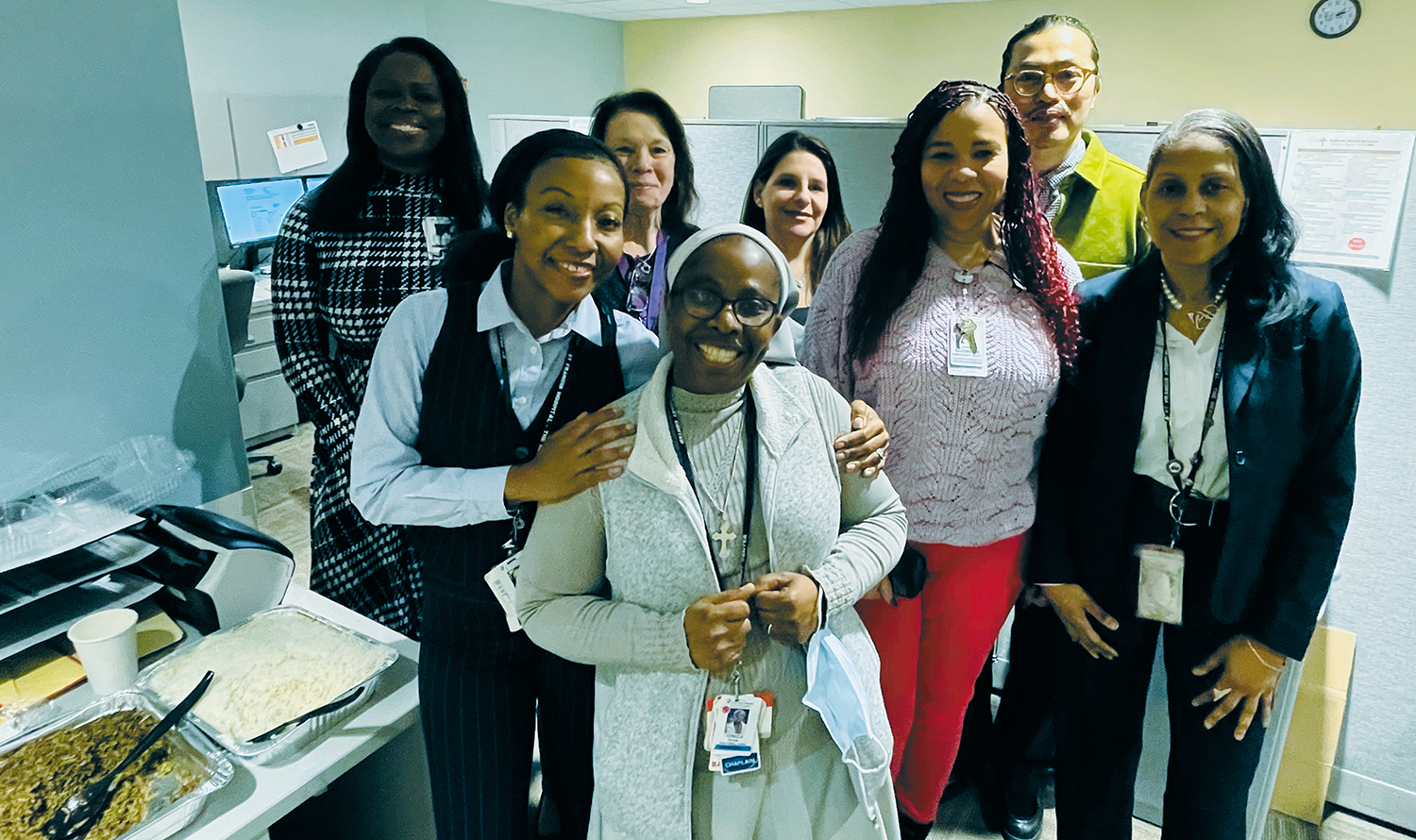
While Levchuck performed Brilliant's surgery, her treatment at St. Francis was coordinated with and supported by a group led by Ingrid Collymore, the hospital's quality improvement manager and health equity coordinator. Collymore leads the Ambassador Program that makes sure care is available not only for the heart patients but also for their families.
"We are treating our patients medically," she says, "but how can we care for them and their families beyond that, to help them feel welcome, included and supported emotionally and culturally? I believe every patient and family deserves the patient-centered culturally sensitive care that honors their values and traditions, especially when they are far from home."
Collymore's Haitian heritage makes her keenly aware of the need to make foreign patients comfortable by meeting more than just their medical needs, from food that reminds them of home to clothing that keeps them warm during their stay in New York, which has chilly winter temperatures that are unheard of in the Caribbean.
"Healing also requires compassion, cultural understanding, and human connection," she says. "The Ambassador Team is made up of a diverse group of staff members who help to bridge cultural and language barriers for the patients and their families during what can be an overwhelming experience."
Collymore says supporting Haitian families is especially meaningful because it allows her to help people who share her cultural background. "When we care for families from Haiti, it's very near and dear to my heart," she notes. "I want to be able to give back."
'I will never stop thanking you'
Collymore remembers a particular Haitian family who brought their daughter to St. Francis.
"The journey they took to get to America was just a remarkable display of resilience in itself," she says. "They lived in the countryside and had to ride horseback to reach the city, then travel to get to the airport to leave Haiti."
Once they got to the United States, at one point the young patient was crying in her hospital bed.
"She was scared and didn't understand the language," Collymore says. "They had given her an iPad and a cartoon was playing, but she was still crying. It was in English. As soon as I found the French version, she immediately stopped crying and watched it, smiling and laughing while staff were able to continue clinical care."
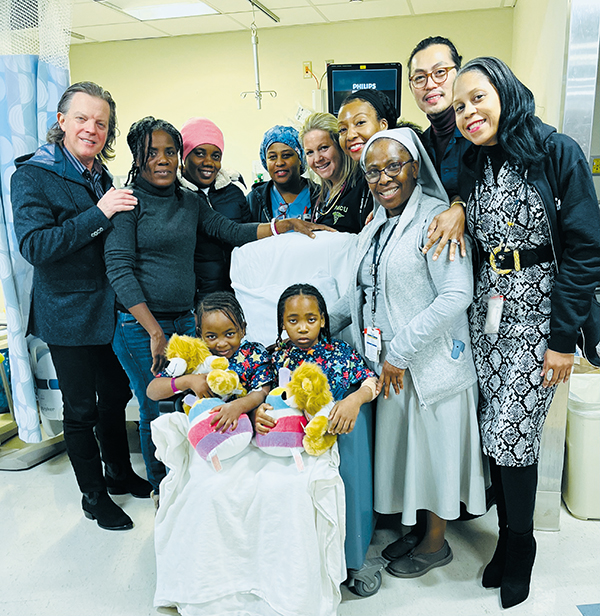
Following up, Collymore says the Ambassador Team reached the family a year later and got a picture of the patient and her twin sister. Before the procedure, she was several inches shorter and underweight compared to her sister. A year later, after treatment by Dr. Levchuck and his team, the two were the same height and weight.
"It was deeply moving to see that a procedure we perform here can have such a profound outcome, with the child now thriving and growing," Collymore says.
In a letter to the hospital, the girls' mother expressed her appreciation:
"I am writing this letter to thank you for everything you have done for me and for the children.
I do not have the words to express all my gratitude toward you for the way you have always been by my side. You are more than a family member to me and to the children. I will never stop thanking you."
Such a response is typical. Another family testimonial expressed gratitude:
"We came from Honduras very worried about our daughter, but your hospital made us feel safe and cared for. The doctor and nurses gave her the heart procedure she needed and treated our family with kindness and respect. Having an interpreter helped us to feel comfortable and understand everything, and the Honduran meals made us feel closer to home. The generous care packages provided to our family made us feel welcomed and supported. We are thankful to the Gift of Life program and Ambassador Team for everything they did for our daughter."
Growing expertise elsewhere
Unlike in its early days, when it focused on bringing children to the United States for care, Gift for Life's current focus is to provide training and resources so pediatric cardiac care is available globally.
"We coordinate the efforts of 84 autonomous Gift of Life programs in 80 countries across five continents with like-minded partner charities, hospitals, healthcare professionals, Rotarians and volunteers to develop sustainable pediatric cardiac surgery, catheterization and aftercare programs in emerging countries," the organization says.
Now chairman of pediatric cardiology at St. Francis, Levchuck has witnessed the growth of the program. Though he continues to operate on patients brought to St. Francis by the nonprofit, he supports its strategy of training providers in low-resource nations.
"We really have to teach other countries how to do things because it becomes very cost ineffective to bring these kids to America every time they need something," he says. "While we are still very active and focused on the countries that don't have the technology, many of the countries that I used to take care of kids from don't need me anymore because the Gift of Life has helped them develop their own programs to care for these kids.
"It's like the old saying about teaching a man to fish. That's really what it's all about."