
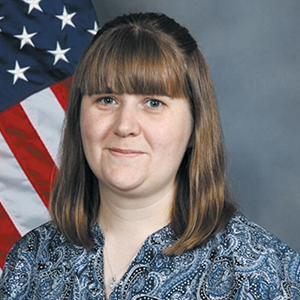
Sara Gadd of Ascension St. John Medical Center in Tulsa, Oklahoma, can't think of anyone more vulnerable than human trafficking victims, who often are so used to the abuse they don't realize that they are being victimized.
They weren't kidnapped or lured into a scary white van. Some say they willingly prostituted themselves at a hotel. Or maybe they took a job paying $2 an hour, because it's better than what they were getting paid before.
It's sometimes difficult to help people in these desperate situations because they don't know what's happening to them is a crime, Gadd says. The staff at Ascension St. John knows and is poised to help connect them to resources to escape their situations and traumas that could cause short- and long-term health consequences.
"Healthcare is amazing for this work," she said.
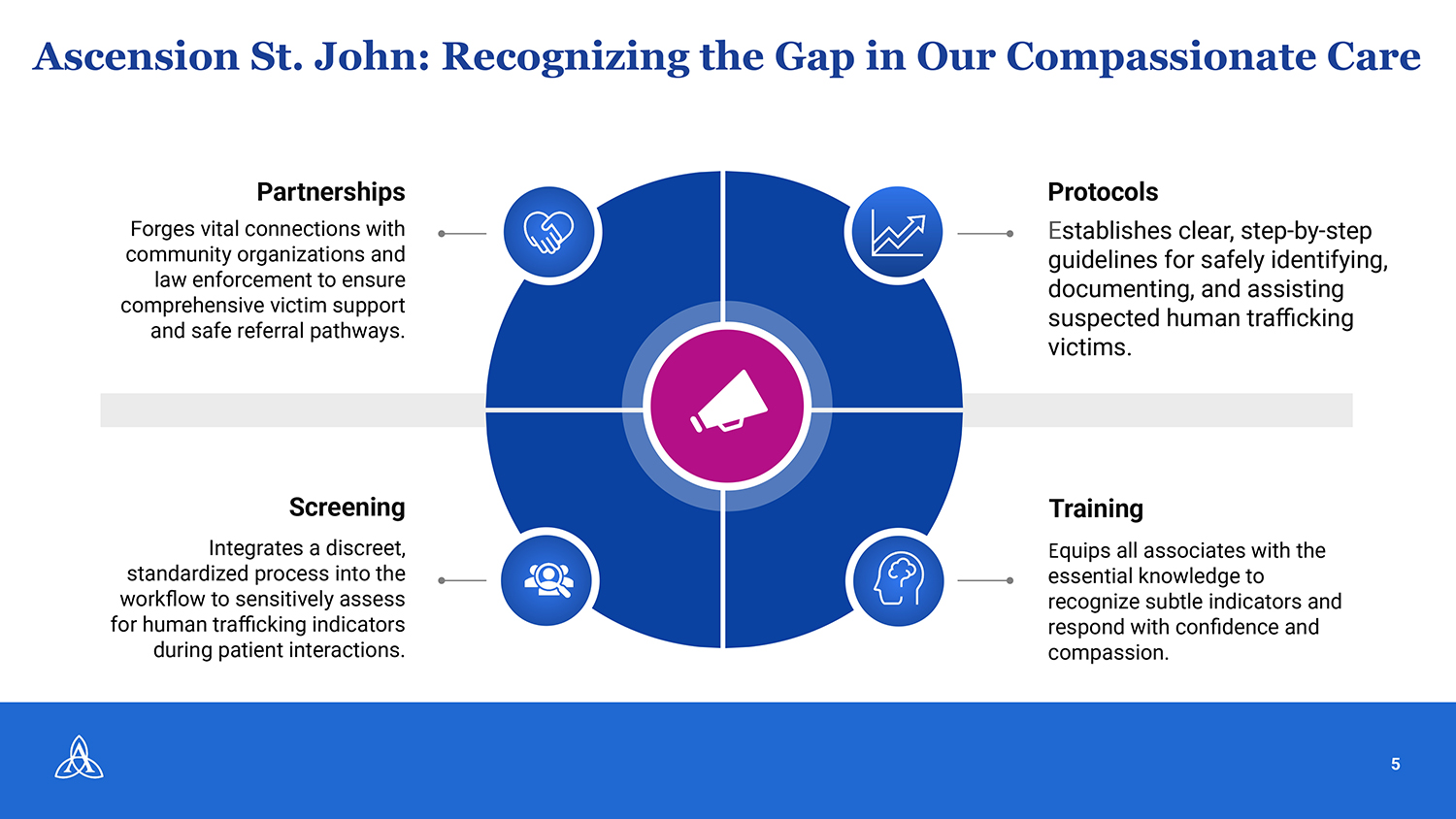
Ascension St. John's human trafficking team has offered support and resources to more than 400 suspected victims of human trafficking since 2018, including 49 new ones in 2025.
Replicating the approach
Gadd works systemwide to help individual Ascension markets start or develop their programs. The system has care sites in 16 states and Washington, D.C.
Each market's human trafficking program operates a little differently, with varying types of partnerships. Some markets deal more with issues involving gangs, some with issues involving immigrants and some with families trafficking their children for money. An interstate highway running through a city doesn't necessarily mean more trafficking: Gadd estimates that half of the victims Ascension St. John has helped have never left Oklahoma.
"They're born here, raised here, haven't been out of here," she said. "I think out of the 400 people we've offered help to, I think two were actually kidnapped."
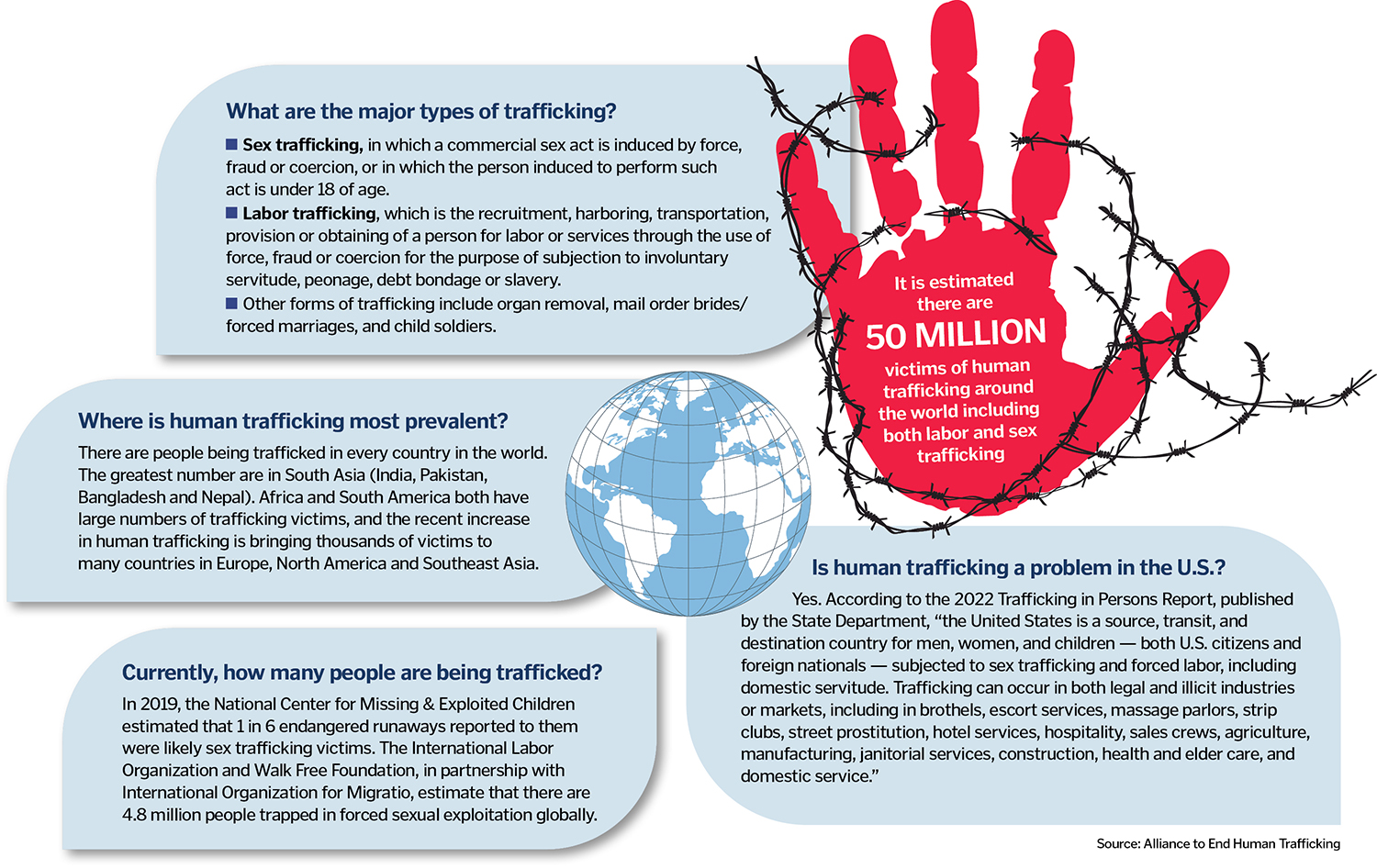
A human trafficking situation involves someone profiting by coercing, threatening or forcing someone else into doing something they wouldn't normally do or want to do.
Gadd said trafficking can take many forms, such as a husband who tells his wife that their crying baby won't eat and she can't buy formula until she prostitutes herself at a hotel for $1,000 and turns over the money to him.
Identifying victims
Gadd worked for the Tulsa County Sheriff's Office for 13 years, and that's where she became interested in fighting human trafficking. She eventually became chair of the Oklahoma Coalition Against Human Trafficking. In 2018, Ascension St. John hired her to run its response team.
Part of her job is to teach the staff how to spot trafficking victims. She asks them to focus on the things that don't make sense: Why does that mom have all that money when she's homeless? Why does that child act like they're engaged to someone who is in their 60s? Why does that infected arm appear to have a past break that went untreated?
"It could be nothing, it could be something," Gadd said. "And it's really just learning how to ask: Why does that not make sense? And how do we ask more questions, so that we can find out?"
The work of identifying victims isn't limited to clinicians. An environmental services worker might overhear a remark while cleaning the floor. Chaplains are an excellent resource, Gadd said, because when one walks in the door, patients' visitors tend to leave, and patients feel more comfortable telling their stories.
If hospital staff suspect a patient is a victim, they call in specifically trained responders to assess for human trafficking. An advocate who works with this specialized response team may then reach out to do a more in-depth interview, asking questions such as: Are they a victim? Do they want resources? What would help them once they are discharged from the hospital? Do they want police to be involved? Do they need housing, clothing, or a birth certificate?
"We've had victims who — talk about losing dignity — they've had their name changed so many times by human traffickers they've been sold to, and they don't even remember their original name," Gadd said.
A hotline number is given to patients who may be leaving because they aren't yet ready for help. That way, they can contact the trained responders if they want, Gadd said.
Resources for replication
The advocate does long-term case management with patients who want to remain in contact with Ascension St. John and get help. That can include helping them apply for disability benefits, schedule outpatient medical care, get a driver's license, or pay rent for a month to escape from their trafficker.
The advocate works out of the Case Family Safety Center, which is near the hospital. The center offers resources such as assistance with police reports, protective orders, immigration referrals and interpretation services, and consultation with district attorney staff and the Tulsa Police Department's family violence unit. Laws and administrative rules in Oklahoma have changed in recent years so that law enforcement and victim services and medical providers can better work together. Victims now are asked about their situation and given resources often before they're interviewed by police, Gadd said.
Gadd advises hospitals that their human trafficking program can be as big or as small as they want, as long as they do something. A rural, three-bed hospital should know how to encourage victims to call a national hotline, she said. A huge health system may want to put together a response protocol. Gadd shares a tool kit with other systems. The tool kit includes information on developing a pilot program, handouts to identify relevant staff and community partners, instructions for how to educate staff, and sample protocols.
"Your staff is seeing it, they know they're seeing it. They're discouraged because they don't know what to do about what they see," she said. "Just give them the resources to respond to that patient. Nobody went into healthcare not wanting to help, so giving them the resources to respond to that patient can change everything."
Poised to help
Gadd said victims often don't tell a police officer that they're being trafficked because that same police officer may have just arrested them for shoplifting or prostitution. Also, many victims don't know about shelters, so they don't seek help there.
"Healthcare, though, everybody has to go to the doctor at some point, because they trust their doctors and they're going to tell us more, and we have that opportunity to say, 'Hey, this shouldn't be happening, can we do something for you?'" Gadd said.
When the Ascension St. John program started, organizers were reluctant to promote it for fear that traffickers would stop bringing victims to the hospital. But they learned the opposite was true. Traffickers thought they had such control that their victims wouldn't ask for help at the hospital.
And after victims found out there were resources available, more than half accepted help. "And then, even if they left, they'd come back," she said. "Once they knew there was a safe place, they'd come back."
Hope and a future
To keep helping others, Gadd hangs on to the success stories. She thinks of trafficking survivors who got their driver's license, enabling them to drive to their first job making $9 an hour versus the $100 they made for their trafficker on the street. "But it's theirs, and they got to choose that job," she said.
She thinks of the mothers who got their kids back from state custody because they have a house now, and they're safe.
"There's a whole lot of hope in what we do," she said.
She thinks of one immigrant who had been trafficked most of her life and was separated from her family. She came to Ascension St. John because she had a terminal illness. "She couldn't be sold anymore, and when she finally could access medical care it was too late to save her," Gadd said.
Hospital staff spoiled her with her favorite foods. They made sure her family got to the hospital to reunite with her. And when she died, her family took her back to their home country for burial. "I think that restored as much dignity as you can to an individual. She died free with family by her side instead of alone on a hotel room floor somewhere," Gadd said.
A few months later a family member contacted the staff to thank them for their help so that the relatives were able to reconnect and have that special time together.
Gadd said she loves working for Catholic healthcare because it's not about the money or numbers.
"It's about people. It's about that vulnerable person that came into our services for care, and we were able to offer more than just a prescription, more than just a cast on a body part. We offer them a future."