
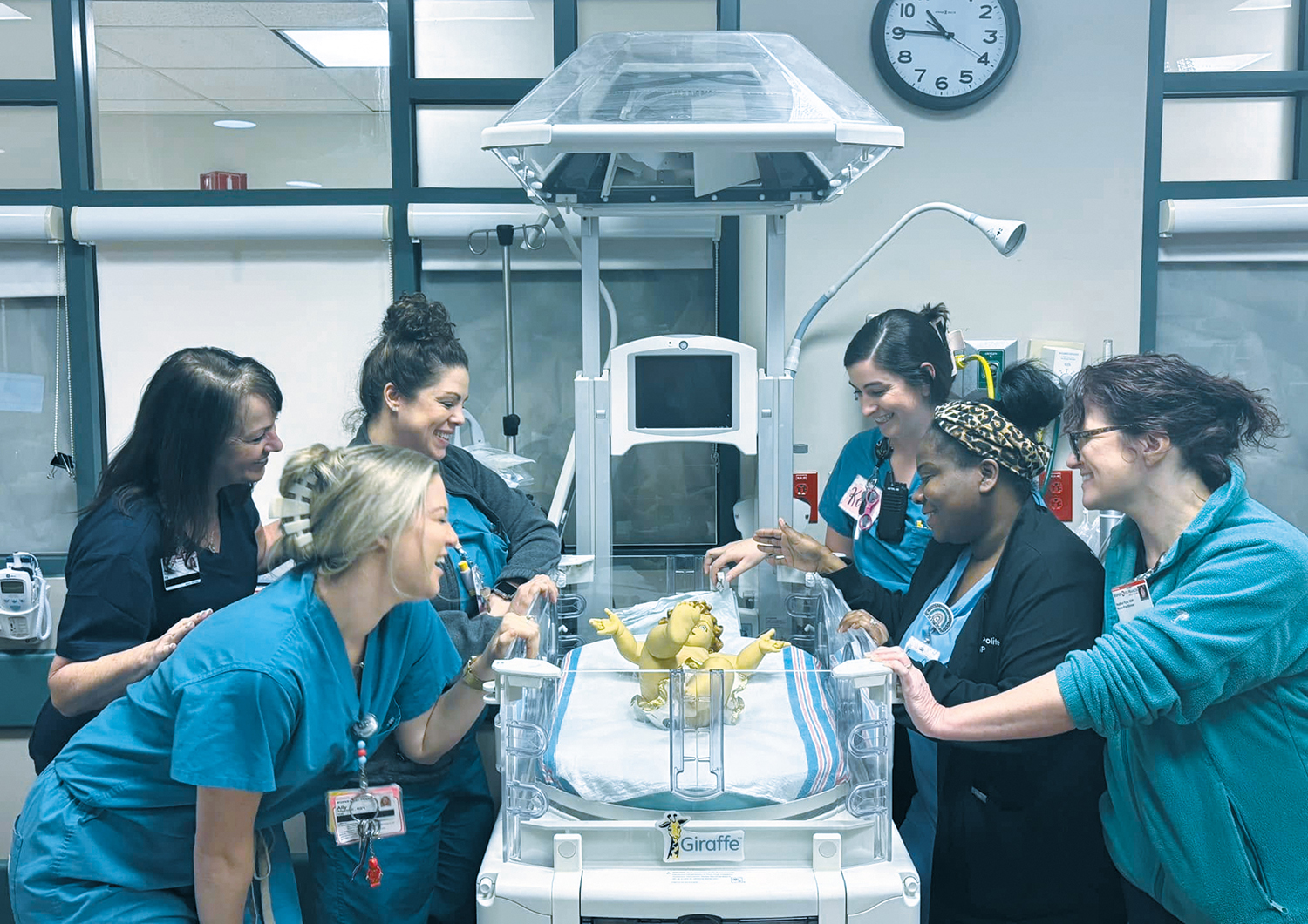
The day before Christmas Eve, the nursery at Bon Secours St. Francis Hospital in Charleston, South Carolina, gets an extra special guest.
A statue of baby Jesus comes out of storage, and a nurse places him in a bassinet. His bright blue eyes look at the ceiling. Sometimes, a little foot sticks out of his swaddling clothes.
"And everybody's like, what in the world is that?" said Christina Westberg, a nurse in the special care nursery. "Because we're used to seeing babies that move."
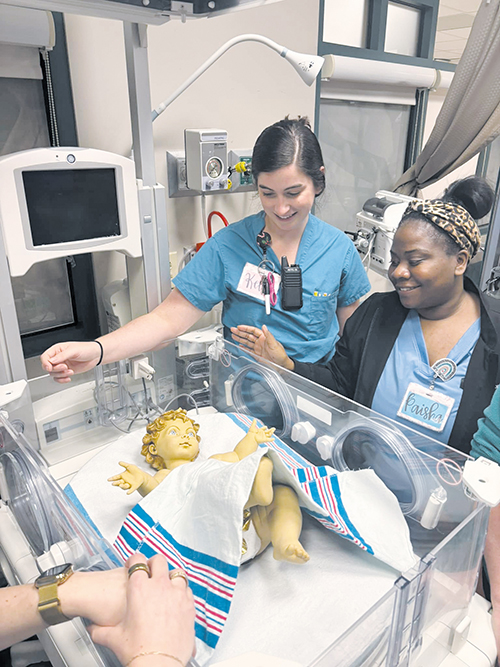
Nobody's exactly sure when the tradition of bringing the baby Jesus to the hospital Nativity at midnight on Christmas Eve started. It began when the old St. Francis Xavier Hospital was in downtown Charleston and sponsored by the Sisters of Charity of Our Lady of Mercy, before they transferred sponsorship to the Sisters of Bon Secours in 1989. The sisters thought the nurses in the nursery should bring the Jesus statue to the manger since they were charged with caring for newborns.
Mark Dickson, the vice president of mission for Roper St. Francis Healthcare, explained the tradition continued when the new hospital opened in 1996. The system has four hospitals in and near Charleston, and Bon Secours St. Francis is the only Catholic one.
Sr. Gemma Neville, whom Dickson considered a mentor, was one of the first Sisters of Bon Secours in Charleston, and she arranged for the donation of a new Nativity set to the hospital, he said. The Nativity, which came from Italy, is nearly life-sized. In the weeks leading up to Christmas, the hospital displays it outside the entrance, in front of the stained-glass windows of the chapel.
"I call it sacred artwork," Dickson said of the Nativity. "It resonates with people. They love it. Families will walk up and just stand in front of it, you know, gazing and praying and just loving it."
But at the same time, the Nativity scene causes a bit of consternation — as Christmas approaches, some people are concerned that Jesus is missing.
"So we get lots of people frantically coming into the front information desk saying, 'Someone stole Jesus,'" he said. "We have to explain: no, we wait for Christmas. Actually, right at midnight, and it's part of our tradition."
On Christmas Eve, in the minutes leading up to midnight, baby Jesus gets some extra attention from the nurses. Sometimes, people from different departments, even adult units, gather in the nursery.
The nurses wheel the bassinet with the baby Jesus statue down the hallway, walk out the main doors of the hospital, and place him in the manger. Security officers keep watch. The group takes a few pictures.
There isn't much fanfare. No speeches. Mostly, it's quiet.
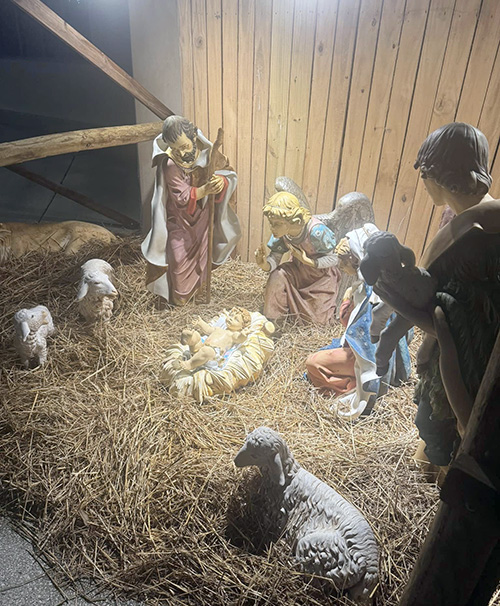
But at that moment, it's Christmas.
Westberg experienced the tradition for the first time last year, her first year as a nurse. "It was nice seeing everybody kind of come together on a holiday, where all of us are away from our families, and we could be together," she said.
And last year, she and her colleagues went back to the nursery for another delivery: A mother was bringing a new life into the world on Christmas Day.
Dickson said the midnight tradition is a tangible reminder that those in Catholic health care continue the healing ministry of Jesus Christ.
"And it's not just a nostalgic looking back 2,000 years, when Jesus physically was born and walked the Earth," he said. "It's a continuing sacramental presence in the world, and we are a witness to the world for Jesus and the healing ministry."