

After Louisiana State University quarterback Joe Burrow won the Heisman Trophy in 2019, he and his family started The Joe Burrow Foundation to help others — because, according to its tagline, "Everybody has a responsibility to do good."

The foundation focuses on food insecurity and child mental health issues in Louisiana and Ohio, where Burrow played football in high school and where he now plays for the Cincinnati Bengals. Community and business leaders in both states helped start the foundation.
Last summer, the foundation launched a new training and consulting program called The Burrow Blueprint to help Our Lady of the Lake Children's Health school-based health centers in East Baton Rouge Parish in Louisiana address the mental health needs of students. The centers are part of FMOL Health. The centers are the first users of the blueprint, which was developed with Nationwide Children's Hospital in Columbus, Ohio.
The blueprint provides education and training for school-based health professionals to identify mental health issues; a framework for peer-to-peer support; and guidance to navigate logistical, operational and administrative challenges to providing mental health care. It also streamlines access to prescription medication.
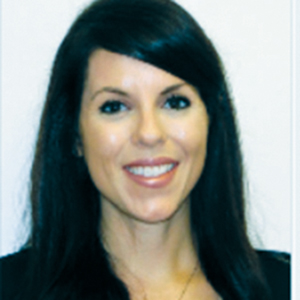
Catholic Health World spoke with Emily Stevens, senior director of operations at Our Lady of the Lake Children's Health in Baton Rouge, about how The Burrow Blueprint is helping caregivers and students. Her responses have been edited for length and clarity.
Tell me more about the centers and what they do.
Health Care Centers in Schools is a nonprofit subsidiary of FMOL Health, formerly Franciscan Missionaries of Our Lady Health System. HCCS has been a part of the FMOL Health family for almost 15 years. Today, we have grown to seven school-based health centers across East Baton Rouge Parish, four in high schools and three in middle schools. We also provide access to health care through a mobile health unit. In addition to care provided through our school-based health centers, HCCS also provides community outreach and education services at schools and community agencies as well as school nursing services in local charter schools.
It's a wonderful partnership and access opportunity. Some of the children we serve wouldn't access either physical or mental health services if we weren't present on their school campus, for a variety of social barriers. Transportation is a big one. It could be that it's hard for their parents to get off work. Access to care on campus also reduces the child's time away from school, which can have a big impact on their learning outcomes.
We see high rates of behavioral health challenges, but that's not unique to our community. It's a national challenge — one in five children have a mental or behavioral health disorder, and unfortunately, about half of those children will go untreated, because it can be hard to find services and there may be financial or insurance barriers to accessing care.
We accept all insurance, and we don't charge anything to families who do not have insurance.
How does The Burrow Blueprint help providers manage mental health issues?
It has provided education and technical assistance for our providers and team to develop the tools and be successful from both a clinical and operational perspective, and all the programming is free thanks to The Joe Burrow Foundation.
The Burrow Blueprint uses an integrated care model. Every child that comes to our health center is screened using evidence-based screening tools. Based on that screening, children may go into a different tier for further evaluation and potentially treatment.
Our clinicians have been trained to complete comprehensive diagnostic assessments and initiate evidence-based treatments in partnership with the parent/caregiver. The providers have weekly case consultation calls with a fellowship-trained child and adolescent psychiatrist. It's empowering primary care providers to be able to treat low-acuity mental health disorders like depression, anxiety and ADHD (attention-deficit/hyperactivity disorder), so that we're reducing low-acuity referrals to psychiatry and hopefully reducing the waiting list for specialty care for those most in need.
Have you seen results so far?
We experienced a 6% increase in our behavioral health visits in the first two months of implementation. To give you some context, we completed over 5,000 behavioral health visits last year. A 6% increase in the first two months is pretty significant, and I anticipate it will continue.
A new Louisiana law requires schools to offer mental health screenings to all students. There are going to be children who need further treatment after screening. It's beautiful timing as the on-campus providers will be well prepared to care for children in need of services.
Do students know who Joe Burrow is? Have you had fun with the football connection?
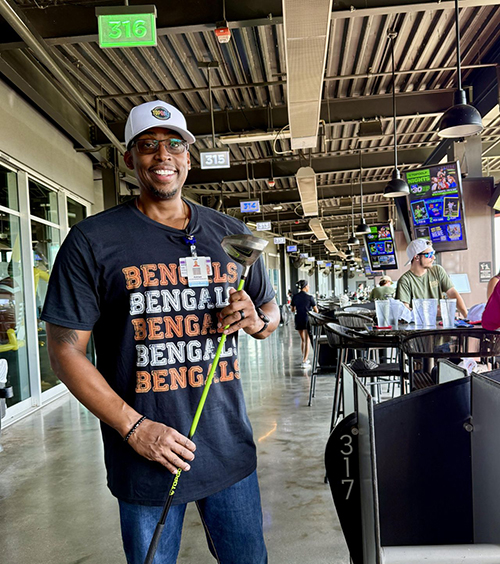
Absolutely. Baton Rouge is a college town — football and all collegiate sports are big deal to the community. It's kind of our culture. Health Care Centers in Schools has tried to lean into the football aspect. Right before the NFL season started, we had a Joe Burrow Day. We dressed up in either LSU or Cincinnati colors, and we brought ice cream to the schools. The children's hospital staff dressed up, and our other community clinics dressed up, too. We also invited school staff and students to participate to boost enthusiasm and awareness around the clinics and the services offered there and start conversations around mental health to break stigma. It was also a way to raise awareness about mental health in a playful, approachable way. We sent all our pictures to the Joe Burrow Foundation from the school, to share with Joe as inspiration for a great season and for him to know how much we appreciate his continued support of our community.
How does this tool help you fulfill your mission as a Catholic health care ministry?
Our mission, in a succinct form, is to serve those most in need, and to meet patients where they are. That's what we're doing. For somebody who doesn't go to the doctor regularly or maybe would be fearful to access services, we're right there with them, no barriers to access. We feel like that's serving our mission in the highest way.