
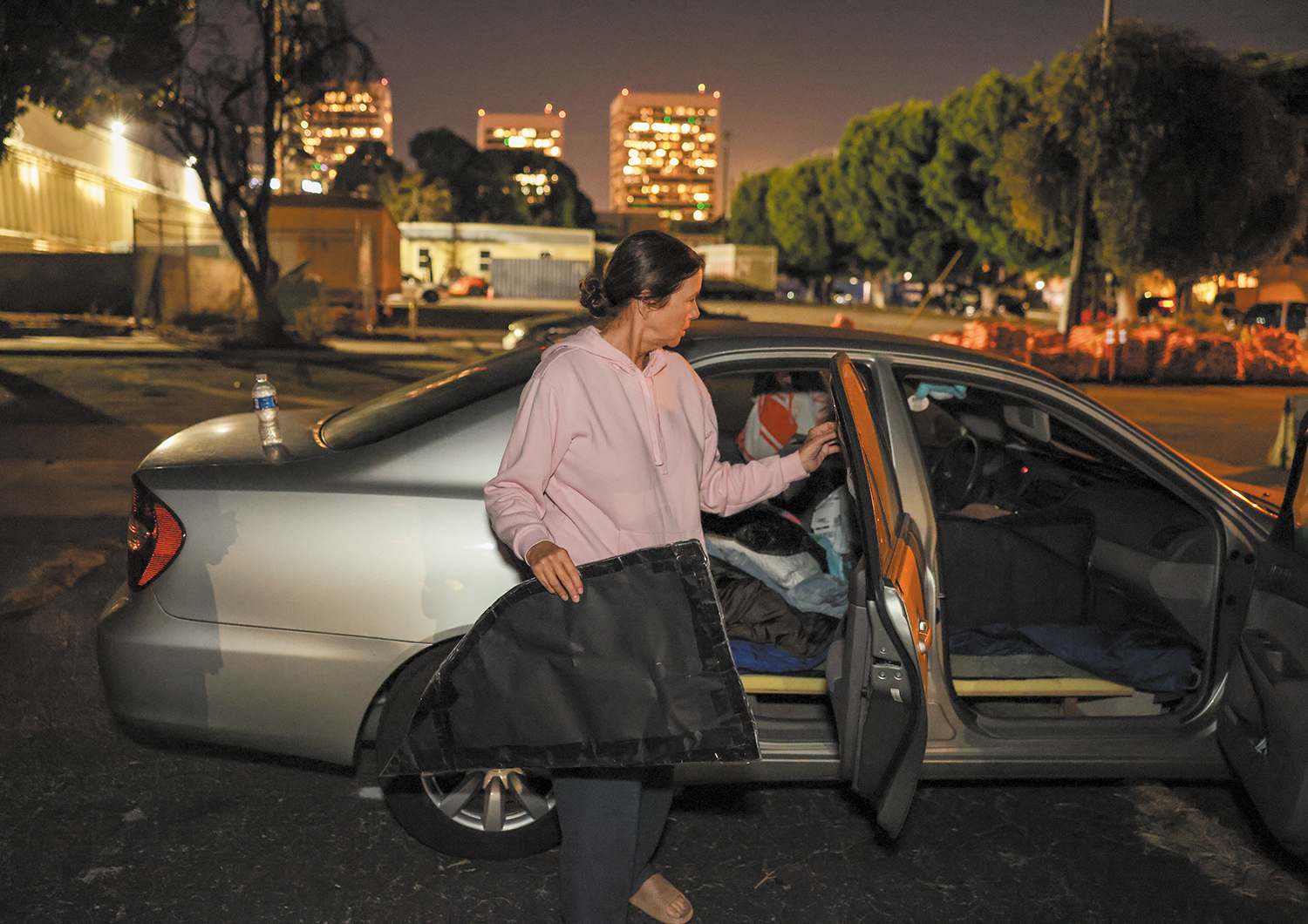
LOS ANGELES — The 61-year-old woman, who goes by her artist name, Sundog, wants a home. But she's made her temporary shelter, her 2003 Toyota Camry, as comfortable as possible.
She removed the front passenger seat and installed a piece of plywood as a base for a thin mattress, a piece of upholstery foam, and a sleeping bag.
"So that's it," says Sundog, demonstrating how she stretches out with her head toward the back of the car and her feet near the dashboard. She motions to a jumble of empty plastic cups and a lunch cooler on the back seat. "That's usually a little neater over there. But it just is what it is."
Sundog has been living out of her car since Christmas Eve of last year, a present she says she gave herself after leaving a living situation with an alcoholic roommate. For a few months, she parked near the beach, trying to stay under the radar but always worrying about her safety. Then she learned about Safe Parking LA, which provides safe overnight parking for people who are living in their vehicles and connects them with resources to help them return to permanent housing.
"I love the security guard," says Sundog, who works for a nonprofit doing cleanup along the beach during the day. "Now here, I do not feel unsafe. At all. I felt unsafe everywhere when I was out."
Sundog is staying the night in West Los Angeles, in a parking lot owned by the city but used in a special agreement with Safe Parking LA.
Currently, Safe Parking LA operates in the San Fernando Valley, Hollywood, Downtown Los Angeles, and West Los Angeles, including on the campus of the Veterans Affairs Medical Center. The group plans to open a women-only parking lot with inclusive services such as trauma-informed care. Dignity Health, a member of CommonSpirit Health, recently awarded $250,000 for that program through the health system's Homeless Health Initiative.
The program is also supported locally by Dignity Health — California Hospital Medical Center, which gave $35,000 to Safe Parking LA to help fund initiatives for people who park overnight at the Los Angeles Convention Center, a few blocks from the medical center. The 30 allotted parking spaces are in a covered garage that has bathroom facilities.
Hospital systems can be valuable partners, says Carmela Carreño, Safe Parking LA's director of development. "It makes sense because they see people come into their emergency room, and through their screening process, they find out this person is actually living in their car," she says. Hospital employees who know about Safe Parking LA refer patients to the group, she says.

A vulnerable population
Since Safe Parking LA got started in 2017, it has received more than 11,000 inquiries and permitted more than 3,000 vehicles for safe parking. To get a permit, people must apply to the program, have a valid driver's license or provisional permit, and have an operable vehicle and proof of ownership. Safe Parking LA does not screen for immigration status.
"Our name is Safe Parking, and that's really our core, which is to provide a safe and also legal place to fulfill the basics of biology: a restful night's sleep, and a restroom," says Matthew Tecle, executive director of the organization. "We couple that with case management services to help provide an opportunity to stabilize a lot of folks who are in our programs."
He explains that his organization's offerings are slightly different from those of groups that work with people who are completely unsheltered, who might sleep in parks or encampments. "However, I like to tell people that folks who are in cars will end up in encampments," he says. "It's just sort of the nefariousness of homelessness, you sort of slide further over time."
After 30 days of enrollment in the program, participants can apply for assistance from Safe Parking LA for things like vehicle maintenance, credit repair, and a first month's rent once they find stable housing. In 2024, 152 participants transitioned into housing, a 47% housing placement rate for people who had exited the program.
 A step away from housing
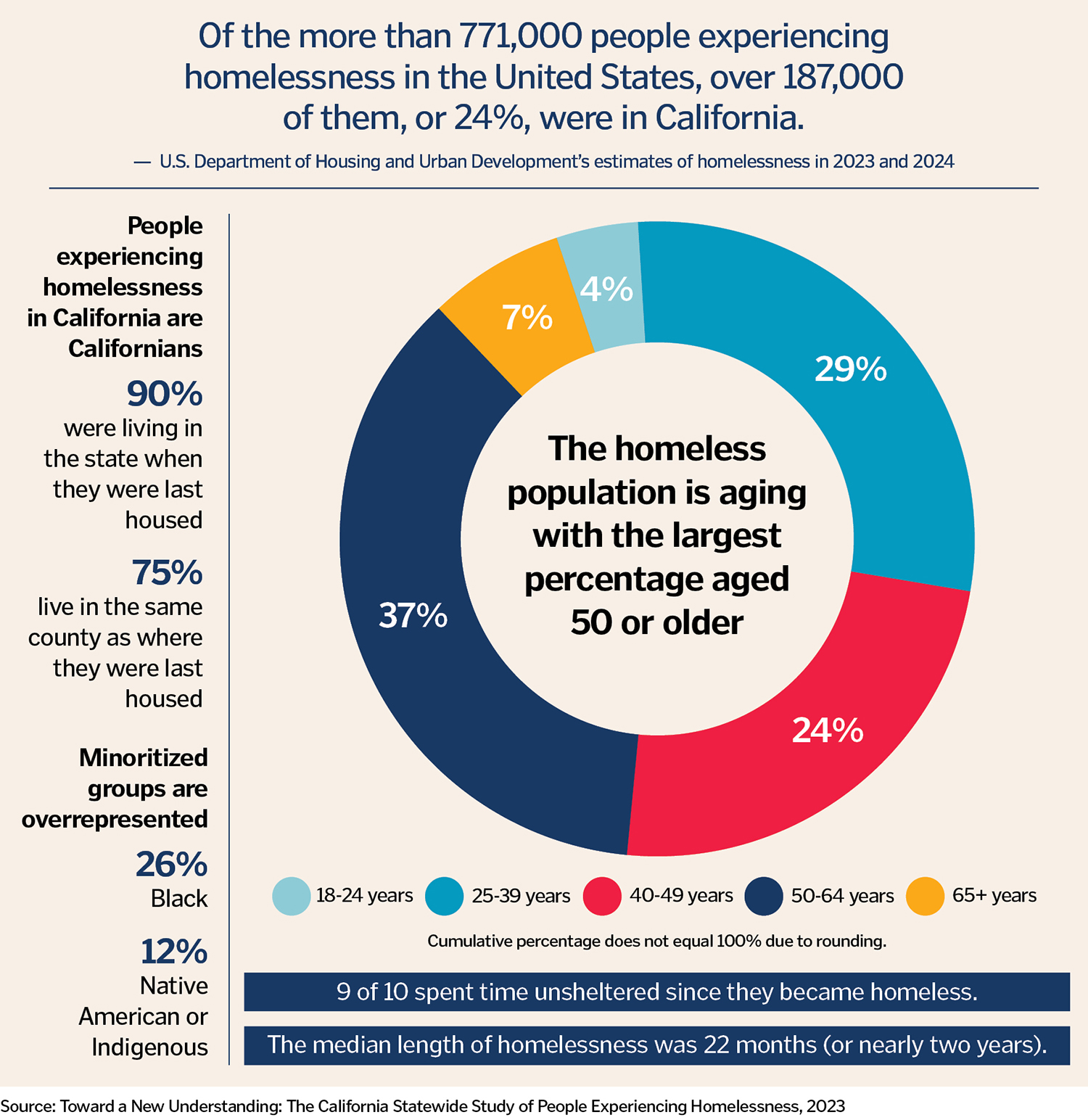
Of the more than 771,000 people experiencing homelessness in the United States, over 187,000 of them, or 24%, were in California, according to the U.S. Department of Housing and Urban Development's estimates of homelessness in 2023 and 2024.
According to the 2024 Greater LA Homeless Count, people experiencing vehicular homelessness make up more than 44%, or more than 23,000 adults and children on any given night, of Los Angeles County's unsheltered population.
Homelessness reached record highs in 2024, though it grew at a higher rate nationwide, 18%, than in California, 3%.
One study of people experiencing homelessness in California found that for most people, the cost of housing had become unsustainable. Those studied reported a median monthly income of $960 in the months prior to their homelessness and thought that one-time financial help or rental subsidies would have kept them housed.
The people in the study who lost housing were local: Almost all of them were last housed in California, and 75% of those surveyed had last lived in the same county. Nearly half had lived in a housing situation where their name wasn't on a lease or mortgage.
There are many reasons someone who is homeless might want to stay in their vehicle, advocates say. They may not feel safe in a shelter, if they find availability in one. Living in their vehicle can be a way to keep a family together. It allows them to drop off a child at school, go to work and keep a pet that they might have to give up if they went to a shelter. Some safety net programs require those they help to give up their vehicle.
Carreño says most of those helped by Safe Parking LA haven't been homeless before and usually have jobs or are retired and have a source of income like a pension. "Sometimes they just need light touch support," she says. "They need help to stabilize so that they're not being penalized with tickets and putting themselves in unsafe situations."
A night on a parking lot
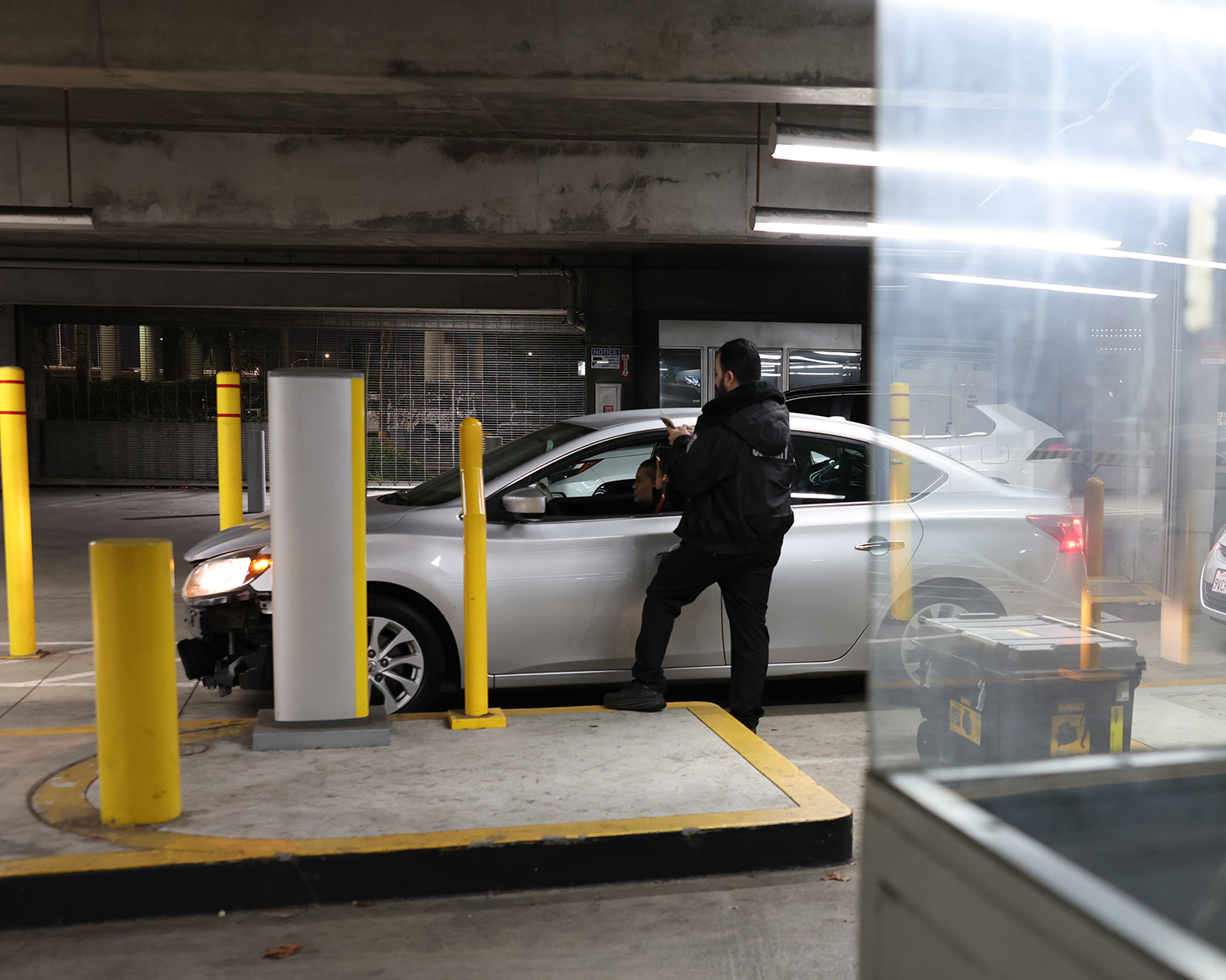
Safe Parking LA provides overnight security at the lots, which generally open at 7:30 each evening. The vehicles line up to park and the drivers sign in with the security guard, who motions them toward their allotted spot. Portable toilets and sinks are available at lots that don't have permanent ones. Sometimes volunteers or Safe Parking LA employees bring food or other free items, like socks or soap.
On this particular October evening at the West Los Angeles location, Tecle and Carreño bring a tray of chicken Parmesan and caprese sandwiches, donated by a nearby Italian restaurant.
A young woman in a sedan pulls into her parking spot and cheerfully greets the workers. "I have five," she says. "Me and my four kids."
With a smile, she thanks Carreño for the last five sandwiches on the tray and returns to her car. The tinted windows obscure any activity inside.
Quiet hours begin at 10 p.m. If people arrive after that, they are asked to pull in and get settled quietly. If they aren't going to stay in the lot more than a few nights in a row, either because they are staying with a friend or elsewhere, they are asked to check in with their caseworker. Participants are expected to leave by 7:30 the next morning.
A 54-year-old man, who asks that his name not be used, parks in the lot in his 18-foot cargo van, a Ram Promaster 2500. He says it has everything he needs — a refrigerator, a bed, solar power — except running water. He bought the van in 2018 when he worked on Hollywood film crews and could travel and live in the van as he worked on location. But then he got diagnosed with cancer and faced a choice: make rent or pay the $1,400 co-payment for medicine.
"I was already paying a lot of money for rent a couple years ago," he says. "So, here I am."
He's had a couple of surgeries and is "doing well," he says. He discovered Safe Parking LA about four or five months ago. He was moving slowly because of the surgery, and while he had kept a low profile on the streets, he thought it might be safer here.
"It's a smart idea," he says. "You know, the streets in any city, it is what it is. People are most vulnerable when they are sleeping. So, this is great. It makes perfect sense. I'm sure it's a huge need in every big city, but I'm surprised that there aren't more."
He's on Social Security now, but he hopes to get back to work.
Meanwhile, Sundog, in the next aisle of the lot, settles down for the evening. She's made window covers from poster board and quilt batting, which helps keep out the light and cold. She neatly labeled each cover so she knows which one goes where, and jokes that she tried to make the labels look "designer."
When she does go to sleep, it will be a little more soundly than if she were parked elsewhere.
"People walk by here, I don't care who they are, because there's a security guard watching," she says. "But if I was trying to sneak in here and sleep, then you're wondering, oh, are the cops gonna come? Who are the people that are walking by? Did they see me get in my car? Do I have to be worried about who saw me, a single female? That kind of thing. So I can't handle it. I cannot handle that."
Safe Parking LA has helped her pay for an oil change, insurance and a storage unit. She has asked for and received assistance for security guard training, so that she can work as a guard herself somewhere.
She watched YouTube videos on how to live out of a car and thought she could handle it. "But no, I don't want to," she says. "I want to live different. I want to live, like, inside."