
Individuals and institutions can use the principles of Catholic social teaching to foster trust, promote health equity, and support public health in an age of medical skepticism, says Joshua Snyder, an associate professor of the practice of theological ethics at Boston College.
"The principles of Catholic social teaching provide strategies to rebuild social trust and promote the efficacy of the work that public health practitioners are engaged in," Snyder said during a webinar hosted by CHA.
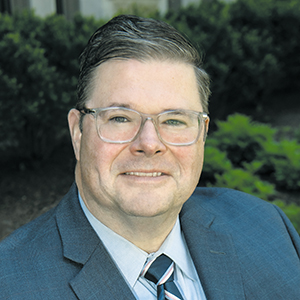
During the Nov. 5 webinar, "The Challenges Facing Public Health in an Age of Medical Skepticism," Snyder pointed out that there has been a decrease in trust over the last five years in public institutions such as hospitals, public health departments, and social service agencies.
This can be partly attributed to the COVID-19 pandemic, he said, which he called a "human moral tragedy."
"It illustrated the failure of developed health systems to address the needs of public health in epidemics in society," he said.
He added that one of the biggest errors of the pandemic was not addressing its politicization.
He cited a study published in June that found social media misinformation was associated with a lower trust in the U.S. health care system. "Misinformation, ranging from misleading medical claims to falsehoods about health care policies, poses significant health risks," he said. "Likewise, misinformation lowers adherence to preventative measures."
He cited President Donald Trump's announcement in September that there was an association between exposure to acetaminophen in utero and autism. Two days later, the World Health Organization said there was no conclusive scientific evidence confirming the link.
Claims that autism is related to childhood vaccines have been debunked by various studies. "Immunization is one of public health's success stories, saving millions of lives each year," Snyder said.
The role of the Catholic Church
Yet, the recent outbreaks of measles and confirmed cases in 21 states serve as a warning, and a recent survey by U.S. Catholic revealed that 20% of Catholics believe getting vaccinated is a moral obligation, and that 80% of Catholic respondents have ethical concerns regarding vaccine mandates.
Snyder pointed out that the Catholic Church is the largest nongovernmental provider of health care services in the world, with about 18,000 clinics, 16,000 homes for the elderly and those with special needs, and 5,500 hospitals. Of those, 65% are in developing countries.
He said people must build social trust, which is a substantive element of the common good, one of the principles of Catholic social teaching. Another principle, the preferential option for the poor and vulnerable, builds social trust by promoting health equity. Solidarity, he said, leads to choices that ought to promote social trust.
To build social trust, people must work together to combat the spread of false information and promote the common good by promoting health literacy and science education, he said. "The common good also calls for a commitment to vaccinations," he said. "When an individual who is eligible to be vaccinated refuses to do so, they don't merely harm themselves, but they undermine the common good."
Upholding the principle of the preferential option for the poor and vulnerable "requires that social, political and economic policies be evaluated in terms of what they do to the poor, for the poor, and enable the poor to be so," he said.
The principle of solidarity, he said, "is a disposition that motivates us to act on behalf of those who are in need in order to alleviate their suffering. Solidarity functions as a moral category that leads to choices that ought to promote social trust."
Fostering civility
Promoting the common good starts with encounters with others and people asking themselves if they are willing to speak with those who have different views, Snyder said. "How do we foster civility? How do we foster discussion and debate?" he asked.
He pointed out that at the time of the webinar, the federal government was on day 36 of a shutdown. "Our lack of trust in politics is enormous because it just seems so dysfunctional currently," he said.
If people connect politics to public health, it's going to lead to a further decline in trust in politicians and public health institutions, he said.
It's essential to build trust at a local level, he said, and community-based organizations or groups like CHA can influence faith communities.
"All of us here know that 80% of modifiable health outcomes are not determined in a clinic but are determined by our living conditions," he said. "So if we're waiting for politicians to be the ones that change that, I think we're in trouble."