
In 2022, when Sioux Falls-based Avera Health conducted a community health needs assessment and began screening at some clinics, some results were surprising. Between 10% and 15% of patients reported problems with having enough to eat. In some locations, it was as high as 30%, according to Lacey McCormack, director of rural research at the Avera Research Institute.
"I cannot tell you how many people said they were shocked to see how high the food insecurity was," McCormack says. "And when we identify an issue, we ask: How can we address it?"
McCormack and others came up with an idea called Wellness Pantries. The pilot project distributes food where it's convenient: at patients' medical appointments.
"We wanted to provide a resource on the spot," McCormack says. "With this setup, we are able to do just that."
Hunger makes it hard to 'think about health'
The Avera Research Institute and Avera's Community Partnerships program work with Feeding South Dakota, a hunger relief organization that provides the food. The first Wellness Pantry opened in late 2024 in rural Parkston, South Dakota, followed in February by two inside Avera McKennan Hospital & University Health Center's obstetric and pediatric specialty clinics in Sioux Falls. In July, two more opened in primary care clinics in Sioux Falls.
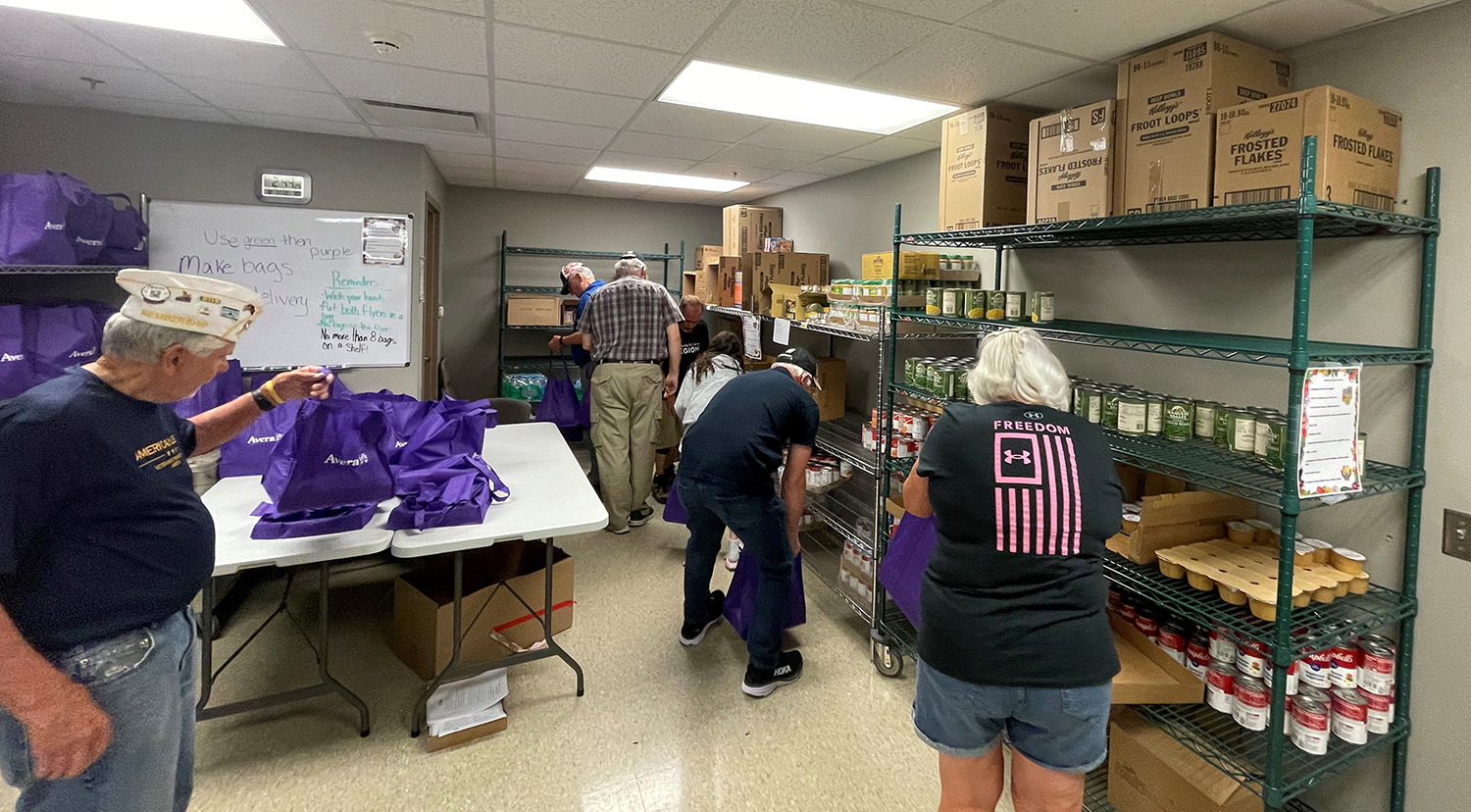
Patients, or caregivers bringing children to appointments, are screened for social determinants of health — nonmedical conditions affecting health outcomes. Questions include whether or not in the past 12 months they've run out of food and had no money to buy more. If that's the case, they may take home from each appointment a six- to seven-pound bag of thoughtfully prepared shelf-stable foods.
"If we're handing out cereal, we also want to make sure and hand out shelf-stable milk," says McCormack, who oversees the Sioux Falls-area pantries. "If we hand out a grain, we want to make sure there's a protein and vegetable to go with it."
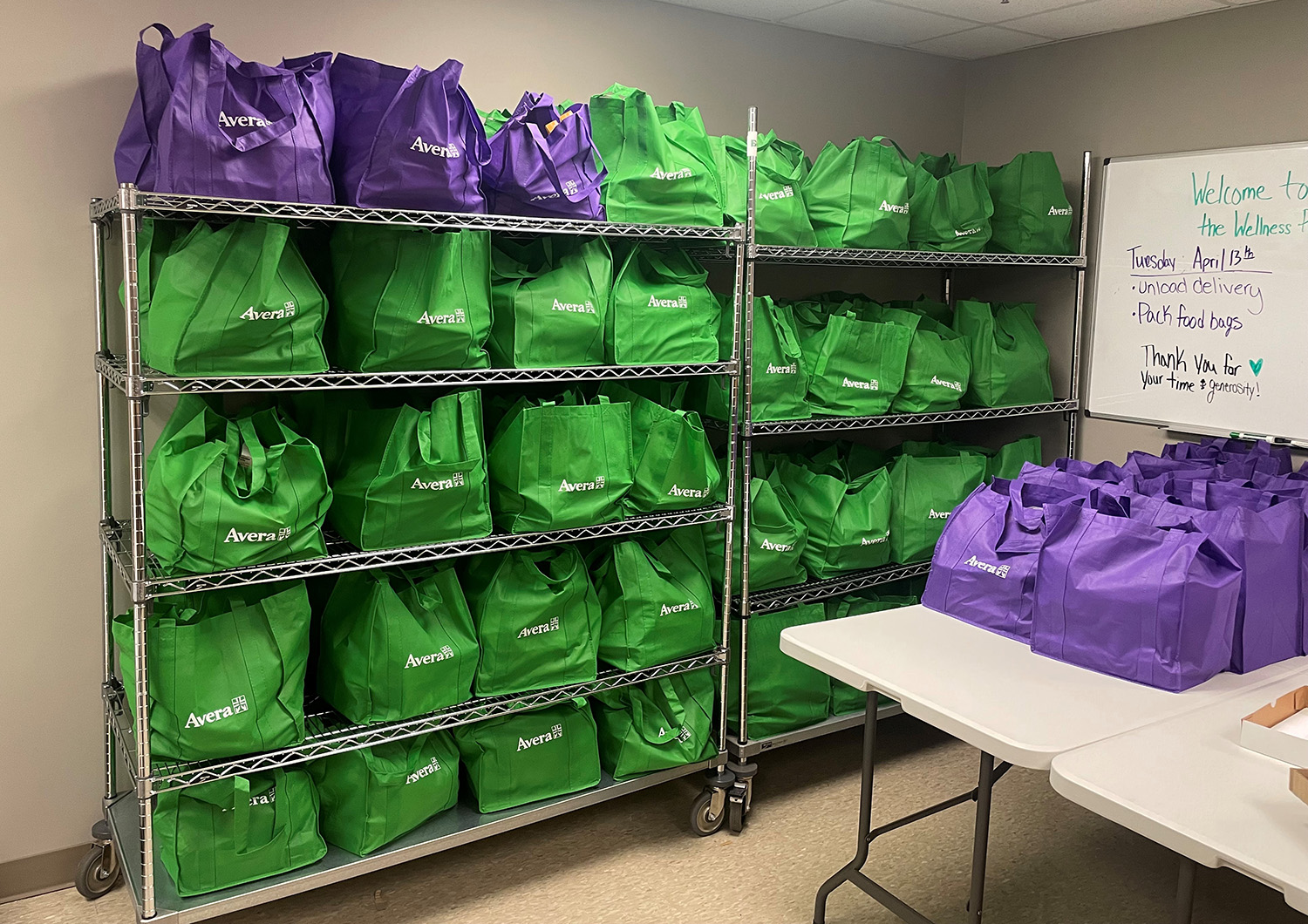
In Sioux Falls locations, staff carve out time during the workday to order food weekly from Feeding South Dakota, which delivers it to a central location. Community volunteers assist with unpacking, sorting and bagging the food. The bags are then taken to clinics for distribution. A portion of a federal Healthy Start grant for maternal and infant health covers the two to four hours a week of staff time.
The program isn't meant to be a regular source of food but an emergency stopgap. Food bags have a QR code that directs people to information about other food pantries and hot meal locations. McCormack says that while no one should go hungry, access to healthy food is especially critical for people dealing with illness.
"It's hard to be told by a doctor to manage your diabetes by eating different kinds of foods when you can't access them or afford them," McCormack says. "It's also hard for people to think about their health when they're hungry."
Prioritizing patient dignity
The original Wellness Pantry in Parkston operates in Avera St. Benedict Health Center facilities. Another rural operation, inside Avera St. Mary's Hospital in Pierre, South Dakota, opened Oct. 29. Unlike pantries in Sioux Falls, rural sites are fully volunteer efforts. Some who donate their time are from the wider community, others are St. Benedict staff coming in after work or during lunch breaks.
Staffers screen all clinic, emergency room and hospital patients at St. Benedict for food insecurity — defined as experiencing daily challenges with hunger. Those who qualify can take home a bag of food which also contains a $15 fresh produce voucher, redeemable at a local grocery store.
Lindsay Weber, president and CEO of Avera St. Benedict, says preserving patient dignity is of utmost importance. This emphasis even goes into the choice of how the food is packaged.
"The bags here are orange or green, the same ones a patient would leave the facility with, containing their clothing," Weber says. "So it's not obvious there's food in the bag."
Patients may be more likely to accept food from a medical setting, Weber says.
"They're comfortable telling the medical provider that they might be food insecure, but they may not be comfortable going to the local food pantry," she says.
As far as Weber knows, pantries embedded in medical settings is a unique concept.
"A Wellness Pantry certainly aligns with our values of compassion and hospitality, and caring for our patients — mind, body and spirit," Weber says.
Worsening situation
More than 12% of South Dakotans experience food insecurity, says Lori Dykstra, Feeding South Dakota's CEO. Fifty-six percent of them make too much money to qualify for the federal Supplemental Nutrition Assistance Program.
Across the United States, 14% of people are food insecure, according to the Feeding America organization. That translates into 47 million Americans, including one in five children.
It's a dire situation for individuals and families, especially when it comes to children's health and development, Dykstra says. "Food is medicine," she says.
The situation is getting worse and will likely worsen further, she says. Right now, 42 million Americans have to make do with unreliable or reduced SNAP benefits during the federal government shutdown. Dykstra doesn't know exactly how additional changes to SNAP through the One Big Beautiful Bill Act will affect hunger. But she fears new Medicaid work requirements that begin in January 2027 will put an impossible strain on all food pantries.
"If people lose their Medicaid, and can't afford health care, they're going to move to the next charitable system," Dykstra says. "In the past, when people have lost either Medicaid or SNAP, they turn to the food banks — and we can't handle all of that."
Among the Sioux Falls, Parkston and Pierre locations, Avera Wellness Pantries have distributed a total of 1,600 bags of food as of Oct. 30. Feeding South Dakota and Avera are working together to continue expanding the program. More rural-area pantries are planned for Lake Andes and Tripp, South Dakota, and 15 more are in the works for Sioux Falls.
McCormack considers the program a success for many reasons including that word is spreading despite no marketing efforts. She is warmed by the response of adult and pediatric patients.
"Patients sometimes break down because they didn't know what they were going to feed their families for dinner that night, and kids say they're excited to come to their appointment because they know they're going to get food," McCormack says. "But mostly, people say they feel taken care of."